
Taken from Lynne’s weekly column ‘Green Scene’ for the Western Mail
24th June 2023

Never Too Ancient
Despite having been lucky enough to complete some great personal ‘adventures, pilgrimages and escapades’, sometimes I read about something and think, ‘I wish I’d done that’. Of course it’s never too late, but circumstances and priorities change. However, what I have learned is instead of ‘wishing I had done that’, I now put it on a list.
Who knows, maybe one day I will …
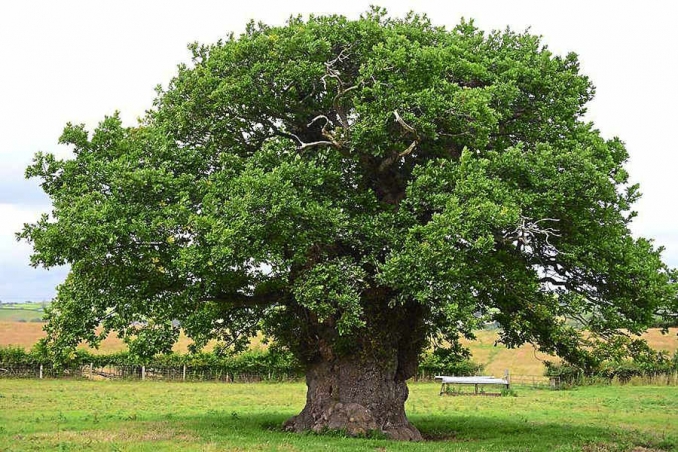
The latest addition to that list was ‘visit more ancient trees’, inspired by Martin Hügi. Walking from Land’s End to John O’ Groats, visiting (at least) 2,700 trees listed on the Ancient Tree Inventory (ATI), Martin describes his trip as a pilgrimage, because wonderful things are unfolding. He says, “It’s part of what’s so special about what I’m doing – I’m just throwing myself into it and just seeing what happens.”
50 year old (an ‘0’ birthday has a knack of igniting these ideas) Martin, is a qualified arborist and chartered forester, who now works for the Woodland Trust and is obviously passionate about trees. He’s not doing the walk for a documentary, for charity or to write a book, or even a blog, but simply because he wants to spend time with these ‘awe-inspiring old beasts’ and to raise awareness of the Ancient Tree Inventory, and The Woodland Trust. “And to try and get legally protected status for some of our oldest ancient trees, putting them on an equal footing with other protected wildlife and historic buildings, as well as support for farmers and land managers who have ancient trees on their land.”
His route from Land’s End to John O Groats is indirect, spanning over 2,000 miles (the direct route by car is 837), which allows him to enjoy spontaneous events and offerings along the way. It took a year to plan but you can’t plan for random acts of kindness and hosting. And of course, some things just can’t be rushed, as Martin explains, “When I meet an ancient tree there is something that happens to time. Things just slow down and sometimes it takes my breath away. As soon as I come into their presence, it lifts my whole being. My motto is ‘trust in the trees – and never pass a bench.’”
I have already visited some of the most majestic ancient trees in Wales – and Martin is right, they do just emit the most amazing energy and magnificence.
More details about the Ancient Tree Inventory at woodlandtrust.org.uk
Royal-trees
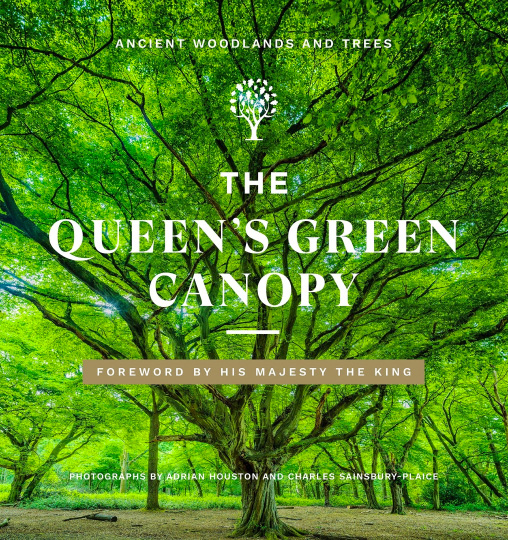 Some of Britain’s most famous trees are showcased in a new book, ‘The Queen’s Great Canopy.’ They include a majestic oak in West Sussex, a 16th-century sycamore in East Ayrshire, the apple tree in Lincolnshire that was said to have inspired Isaac Newton’s work on gravity, and Wales’s own magnificent Defynnog Yew in a Powys churchyard not too far from Brecon.
In 2022, The Queen’s Green Canopy (QGC) invited everyone across the UK to plant trees to mark Queen Elizabeth’s Platinum Jubilee. Following her death in September 2022, the initiative was extended to give more people a chance to honour Her late Majesty, her long service and legacy. The initiative has now closed, with the trees planted creating a green legacy. His Majesty The King, patron of the QGC, has recently unveiled a nationwide network of 70 ancient woodlands and 70 ancient trees dedicated to his mother, and they include several Welsh beauties – Brynau Wood in Neath, Coed Gwent – and the Curley Oak -at Wentwood and the Coed Glaslyn Rowan at Coed Glaslyn in Powys.
The book has the most beautiful photographs and, as well as a forward written by King Charles, contributors range from presenters such as Alan Titchmarsh, Adam Henson and Danny Clarke to conservation experts from the Woodland Trust and the Duchy of Cornwall, as well as beloved national treasures such as Dame Judi Dench, Dame Joanna Lumley and Archbishop Justin Welby. In these pieces they reflect on the trees that have made a mark on their lives and the importance of protecting Britain’s woodlands for future generations.
Dew Dew
 I love the fact that nature can inspire in so many unexpected ways and places – even nail bars. I have often marvelled at the beautiful beads of dew held on the Alchemilla mollis leaves (Lady’s Mantle) – and now that look is available for your nails. Honestly. Dew-drop nails are apparently (I say apparently as, obviously, I don’t have first ‘hand’ experience), the latest summer trend on Tik Tok with over 288 million people viewing the nature-inspired nail art. The 3D manicure adds what looks like droplets of water to the nails supposedly evoking thoughts of summer holidays, beach trips and pool parties. Influenced by Japanese and Korean manicure techniques I suppose it does bring nature to the finger-tips of a wider audience.
Bunny Bandits and Bindweed
 The rabbits have eaten my peas. Not a line that’s going to make the headlines, I appreciate, but nonetheless disappointing in my world. I managed to raise and nurture them to around 18” (the pea plants not the rabbits) but one night last week, the long eared, bob-tailed, furry squad ‘razed them to the ground’. Despite the disappointment, it’s hard to be cross with the baby bunny bandits as they play on the lawn as if rehearsing for a scene out of Watership Down. I’ve added frozen peas to my shopping list.
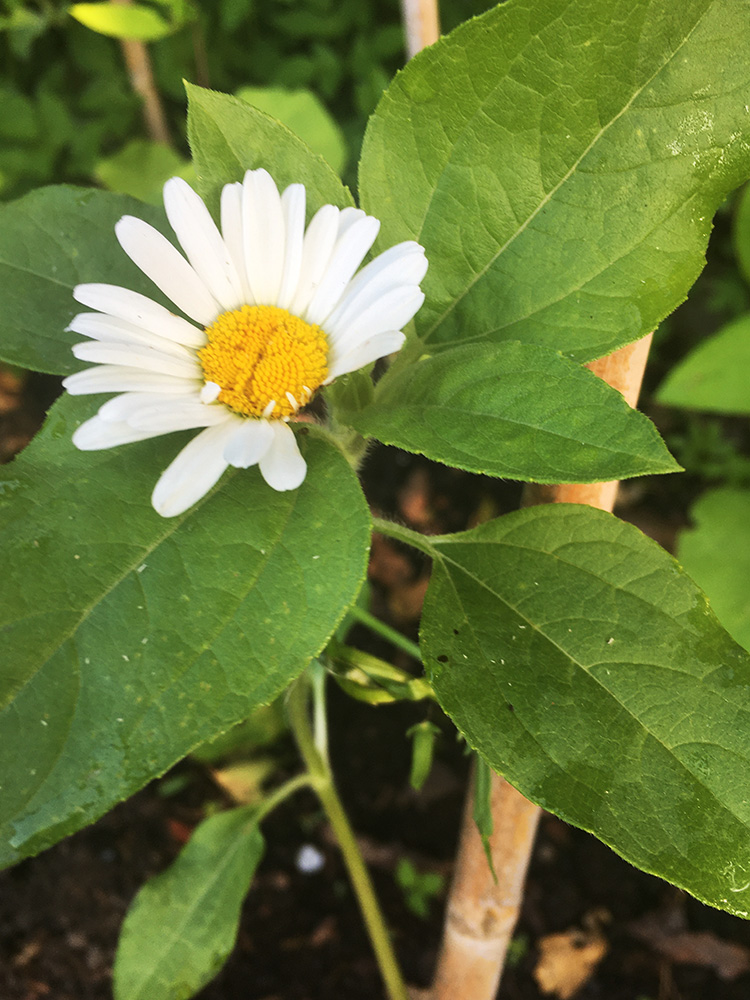
The rabbits might have had my peas but, so far, I am managing to win the runner bean race. They are growing as much as each day and whilst most were able to find their way around the hazel bean poles, there are always one or two that are just like that petulant child in a supermarket aisle and insist on lying on the ground. A friend prides herself on using bindweed to tie in her climbers. She is the most amazing ‘more mature’ gardener with the kind of enviable attitude that only years of experience can bring. “I’m done fighting with it,” she says, referring to the bindweed, “I make it work for me now”. As the name suggests it does dry into the strongest and most subtle of twines. Being rather fortunate not to have bindweed in my garden, I always use the long, strong stems of ox eyed daisies to tie in my reluctant climbers, and anything that needs a little support to start off – like the young sunflower pictured.
Leave a Reply