

Taken from Lynne’s weekly column ‘Green Scene’ for the Western Mail
11th April 2026

My Favourites
By ecclesiastical rules set centuries ago, there actually are 35 possible dates on which Easter can take place. The earliest possible date is March 22 and the latest possible date is April 25. For me, Easter felt quite ‘early’ this year (last year it was on the 20th April), and with the weather not being able to make its mind up what it’s doing, I feel I’m not quite in my ‘gardening stride’ yet.
I loved the early snowdrop show, the following daffodil displays and now the tulips and bluebells are beginning to burst into all their glory, but it does feel a bit like the calm before the storm with regard to gardening growth. And I don’t mind a bit. It’s giving me a chance to really enjoy what’s going on and get a bit more prepared for that oh-my-God growth spurt which I know is coming.
Whenever a particular spring flower takes centre stage, I tell Yogi it’s my favourite. The snowdrop carpets were my favourite in February, then the daffs were definitely my favourites and now it’s the tulips. Last autumn I bought a few different varieties, mixed them up in a bag and put them ‘willy-nilly’ in various containers around the garden. I had completely forgotten which varieties I had chosen and am now just so enamoured by the bloomin’ magical mix, from the traditional blooms to the elegant frilly parrot ones – and of course, in all colours.
Sorry Monty, but there are no carefully chosen apricot hues here!
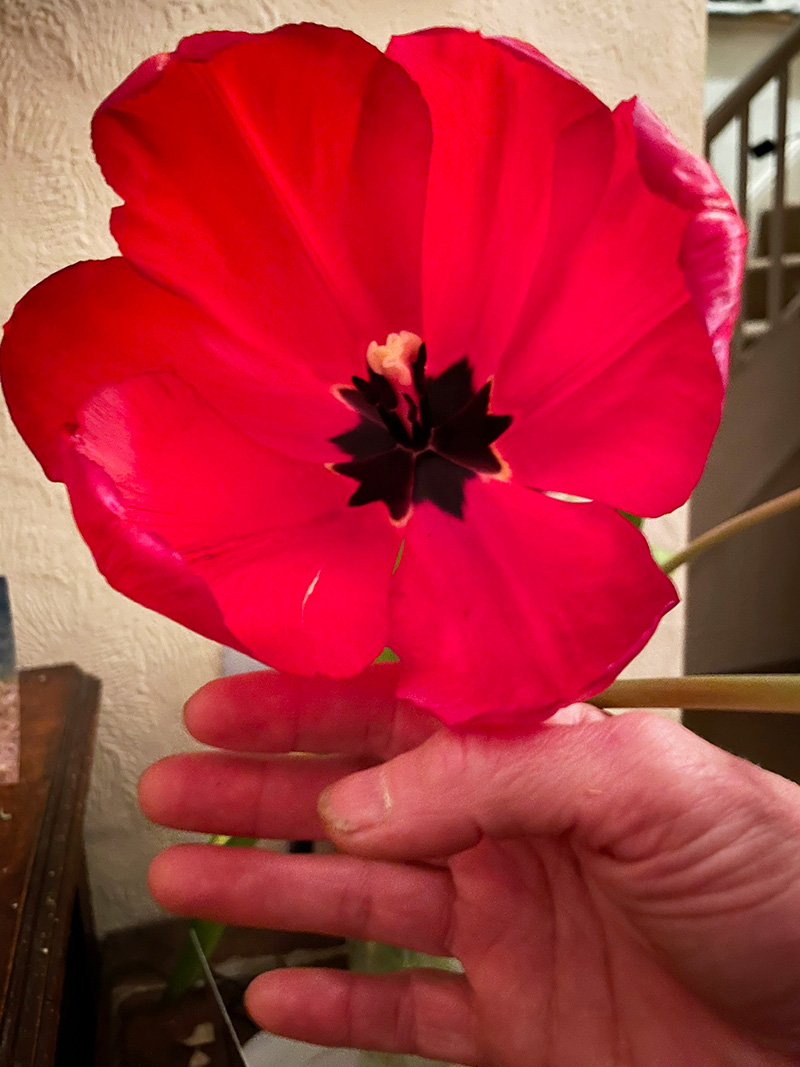
I always pick flowers some from the garden to have indoors and last week picked some of the traditional tulips I planted last year. They have been lovely and lasted well, and I just love the shapes that picked tulips throw. But I was quite shocked by the enormity of one particular bloom – as you can see, bigger than my hand.
Moles and Moss
 In all the years I have been gardening, I have noticed that there are two things that are likely to drive people (men in particular) to despair. And that is moles and moss. The latter is so prevelant at this time of year – although the former are getting busier too.
The moss that everyone moans about at this time of year is ‘winter moss’ and is so prolific because it loves grey, dreary, damp conditions. It’s a difficult thing to advise on, although I am offered lots of opportunities to do so. If you don’t do anything about the moss in your lawns, then as soon as the conditions change to ‘unfavourable’ ones (for moss), and that means dry, warmer weather, then it will disappear of it’s own volition – until next year’s dreary, wet and cold conditions return. It’ll then be back with a vengence as it will have sown its spores this year before quietly shrinking away.
So lots of ‘proper’ gardeners and lawn lovers will be taking action against moss. That basically means scarifying – which will remove the moss but not the grass – and then aerating the soil and over sowing with grass seed, if and where necessary. It is basic lawn care and Granddad used to do it religiously, as does my brother (the Lawn Ranger), whereas I tend to go for the former option of ‘this too shall pass’, although I’m not sure that was meant to be relevant for moss.
Do It Your Way
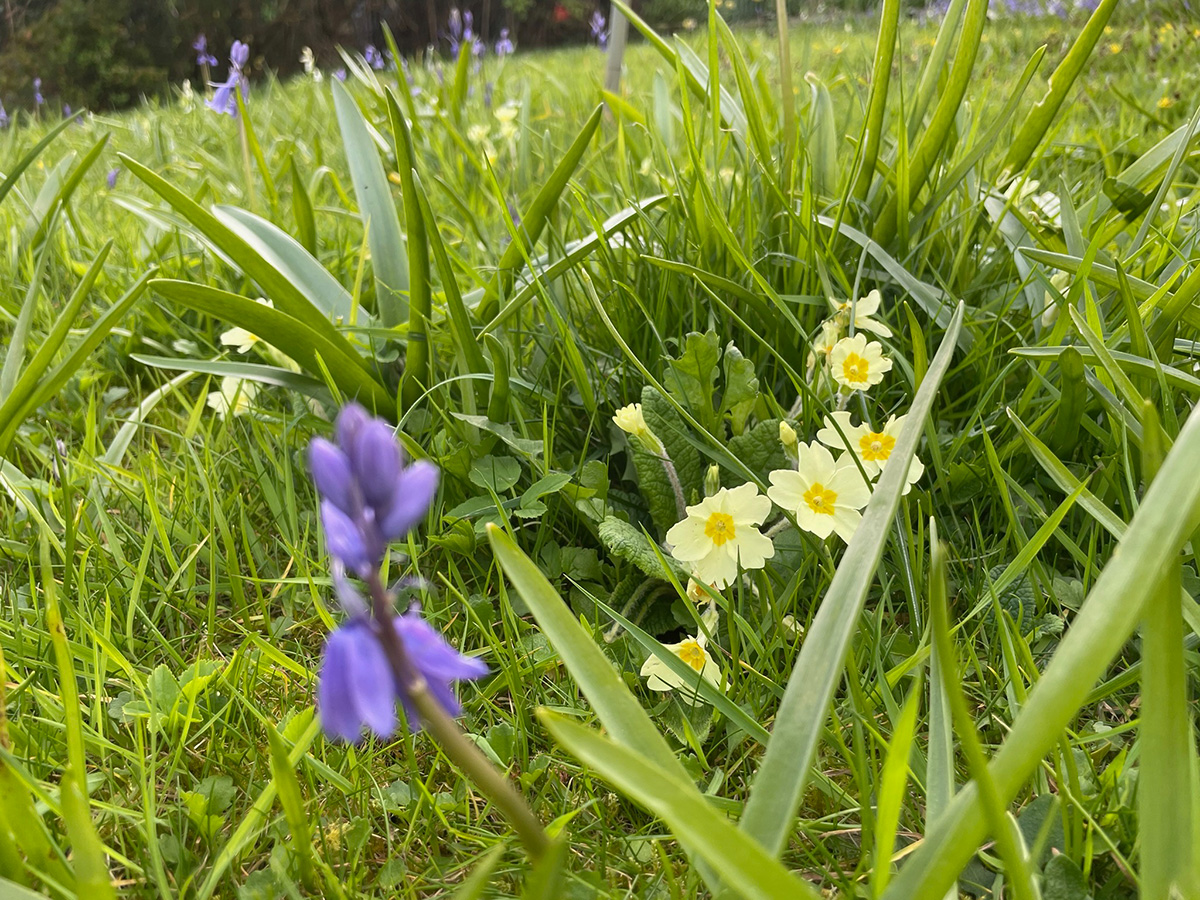 My and my brother’s lawns couldn’t be more different and I know mine makes him ‘itch’, as it is now still uncut and home to lots of bluebells and wild primroses. I do try and keep the primroses to ‘certain areas’, as they’re more effective en mass but the bluebells are ‘free-roaming’. Once they have finished flowering and the leaves have died back, I’ll mow the lawn, with the blades high in order to keep the celandines and dandelions intact for the bees.
I also have a rather impressive display of fox and cubs (the plant not the animals), which will be prioritised over mowing in the summer. And will give my brother more reasons to ‘eye roll’.
I remember being told that if you ask 10 beekeepers the very same question then you’ll get 10 different answers and gardening is much the same. So much of it is personal preference and should be a real opportunity to do things your way and create the kind of space that brings you pleasure and peace.
Beet That
I have been enjoying a bit of baking lately. Encouraged by Tim Spector, I have been busy baking beetroot brownies (they freeze fabulously too) – and highly recommend as a way to getting one of your ‘five portions of fruit and veg a day’. They are delicious with yogurt and raspberries – and that’s two of your five a day sorted.
I love the fact that I am using my nan’s huge old mixing bowl and spatula and feel they pretty much know what they’re doing already. Including veggies in brownies, cakes and even bread is a great way to increase your fibre and nutrient intake as well as giving you an extra incentive to grow your own veggies. Beetroot is one of the easiest things to grow – and is what my dad gave me to grow in my very first veggie patch aged about 4.
Courgettes are also easy to grow, prolific at harvesting time and are great in brownies, breads and cakes. There are lots of recipes online – do look for the courgette and cheese bread, it’s lovely. And, when you put your seed orders in, remember to order for the ‘baker’ as well as the cook.
Brilliant Bats
 April 17th (Friday) is Bat Conservation International (BCI) which was founded in 1982 by a group of concerned scientists who recognised the importance of protecting bats. Whilst a lot of people can’t stand bats (particularly those who are thwarted trying to convert barns and old buildings, thanks to various Bat Conservation laws), bats ‘pull their weight’, by controlling pests, creating rich fertiliser for landowners, and pollinating fruit and flowers.
BCI aims to conserve bats and their habitats through a combination of education, conservation, and research and I encourage you to do your bit by reading a little about bats. They are fascinating.
Depending on the species, bats eat a variety of things including fruit, nectar, insects (and even blood) and whilst they are not the ‘cuddliest looking’ critters in the wildlife world, it’s worth remembering that a single brown bat can eat around 1,200 mosquitoes in one hour.
Llanyrafon Manor Farm, in Cwmbran, is home to several species of bats, including Lesser Horseshoe bats, Brown Long-Eared bats, and Common Pipistrelle bats. Gentle evening walks are being planned for the summer months, where you can listen and watch for bats, using bat detectors. You will be able to learn about the fascinating and protected creatures and more details will be on their website in due course. In the meantime they are looking for a bat enthusiast to assist, if interested please drop them a message via www.llanyrafonmanorfarm.com
I have a couple of bats who roost in my front porch at the cottage, meaning I have to use the back door to avoid disturbing them and also means that they regularly fly into my bedroom, often waking me up as they circle around trying to find their way back out the window.
I always remember having bats living in the porch roof at home as a kid, and they had to be reported to the Bat Conservation people in Brecon, who would then arrange to visit to monitor the roost. Dad tasked Mum with the job of arranging the visit and also to try and get the solicitor, a friend called Robin, to pop out and chat about another ‘outstanding’ issue. Mum duly completed her tasks and left a note for my dad, saying ‘Batman coming at 4, Robin at 5’.
Still telling the jokes then.