
Taken from Lynne’s weekly column ‘Green Scene’ for the Western Mail
5th March 2022
 Marching On
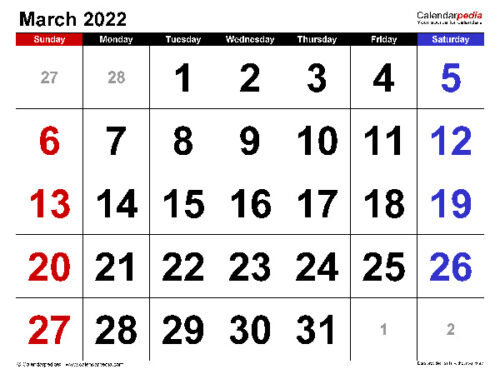
Hello March, nice to see you. It’s funny but I’ve realised that I have certain markers to get me through the back end of winter and into spring. At the start of the new year, I always think, ‘It won’t be long until my brother’s birthday (February) and then it’ll be mine (March) and then it’ll soon be Easter …‘ by which time there is usually some strength in the sun and the evenings are light enough to be useful.
Of course, Easter is a ‘movable’ date and due to ecclesiastical rules set centuries ago, there are actually 35 dates on which Easter can take place. The earliest possible date for Easter is March 22 and the latest possible date is April 25. This year Easter Sunday falls on the 17th April, so it is nearer the latter end of the spectrum, which means we should definitely be feeling the benefits of the sun and lighter evenings by then. Can’t wait!
Traditionally, (and backed up by A&E statistics) Easter is the time where most people start work in their garden, but as it is later this year, I highly recommend reacquainting yourself with it – your garden, not A&E – way before then. We have already cut a few lawns, and if you haven’t already done so, it’s a good idea to check your mower over, sharpen the blades, refresh the fuel if necessary (apparently that new petrol isn’t the best for rubber pipes and gaskets so stick with the old stuff if you can find it). And if you do need to repair or replace your mower (or other machinery) you will have time to do so before growth starts in earnest.
I always try to get as much done in my own garden at this time of year, as I know I will be ‘silly-busy’ in other people’s gardens once the season gets underway. I have significantly reduced a few hedges around the cottage, before the birds start nesting, so they are easier to cut back later in the year and added well-rotted manure to the veggie beds in preparation for a good growing season (fingers crossed) and to make sure there are plenty of crops for my wildlife visitors too (emoji eye-roll).
Hen Highlight
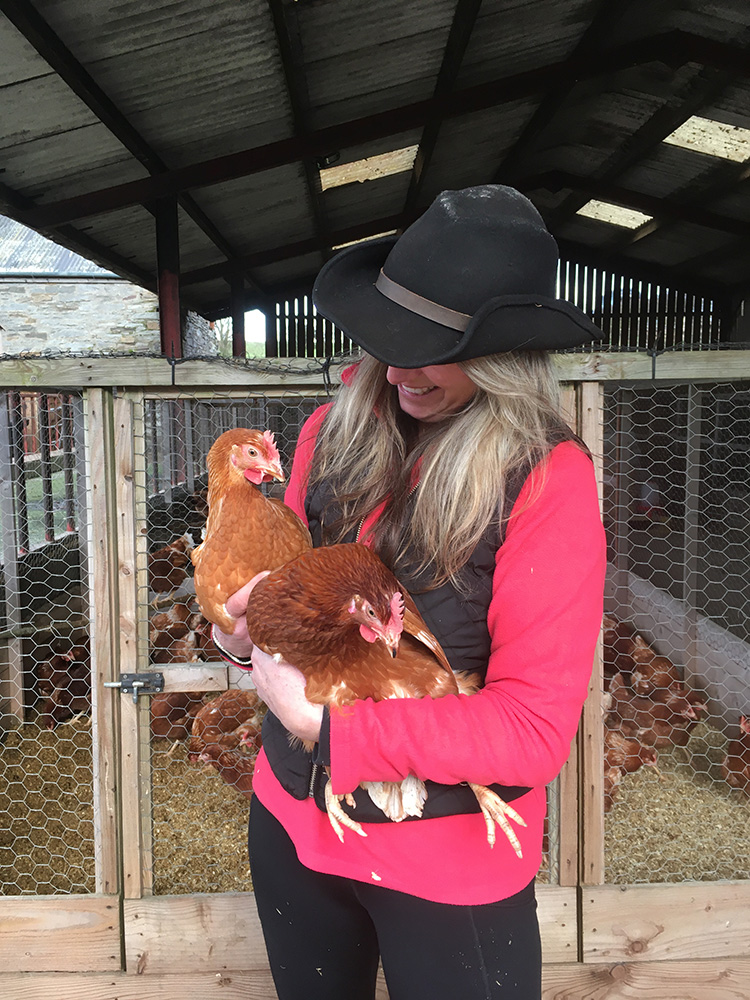 Most of my ‘home-work’ recently has been spent putting a net over my chicken run to abide by Bird Flu regulations and keep an annoying Goshawk out. I have also built a little rustic shelter for my hens to hide in if they have to and adapted a 50 gallon drum, laying it on its side, so that acts as added shelter for them too. They love congregating there – it’s just like Costas without the coffee.
I was able to get two more hens from Plas Poultry in Brecon last week and was just so childlike-excited about it. I woke up in the morning with that real happy-excited feeling but not quite remembering why for a few seconds. It was delicious. I down-played it to a friend cheerfully saying, “I can’t believe this is what my life has come to – the highlight these days is getting two new hens.”
He very astutely replied, “Or it goes to show how wonderful your life is that you can get such pleasure from two new hens”. Good point and a valuable reminder about the importance of perspective.
I was really impressed with Tom and Angharad’s beautifully kept birds at Plas Poultry and their im-peck-able professionalism. They also have a little farm shop, sell chicken coops with enclosed runs and have bred some of the prettiest little bantams that will be for sale this weekend. I may have to go back …
More details from www.plaspoultry.co.uk or call Tom on 07802846759
Oh My Darling Celandine
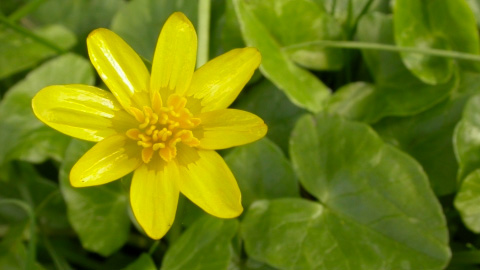 I love to see the sunny-yellow celandines out in hedgerows at this time of year – they were always one of the first flowers we looked for, or noticed, as kids whilst walking to school. They fascinated me as they respond to the daylight, opening out at dawn and closing up at dusk and they also close if it’s going to rain. The old Celtic name for them is ‘grian’, meaning ‘sun’. They were also one of the favourite flowers of poet William Wordsworth who wrote Ode to the Celandine. The fact that the humble little hedgerow plant is sometimes called ‘Spring’s Messenger’ also bodes well.
The celandines you will see flowering now are the lesser celandines (Ficaria verna), not to be confused with the greater celandine (Chelidonium majus) – they’re not even related. The lesser celandine is from the buttercup family whilst the greater celandine is from the poppy family – who said horticulture (or understanding families) was easy? A semi-synthetic substance called Ukrain – created in 1978, by a Ukrainian chemist – is derived from the greater celandine and promoted as a drug to treat cancers.
Last Sunday was indeed a ‘Sun’day – the first for a long time – and it was lovely to see my honeybees busy feeding on a neighbours stunning Camellia and my own winter flowering honeysuckle, Lonicera purpussi ‘Winter Beauty.’ I learned years ago, at ‘bee school’, that the winter honeysuckle is a fabulous source of early nectar for honey bees so introduced it to my (and a few other) garden. It also has the most wonderful fragrance so is a lovely addition to any garden – and maybe a nice present for Mother’s Day.
Dandelions are also a good source of early food for the bees, so what better possible excuse could there be for leaving them in your garden. Raise the blades on your mower and leave them in the lawn for the bees to feed on and leave them to flower in the beds and borders. Your garden is not just for you – it’s for the bees too.
New Seasons
I was sent a meme that made me smile this week – I’m sure a lot of you will recognise these ‘new seasons’. They go like this:
Winter
Fools Spring (where we are now)
Spring … of Deception
Third Winter
Mud Season
Actual Spring
Summer
Pretend Autumn
Second Summer (for one week only)
Actual Autumn.
Leave a Reply