
Taken from Lynne’s weekly column ‘Green Scene’ for the Western Mail
12th March 2022
 Let There be Light
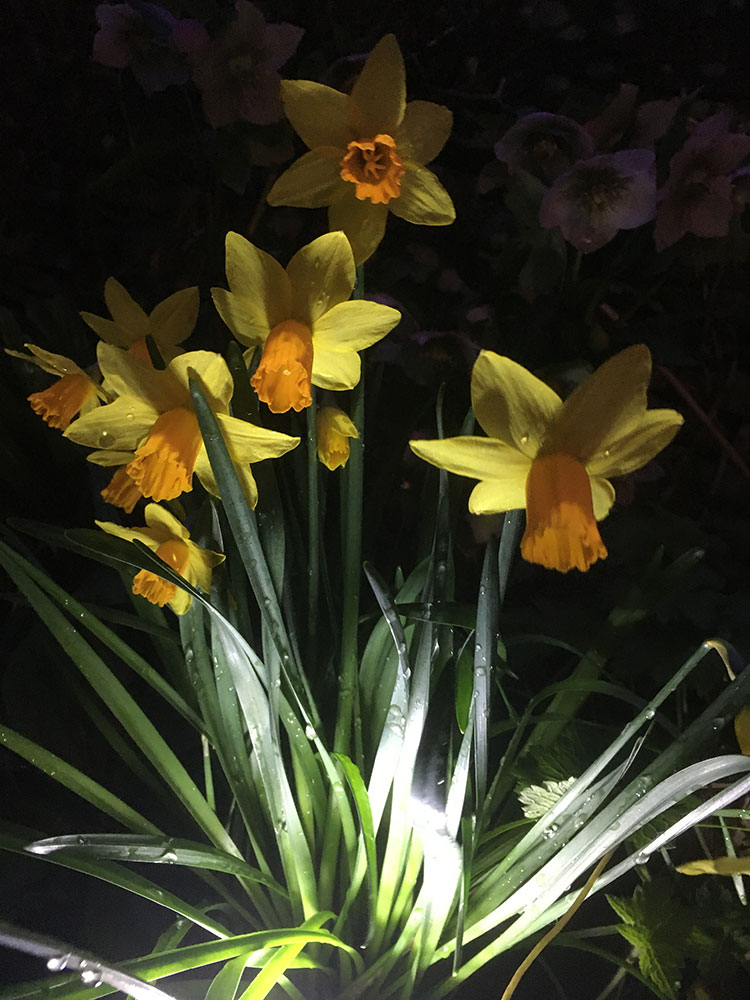
I do love my solar lights and have written about the various types and their attributes often in the column, but as the flowerbed outside my kitchen window hosts the most beautiful spring display of flowers I thought it would be nice to be able to prolong the time I can enjoy them.
The days are drawing out but it’s still dark around 6.00 pm and I wash up after that – so I have up-lit the daffodils. There has to be a joke about bulbs there somewhere but I can’t quite find it.
I don’t know why I haven’t thought of doing it before as it makes so much sense to uplight things that can be appreciated in the longer darker evenings.
I used a single solar uplighter, and they have improved so much that they don’t need sunshine to work now, just daylight. And then I put a net of solar fairy lights at the back of the bed on the wall. It has made washing up far more enjoyable – and also gives me a boost every time I walk into the kitchen and look out the window. Little things maybe, but they are the things that matter most.
Act Swiftly
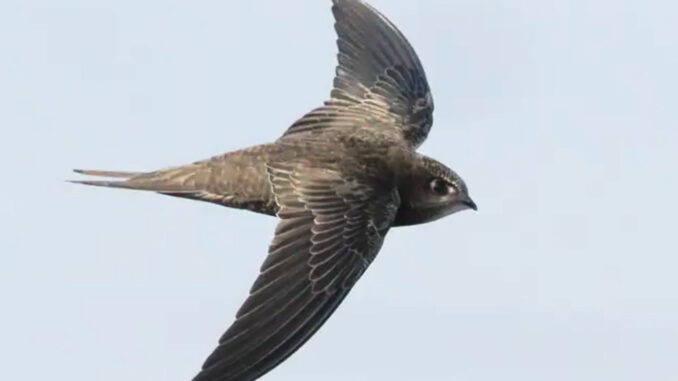
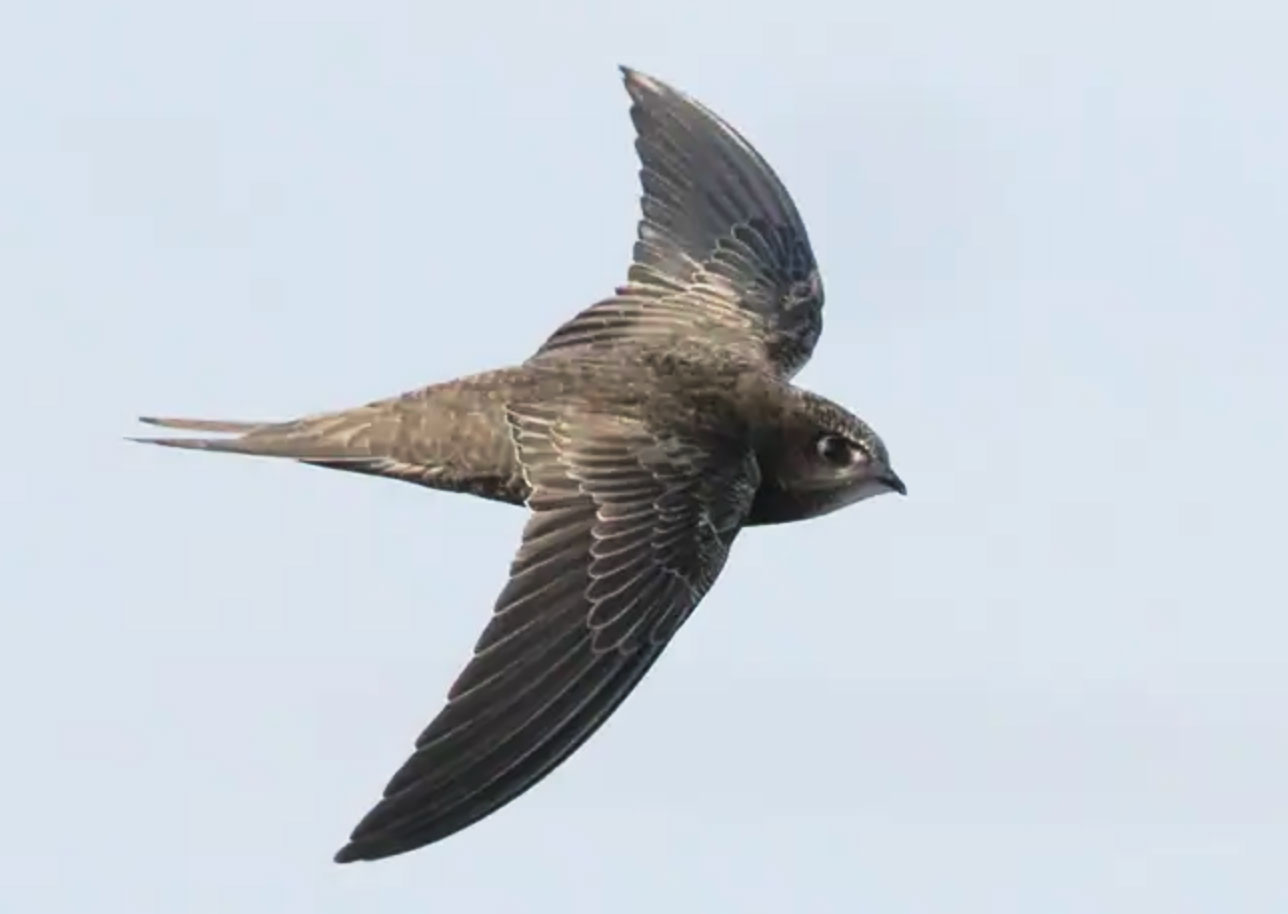 The RSPB is calling on all homeowners and businesses to take some simple steps to help save swifts, as their numbers have plummeted by half in just twenty years. Timing is all-important, as soon swifts will be making their epic 6,000 mile journey here from Africa to bring up their chicks. The swifts that nest in the UK usually arrive here during April and May and will spend just 3 months with us. Sadly for many, finding somewhere to build a nest will prove a real challenge as homes are being developed without suitable nesting spaces and without consideration for our super fit feathered friends.
Swifts are incredible birds, spending most of their lives on the wing and only landing when it’s time to nest. After flying its nest for the first time, a young swift may spend two or three years in the air, eating, drinking, sleeping, bathing and even mating. You won’t see them ‘sitting down’, perching on telegraph wires or fences. They actually have tiny feet and legs, and can hardly walk, which is why they have honed such amazing ability in the air.
Swifts nest in holes, often inside old buildings. You’ll never see them building a nest outside and if you can see an obvious nest, it’s definitely not a swift.
But the hardworking birds are struggling to find homes, as modern and renovated buildings lack the nooks and crannies they need to make a nest. So the RSPB is appealing to the public to help provide as many new homes for them as possible by putting up special swift boxes, which replicate natural nesting spots. I think they would make a fabulous present – for the recipient and the swifts – and Mother’s Day is at the end of the month, so what better present than providing accommodation for a family of swifts? Beats chocolates and flowers if you ask me!
If you’re having a building constructed or renovated, there’s also the option of the ‘swift brick’. This replaces a standard house brick and can easily be installed by a builder. Swift nestboxes and swift bricks can work especially well when put up in groups, as these birds like to be near other swifts.
Please do what you can to help save our swifts; more details, including how to make your own swift box at the RSPB website.
Dog Tired
 Believe it or not, World Sleep Day is an annual event celebrating sleep, but also a call to action on important issues related to sleep and the consequences of lack of it. Organised by the World Sleep Society ,World Sleep Day is held the Friday before Spring Vernal Equinox of each year and this year happens to fall on my birthday, the 18th March.
One of my (numerous) favourite books is by Matthew Walker and titled Why We Sleep.
It is a real eye-opener (pun intended) and explains why good sleep is so much more important for good health than most of us realise. For example, studies found that a lack of sleep has similar effects to being drunk, with slower reaction times and a shorter attention span. The Sleep Council estimates that a third of us get just five to six hours of sleep a night, putting us at almost twice the normal risk of having a motoring accident.
An old proverb states that the best medicine is a good laugh and a good sleep – I would add ‘a good dose of fresh air’ to that and agree wholeheartedly. Legend also says that when you can’t sleep, it’s because you’re awake in someone else’s dream. That always intrigues me.
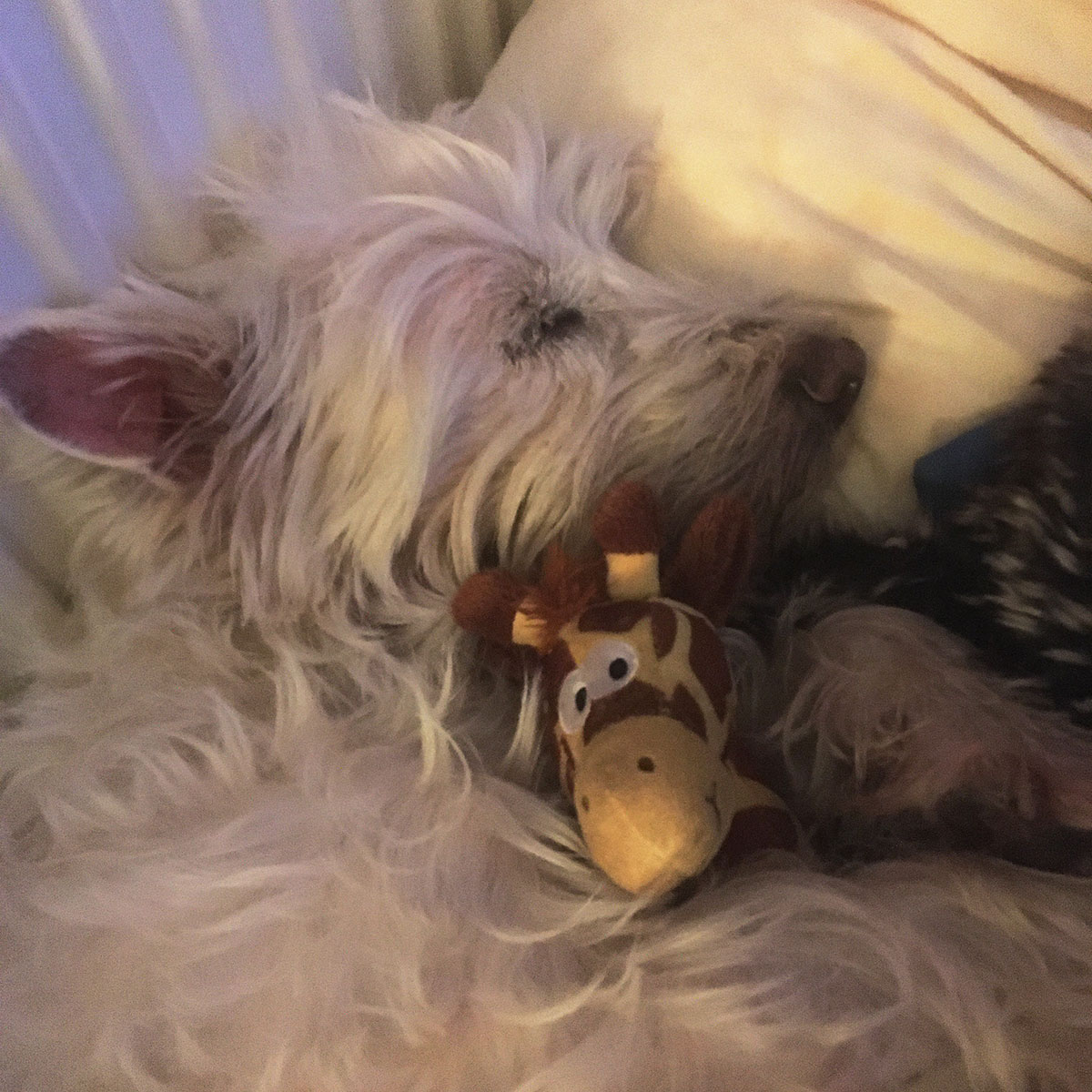
On average humans spend 1/3 of their life sleeping and are the only mammals that can and will choose to delay sleep. I have always admired Yogi’s ability to sleep whenever the opportunity arises and just can’t resist taking photos of her whilst she is snoring blissfully.
Cat owners won’t be surprised to read that two thirds of a cat’s life is spent asleep, but more surprising is that a giraffe only needs 1.9 hours of sleep a day, whereas a brown bat needs 20 hours a day. We all know someone who must be part bat or giraffe!
We all find it challenging too get out of bed some mornings but continued difficulty, often linked to chronic fatigue syndrome, is known as Dysania.
Apparently 41% of the British population sleep in the foetal position and the five other popular sleeping positions include the log, yearner, starfish, soldier, and freefaller. Your preferred sleep positions can also reveal some personal traits according to Professor Idzikowski, who suggests that those who sleep in the foetal position “may appear tough but are actually sensitive souls right to their core.”
You can find out more about the other types here www.sloanmagazine.com/sleeping-position-personalities
Ideally, falling asleep at night should take you 10-15 minutes. Ironically, if it takes you less than five minutes, chances are you are overtired and therefore sleep deprived.
And possibly the least surprising fact about sleep – studies have shown that high earners (those earning around £65 – £75,000 per annum) get the best sleep.
I can dream …
Leave a Reply