
Taken from Lynne’s weekly column ‘Green Scene’ for the Western Mail
26th April 2025

Late Leafing
It wasn’t only Easter that was ’late’ this year. The latest possible date for Easter Sunday is April 25th, making this Easter the latest it could be this year. Unlike Christmas, Easter is ‘moveable’, which it can fall on any Sunday between March 22nd and April 25th, based on the Gregorian calendar. Next year Easter Sunday will be on the 5th April and in 2027 will be 28th March.
But trees are also late coming into leaf this year. It is probably mainly due to last autumn being unusually warm and wet, which can cause trees to hang on to their leaves, result in later autumn colours and therefore delayed leaf shedding. The brief cold snap we had recently will have also contributed to ‘lazy leafing up’.
The initial phase of spring growth is always flowers. The flowering parts of trees and shrubs are only included in the resting buds that form in the late summer and early autumn, just prior to leaves dropping. All buds resting over winter require two to three months of chilling to break their inbuilt dormancy and prepare for flowering.
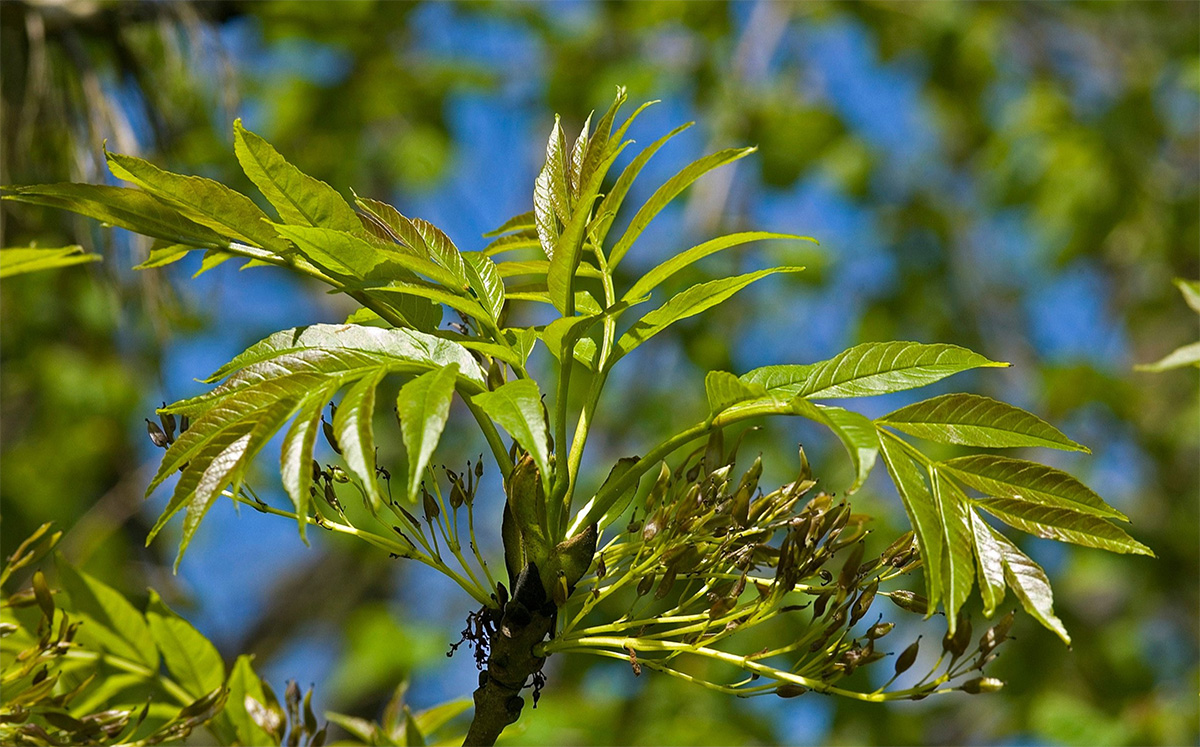 Despite the saying, ‘Ash (in leaf) before the oak only a soak, oak before the ash in for a splash’, ash trees are usually out after the oak.
I always recall one elderly man I worked for, indignantly telling me every spring, “I have never seen the ash before the oak’.
Indeed, the ash are usually the last trees to leaf up at the end of April, often after other trees have already fully developed their foliage.
Currently the ash and oak are ‘neck and neck’ unfurling their leaves, so maybe we’ll have some ‘balanced’ weather for summer.
April Blues
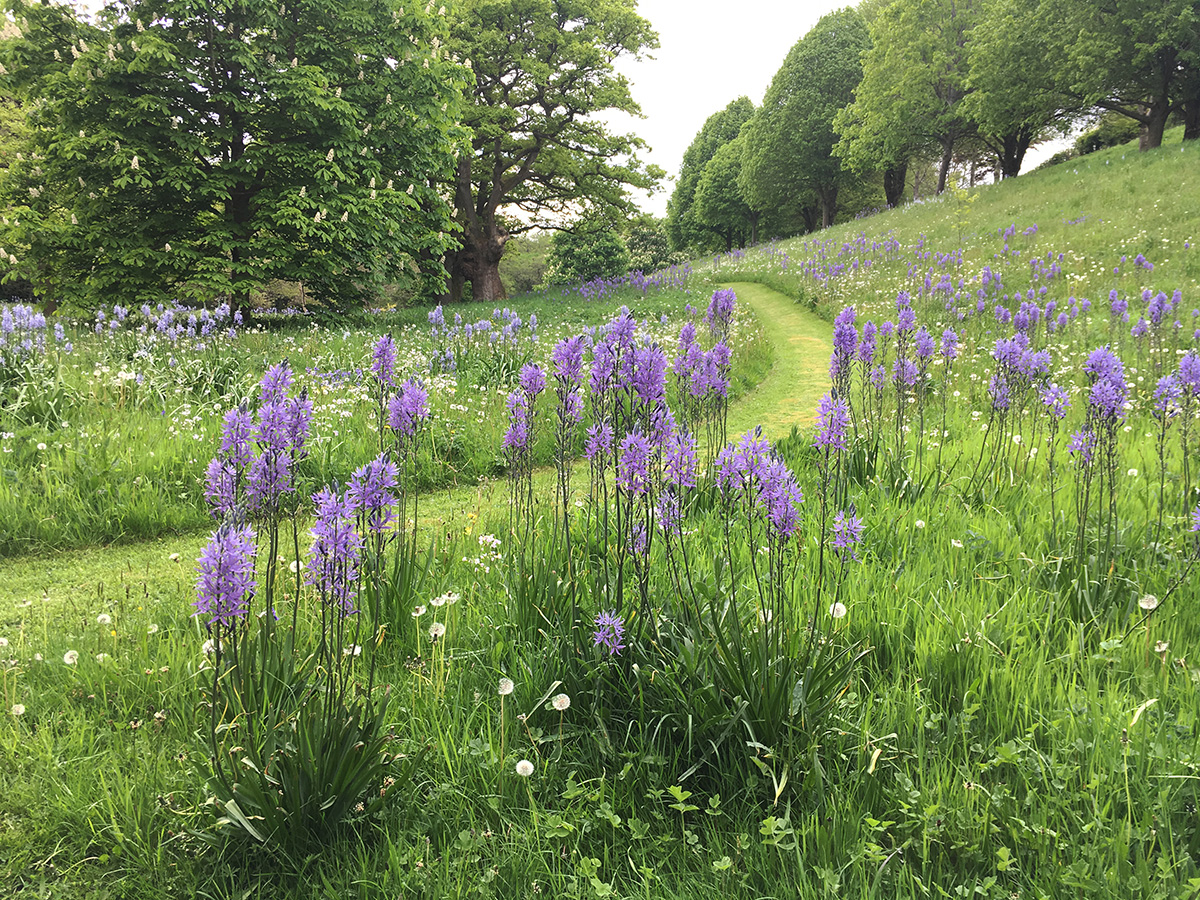 I have mentioned that I always see March as a yellow month, with daffodils, forsythia and winter hazel boasting golden blooms, then that morphs into a ‘pink period’ in the garden thanks to flowering camellias, cherry blossom and Ribes, and now is definitely blue time. Bluebells and Camassias are both providing those stunning, beautiful blue carpets.
We are all familiar with, and appreciate the beauty of bluebells, but I am also a huge fan of Camassias, and am always perplexed by the fact they don’t seem to be as popular as I think they should be. I’m not sure if the fact they look a little bit exotic makes people think they are hard to grow but they’re actually amongst the least demanding flowers you can choose for your garden.
Also known as wild hyacinth, Indian hyacinth, quamash or camas, they produce tall spires of blue, (most common) white or occasionally pink star-like flowers in late April, May and early June. Grown from bulbs that are planted in autumn, they come into their own at a time of year when many spring bulbs have finished flowering and early perennials are yet to flower and often when the bluebells have finished their ‘hoorah’.
Camassias can be planted in borders or pots and look particularly good planted with early perennials such as polygonatum (Solomon’s Seal) or dicentra (Bleeding Heart). They also look fabulous against the acid yellow of euphorbia or at the base of complimentary-coloured wisteria.
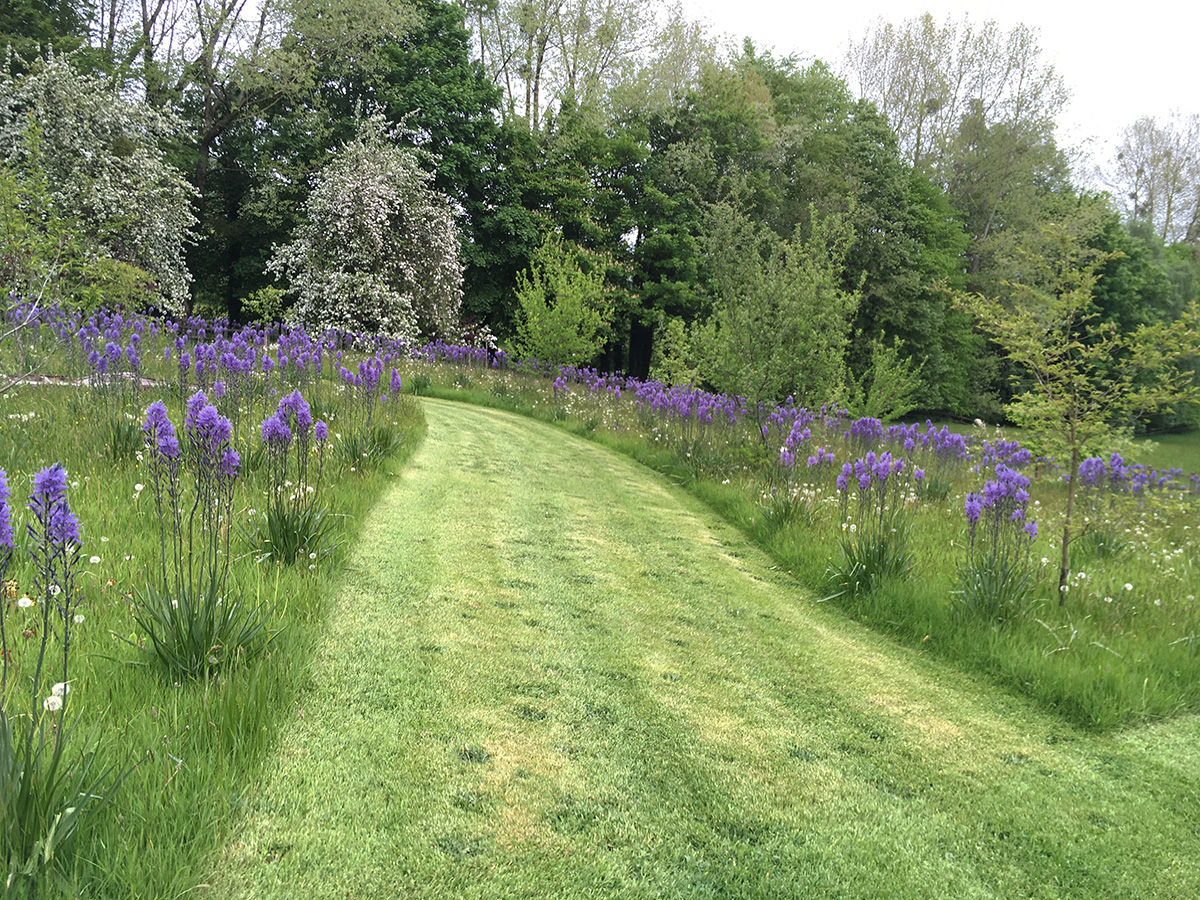 They’re also perfect for naturalising in grass and look good growing near a stream or pond and under deciduous trees. Whilst I love them wherever they’re grown, they are always best planted ‘en mass’ for the best effect and will reward you by flowering more prolifically each year.
Make a note to include them in your shopping basket in the autumn to plant out during September and October. They are so undemanding – and are happy in heavy clay soil, acid, neutral or alkaline soil and full sun or part shade. Completely hardy, they come back year after year, and whilst bees share my love for them, it seems that neither slugs nor snails appreciate them. That’s good news. They also make good cut flowers, lasting well indoors in a vase. While some varieties can reach around 90cm tall, they have sturdy stems that don’t need staking. Allow the foliage to die back naturally after flowering, like all bulbs, and divide congested clumps in summer and replant to spread the joy.
All in all, they are wonderfully low maintenance with high rewards, so c’mon, let’s all celebrate and choose Camassias.
Awesome Amphibians
 There seems to be a day to celebrate everything these days – yesterday was National Hug a Plumber Day and World Penguin Day. Monday 28th is Save the Frog Day. Whilst I’m not prioritising frogs over plumbers or penguins, I do feel that frogs deserve more recognition and gratitude, so ‘their’ day is a good time to promote that. I was shocked to read that certain species of frogs are in just as much danger of becoming extinct as bees are. Save The Frogs Day aims to raise awareness about these amazing amphibians and everything they do for us – especially gardeners.
The first ancestor of the modern frog dates back to the Triassic period and since then, these almost entirely carnivorous ‘grafters’ have been devouring every known type of insect world-wide. That might not sound too brilliant at first but they are responsible for eating tons of mosquitoes and midges every year and when you think how much they weigh, that’s a serious amount of the blood-sucking b*ggars.
Sadly, there are 549 frog species assessed as critically endangered and it is believed that over a hundred species of frogs have vanished from the world just since the 1980s.
Although still prevalent throughout the UK, our common frogs have also declined in number in recent years. Loss of breeding habitat is a big factor, with an increasing number of ponds being filled for development or lost through mismanagement.
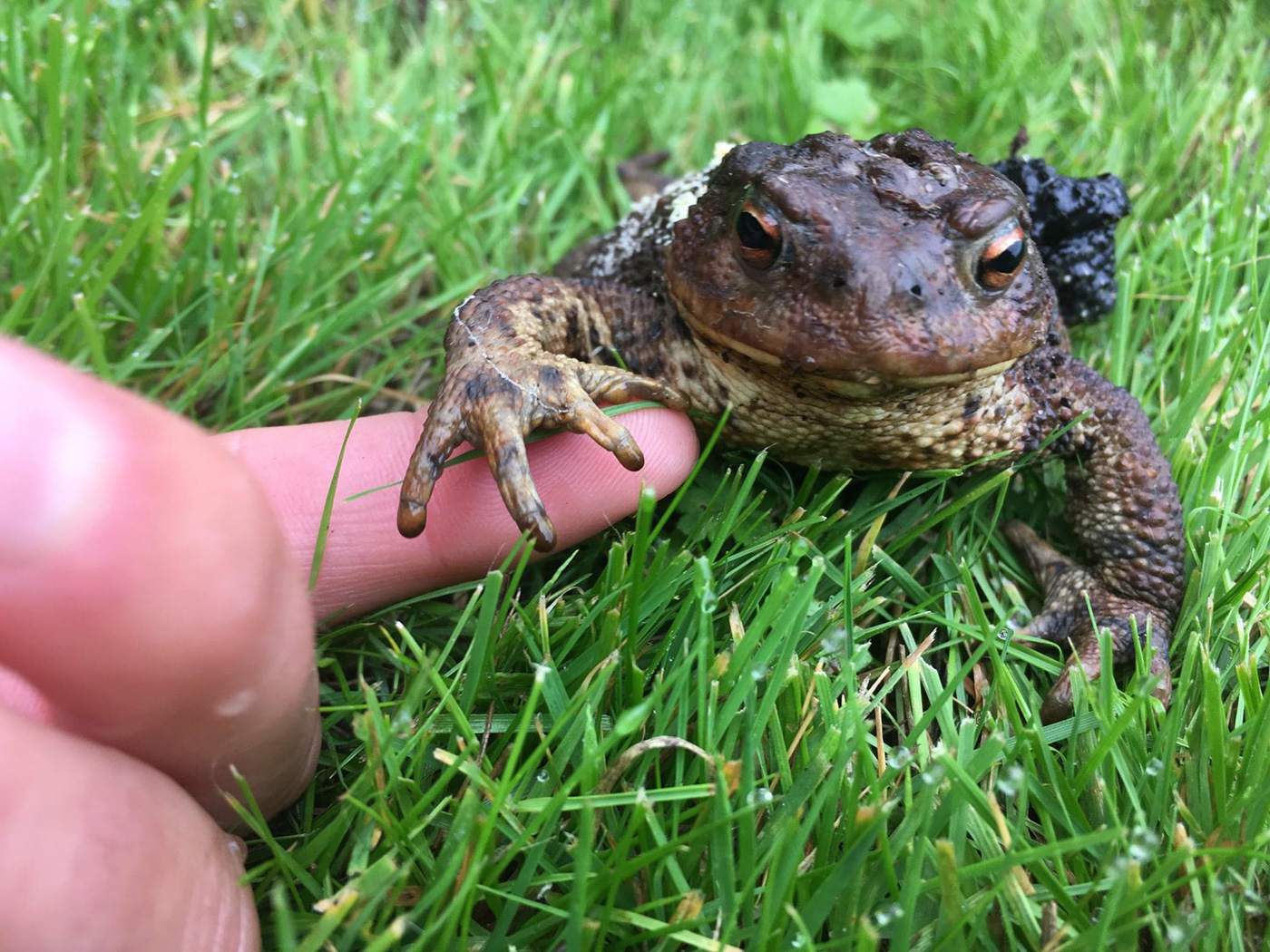
Frogs and toads are often misidentified – and even worse, the terms “frog” and “toad” are often used interchangeably. There are key differences, with frogs generally having smoother, moist skin and long legs for leaping, while toads tend to have dry, bumpy/warty skin and shorter legs for walking or crawling.
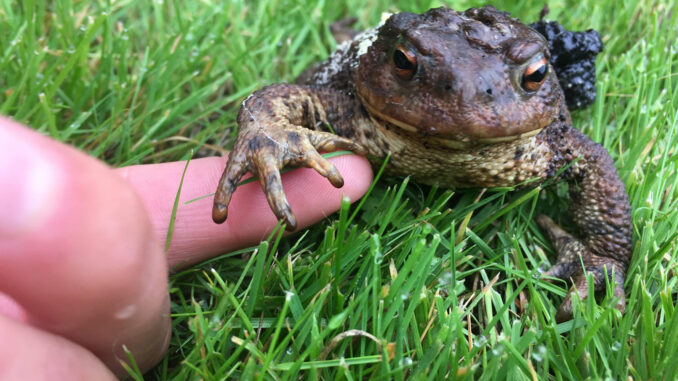
The handsome amphibian holding my hand in the photo is a toad. Toadally adorable.
Leave a Reply