

Taken from Lynne’s weekly column ‘Green Scene’ for the Western Mail
30th March 2024

Mellow Yellow
I’m not quite sure where March went. I still think that January felt like 2 months, and now March has felt like 2 weeks. Is there such a thing as the Monthapause … there is now!
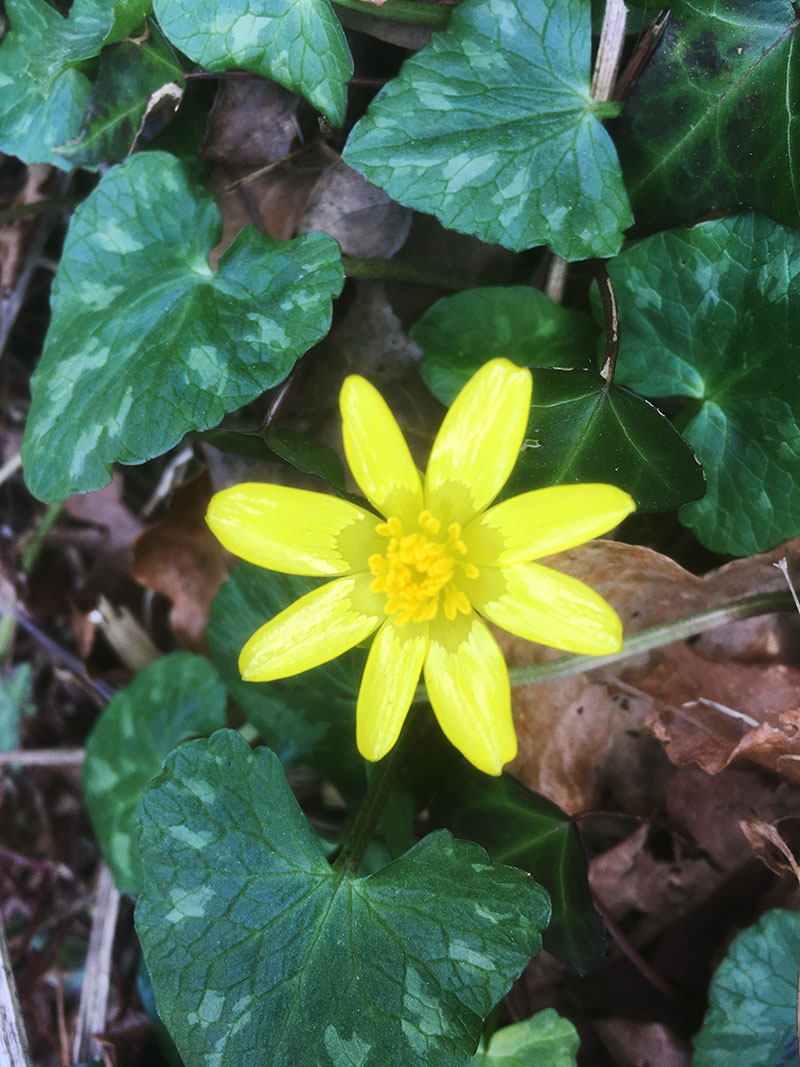
I always think spring, and March in particular, is a very ‘yellow time’ in the garden. There are the daffodils of course, but also the primroses, forsythia and celandines. The celandines remind me of some people I know – there are all very cheery and ‘open’ when it’s sunny and as soon as it clouds over, they close up and shut up.
Of course as well as the ‘mellow yellows’, there are other colours including the ‘pretty pinks’. The magnolias – so far having escaped the usual frosts that brown their tender petals and which always seems like bad planning on the magnolias part. With petals that delicate, best to save your blooming until May!
And the beautiful spring blossoms of the ‘Cherry Plum’, or Prunus cerasifera, also give my yellow-March theory a run for its money. Of course, there is a possibility that the eye-catching blossom you are admiring could be plum or even blackthorn, although the thorns on blackthorn give its identity away.
Even with the increased forays into foraging, few people realise that cherry blossom is edible. Try picking a few bunches on a nice dry day (that could be challenging) and you can include the little stalks as they contain much of the flavour and add a lovely pink tint to the cordial. Put the blossom in a bowl, cover generously with boiling water and leave to cool. Strain and add a little lemon juice or honey if you like, but the fragrant cordial is tasty without any additions and has a natural hint of almond. Some people say it is the champagne version of its ‘sharper’ elderflower counterpart. The blossoms can also be candied like rose petals or added raw, along with young cherry tree leaves, to a salad.
The fresh, bright green hawthorn leaves from hedgerows can also be eaten as salad leaves now. They have a lovely nutty flavour and my nan used to add them to sandwiches at this time of year, calling them ‘bread and cheese’, although I have no idea why. Very young beech leaves can be used in the same way and also had the same unfathomable name.
Real Seeds
Like many viewers, I suspect, I was taken with the Aztec broccoli I saw on Gardeners World last week and have ordered some from Welsh-based, ‘Real Seeds’. I am a sucker for any veg that is ‘easy to grow’, and of course I couldn’t just order one thing so had to scroll through their fabulous seed lists, with several other ‘easy to grow’s being ‘added to basket’. I had to smile when I read, ‘We don’t like things that are fiddly or difficult to grow, so we just don’t offer them.’ on the Real Seed website. That’ll suit me.
I always like to try a new vegetable each year and it seems that this year most of my home-grown vegetables will be new varieties (to me). They are all from The Seed Detective or Real Seeds so no hybrids or genetically modified seed either.
The other thing that Real Seeds pride themselves on is, “One of the aims of the company – written into its deeds – is to encourage home seed saving. All our varieties are real, open-pollinated seed (non-hybrid), so you can save your own seed for the future, using instructions we supply. We have written freely-copyable seed-saving guides, and we sell a more detailed seed-saving book at a subsidised price. There’s really no need to buy new seed every year – you can just save your own.”
Surely that is recycling at its original and best.
All White
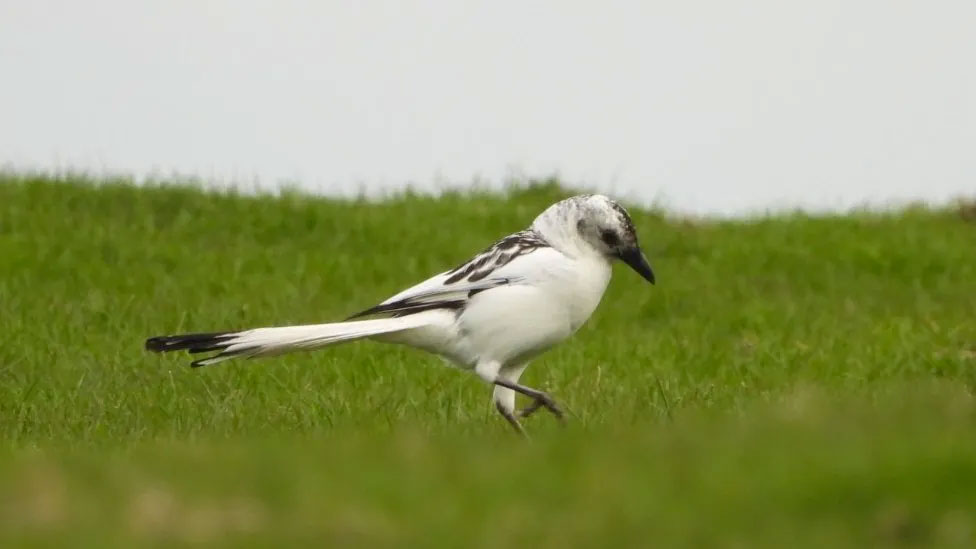 An amateur photographer, Terry Wright has spotted and ‘snapped’ an extremely rare ‘white magpie’ in Pembrokeshire recently.
It reminded me of seeing a ‘white blackbird’ a few years ago – and sharing it with you all in this column. My research showed that ‘my’ blackbird and Terry’s magpie are ‘leucistic’, which means they lack pigment in their feathers, so just have white feathers – usually with a few black markings – but are otherwise healthy, although often ‘preferred’ by predators.
In The Pink
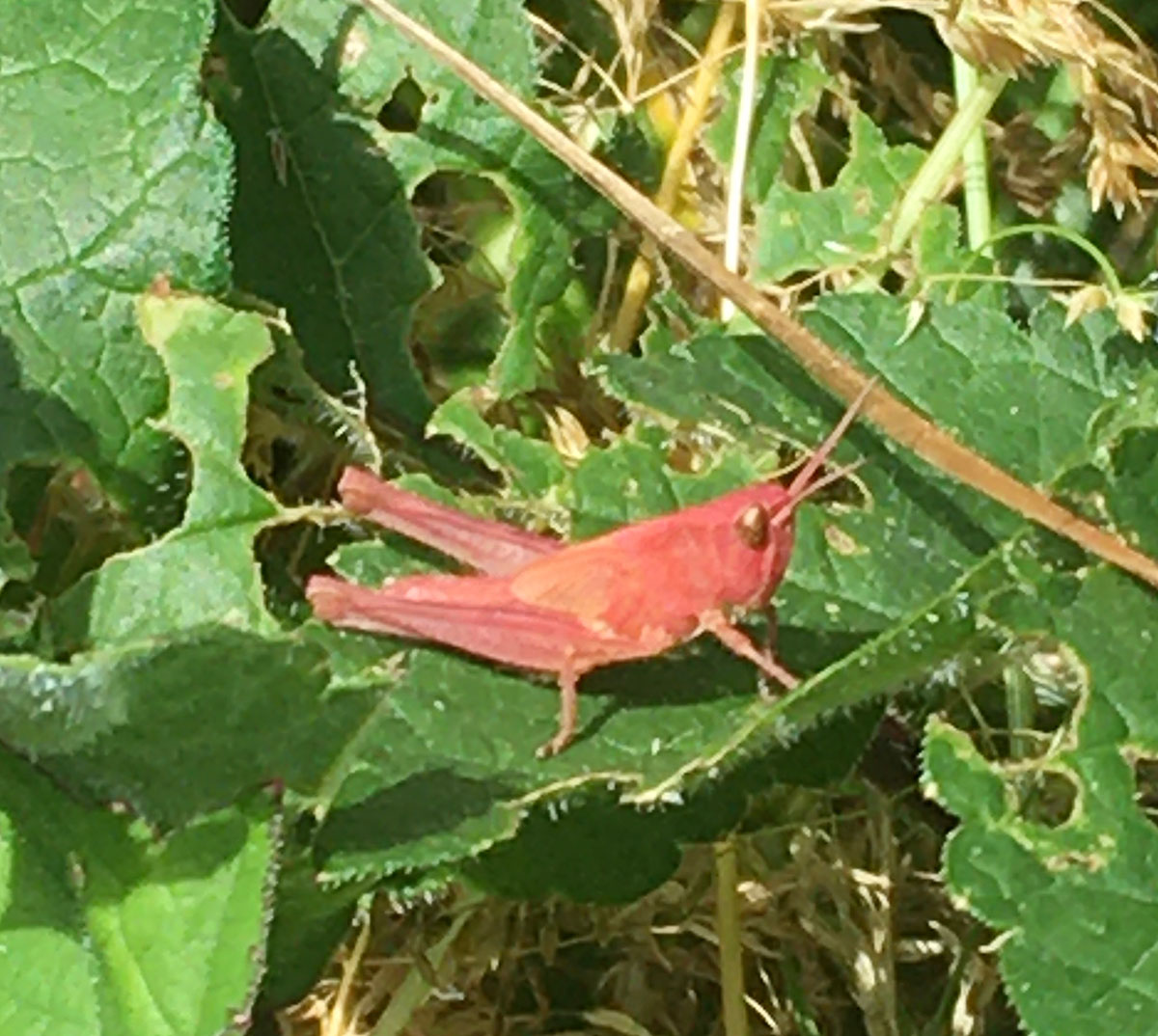 I was also lucky enough to see a very rare pink grasshopper in a client’s garden a couple of years ago.
It transpires that on rare occasions a genetic mutation causes the normally greeny-brown hoppers to turn pink.
Ironically, this makes them even more unlikely to be spotted by a human, as their bright colours mean they are unable to hide from predators and do not survive very long. There is apparently a 1% chance of seeing one in your lifetime.
And yes, I realise it is April Fool’s Day on Monday but honestly – ‘my’ white blackbird and pink grasshopper do really exist – it’s not an April Fools joke. I’ve spared you that this year.
Stay Safe
Research shows that most people start work in their own gardens on Easter holiday weekend and of course, there’s always a lot of DIY done during that break too. So it’s no surprise really that the numbers of visitors to accident and emergency departments also increase on Easter weekend. Suffice to say, if you are undertaking any jobs in the garden or house this weekend, please be safe and not a statistic.
Similarly, vets report an increase in dogs being admitted after having eaten chocolate – which is poisonous for dogs. So please keep your chocolate goodies, and any other treats, out of reach of your four-legged friends.
A friend sent me a ‘saw this and thought of you’ card last week adorned with the quote, “If you have a garden and a library, you have everything you need.” (Cicero) and the words inside … ‘and a dog, of course.’ Of course.
Have a lovely, safe Easter and remember to put your clocks forward an hour on Sunday night. Hooray!
Leave a Reply