
Taken from Lynne’s weekly column ‘Green Scene’ for the Western Mail
5th August 2023

Keep Sowing
August already – how did that happen? Although, whilst gardening, it feels like we have gone back to April, with everything growing with that super-spring energy and super-charged with April-esque showers. And yet, the early mornings also now have that autumnal feel about them already. As you can tell – I don’t really know what month it is!
I do know that for a lot of people gardening has lost it’s appeal by this time of year, as enthusiasm for ‘going on holiday’ replaces any enthusiasm once felt for ‘growing your own’. I completely ‘get it’, if it’s any consolation, professional gardeners also wane a bit now too – Bank managers tend to keep us motivated! However, there is a lot of ‘good gardening time’ left yet, so try to stay enthusiastic. There is still time to sow some veggie and leafy salad seeds for late crops and of course to plan for winter veg.
As Monty Don says, “August is a great time to sow seeds and plant young plants in the UK. On the vegetable patch, sowing and planting out now will keep your cropping season going, providing you with short-term harvests of salad leaves and other quick-growing crops such as radishes, along with longer-cropping plants like winter cabbages. For veg that need a bit of time to crop well, planting in August will ensure plants get plenty of sunshine and warm temperatures before autumn sets in.”
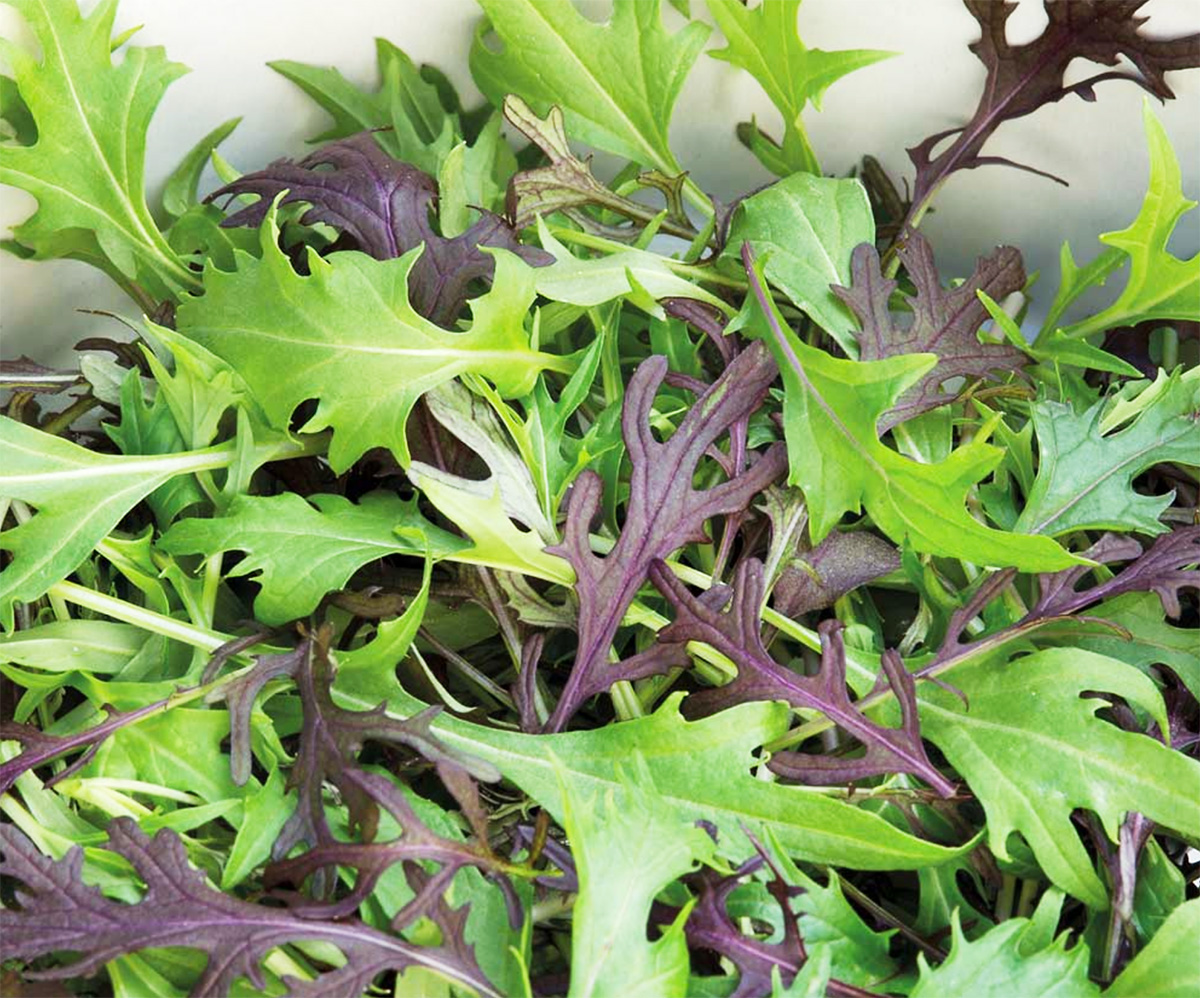 The rabbits had my spring sowing of lettuce and after sulking for a couple of months, I have just made several new sowings of ‘Four Colour Mizuna Mix’ from Thompson & Morgan which should be ready to harvest in 6 weeks. Mid-September will soon be here – and will probably bring summer with it.
I’ve also sown some more beetroot – I am confident that we will have a summer-like autumn and therefore they won’t know what month it is either.
Plenty of salad crops will grow outside in winter with a little protection. The key is to get them in the ground in early autumn whilst the soil is still warm so seedlings or plug plants will establish quickly when planted out. I’m going to sow some corn salad and winter purslane in trays and bring them on in the greenhouse before planting out at the end of the month. I’ll also sow some directly into the soil now. It will be interesting to see the difference – and of course so much will depend on the type of winter weather we get. I will have to provide some protection with a cloche when the temperatures fall. It can be a good time to buy things like that now – ahead of the winter – as you can get some good deals.
You can ‘get sowing’ in flowerbeds too. Obviously you won’t see the rewards this year but sow hardy annuals now you’ll have a good head start with colour in the spring. Colourful and easy to grow, calendula and cornflowers can be sown directly in the ground or in pots during August and September for earlier flowers next spring.
Just mark where you have made the sowings as the chances are you’ll forget!
Runner-way Success
 And for those who have noticed my obsession with my runner beans this year – I win! I have already had a meal of the most delicious butter-soaked sliced runner beans.
Hopefully I will have more than one meal but just in case, I want you to know that against all odds – drought, high winds, heavy rain, rabbits, pigeons, and moles – I triumphed.
My brother is a huge advocate for ‘little wins’ and as the saying goes, “Success is only a series of small wins.” Now if only I can win with my lettuce.
‘Allot’ of Advantages
 National Allotments Week 2023 runs from 7th-13th August and this year marks the 21st celebrations for the National Allotment Society. During the last 21 years the Society has used the ‘national week’ to raise awareness and share the advantages of allotment gardening for communities, individuals, and the planet.
Each year there is a different theme with this year’s focus being on ‘soil health.’ It took me a long time to realise the necessity of taking care of your soil when growing veggies. I think a lot of people underestimate the importance of good soil health and it’s helpful that the National Allotment Society is using the next week to remind and re-educate all gardeners about the benefit of caring for the soil.
You can find out more at www.nsalg.org.uk/news-events-campaigns/national-allotments-week/
Mind, Body and Soil
Horticulturist David Domoney agrees with me that the weather is often the trickiest part of gardening, saying, “The trouble is that we often get two or three different ‘seasons’ of weather in one day.” David started his horticultural career as a buyer for garden centres, and told me “It was fast paced, entertaining and I travelled the World. One day I would be buying glazed pots from the Dragon Kilns in Vietnam, the next I’d be choosing bulbs from the fields in Holland and maybe the next, buying garden furniture from Italy. After ten years of buying I decided to trade the boardroom for the shrub border and my suit for jeans, and became a ‘proper horticulturist’.”
Well known for his eccentric horticultural style and tips, like using bananas, vodka, eggs, aspirin, beer and even Viagra to feed his plants, he was happy to share some of his weird and wonderful facts about soil.
Either directly or indirectly, 95% of our food is produced on our soils. Nutritious and good quality food and fodder for animals can only be delivered if soils are healthy.
25% of all known species on Earth call soil their home, including woodlice, ants, springtails, earthworms, earwig, mole and pseudoscorpion. The soil also depends on these living organisms to stay fertile.
Soil is vital for purifying and storing water and soil without earthworms can be 90% less effective at soaking up water. The casts of earthworms act as channels, which allows air and water to get into the ground.
It can take 1,000 years to form just one centimetre of soil. For this reason, soil is seen as a ‘non-renewable’ resource, because the formation takes hundreds to thousands of years. The process will take longer in colder and drier areas compared to those that are warmer and wetter.
Moles can eat the equivalent of their body weight each day in earthworms and invertebrates. As they are part-time soil dwellers, they help to fertilise the soil by mixing plant litter, seeds and faeces into the soil. They also create airways and passages for water to run through.
A study showed that a bacterium found in soil can boost resistance against stress and reduce inflammation. A further case showed the positive impacts to children who grow up on farms, with exposure to beneficial bacteria, showing they are more resilient to stress and less likely to develop mental illnesses.
As Franklin D Roosevelt warned, “The nation that destroys its soil destroys itself.”
Leave a Reply