
Taken from Lynne’s weekly column ‘Green Scene’ for the Western Mail
11th January 2025

Good B-eyes to Foxes
We’ve had snow! Not exactly ‘pizza snow’ (deep-an’ crisp an’ even) but substantial enough for Yogi to do ‘dog angels’ and snow ploughs, and for me to do one of my favourite snow-things; identifying the various animal tracks left in my garden.
Not surprisingly there were the quite easily-identified rabbit tracks (although they could be squirrel, as they’re very similar) but also a track that I didn’t recognise. Google suggested it could be a sloth, a rhinoceros or a deer – by a process of elimination I don’t think it was any of those, so I am still researching.
A quick check around the Hen Pen reassuringly showed a lack of any prints at all – it’s a good way to see if you have a visiting fox.
Tragically, just before Christmas a client lost 12 of their chickens to a fox. It’s all a part of nature but also heartbreaking.
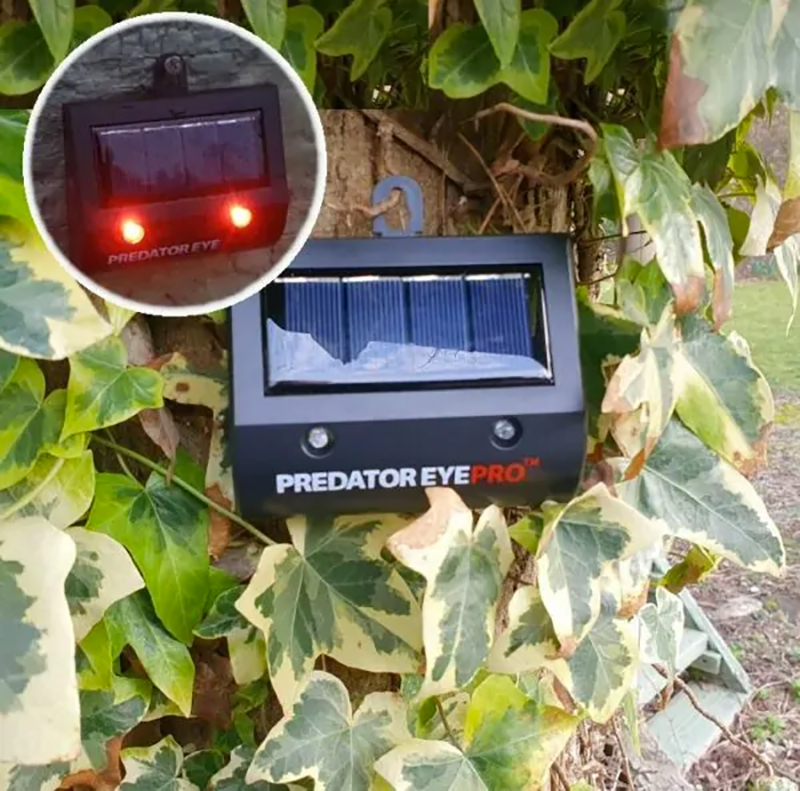
One of the most effective ways I have found to deter foxes – and apparently other predators – is the Solar Predator Eyes unit. It sounds a lot more technical than it is. These solar powered units were called Nite Eyes when I first purchased them. They claim to repel foxes, badgers and deer by mimicking the eyes of a predator.
I can vouch for the deterring of foxes but not badgers or deer – or sloths and rhinoceroses, if Google is right about my snow tracks. Anyway, the solar powered unit charges by day and then comes on automatically at dusk when your hens are at the greatest risk. Chickens – nor Yogi – are bothered by them. They are waterproof and easily fixed to a fence, or can even be freestanding.
The ‘eyes’ are extremely powerful, as a neighbour who lived three fields away asked what they were, so it’s no wonder they ‘persuade’ a fox to go elsewhere for dinner. Available from www.greengardener.co.uk
People Dig ‘No Dig’
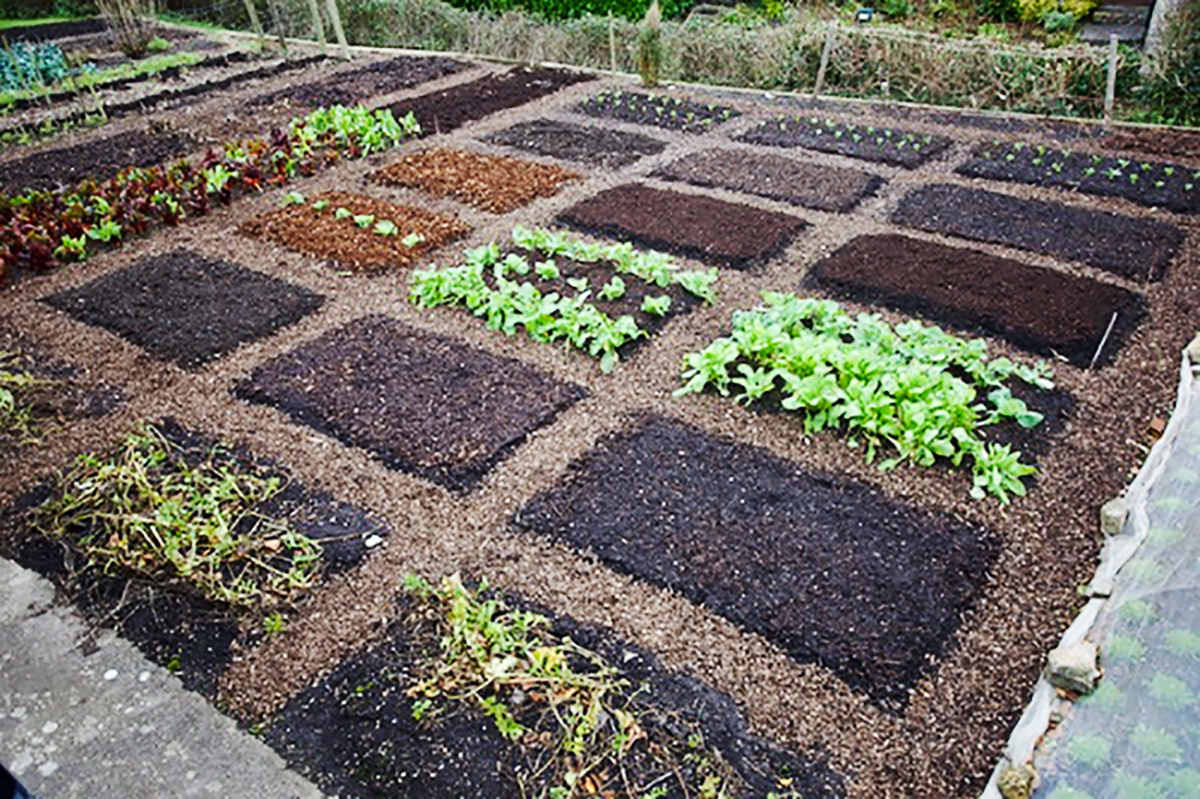 As part of my ‘apprenticeship’ with Dad years ago, each year I spent days double-digging various veggie beds in a client’s walled garden. Whilst I am proud to be able to do this ‘wonderful-workout’ properly and have experienced the satisfaction of being responsible for a beautifully turned over veg patch, and feeding numerous robins in doing so, I – and my back – now favour the No Dig method.
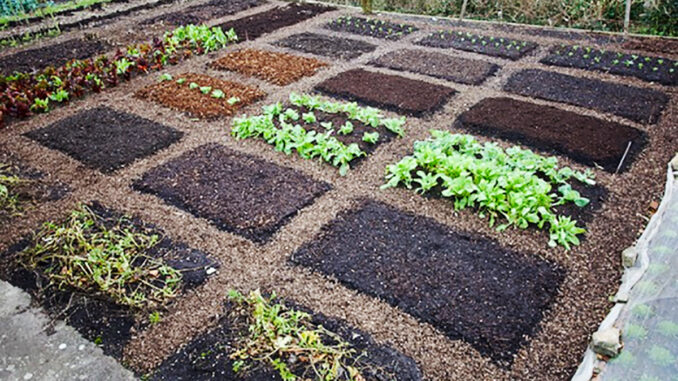
For the last few years I have promised myself (and my back) that I will put more of my own veggie patch over to No Dig and it is slowly happening, although it looks nothing like the enviable neatly made beds in Charles’ trial area shown in the photo. These beds are 2 m by 1.2 m, (6.5’ x 4′), which he advises is a great size for manageable beds and likewise the 35cm paths. The total area they comprise is just 60 m² (645 ft.²) and last year the area yielded almost half a ton of food (455 kg), including 68 kg squash, 52 kg potatoes, 48 kg beetroot, 53 kg lettuce, 41 kg broad beans with pods, and 43 kg cabbage hearts.
If that’s not an incentive to go No Dig, I don’t know what is.
When starting No Dig, especially with a lot of weeds, the two options Charles recommends are either putting cardboard over the weeds and putting compost on top of the cardboard, or putting a good layer of compost on the weeds with black plastic on top of the compost.
It’s optional whether you cut the weed stems before spreading compost, but it makes it easier to spread the compost evenly and assess the depth. It’s also slightly more satisfying.
Whilst pernicious weeds like ground elder will (apparently) succumb, you will need to dig out brambles and woody weeds. If the ground is very uneven, it is worth spreading some soil in the hollows before starting. Don’t use compost as infill as the volume shrinks, the compost disappears and the hollows remain.
Charles is being kept even busier as No Dig takes off ‘in spades’ around the world – it’s particularly popular in Poland, becoming so in the States and he has recently even given talks on No Dig in the Caribbean.
Even ‘our very own King of Spades’, Terry Walton, recently admitted he is slowly being swayed over to the No Dig side – and he knows his onions!
You can find out more at www.charlesdowding.co.uk, including his books, and talks and workshops around the UK. I definitely recommend that you sign up for his useful monthly newsletter – and start saving your cardboard.
Now is the Time
Having used the ‘Snow Sunday’ to create a planting plan for a client for 2025, it reminded me how useful these plans are. Obviously they don’t have to be rigidly adhered to, but they do help you focus on what you want to introduce, change and improve in your garden.
Once you have created the list of the changes you want to make, put them in order of priority and ‘doability’, depending on time, resources and finances available. It is a good time to look around the garden and see it in its ‘bare bones’ and some projects can even be done now so that you benefit from them in the spring. In one garden I look after we have just reduced a hedge height by 4 ft and the width by about 3 ft which will make it much easier to maintain in the year – and it didn’t need to be the height or width it was.
It is also a good time to mark out and cut new flowerbeds or even turf over ones that aren’t working or are in the wrong place. Plants will cheerfully move whilst in their dormancy, or ‘asleep’. Mulching existing flowerbeds now will pay dividends once the weeds start growing – although try to stay off flowerbeds that are too wet; let them dry off a bit as you don’t want to compress and compact the soil structure. I also have a few dry stone walls that need to be repaired and rebuilt too. I actually smiled just at the thought of that – my favourite thing to do.
A lot of people wait until the spring, or until ‘better weather’ to get these projects done, or started, but a lot can be done at this time of year if you ‘pick your days’.
Let’s face it – if we wait for better weather to do things, we may never get anything done!
Thanks for the mention! Yes there comes a time when gardening needs to be made easier and no dig now appealas to me.