
Taken from Lynne’s weekly column ‘Green Scene’ for the Western Mail
13th April 2019
 Get Wired
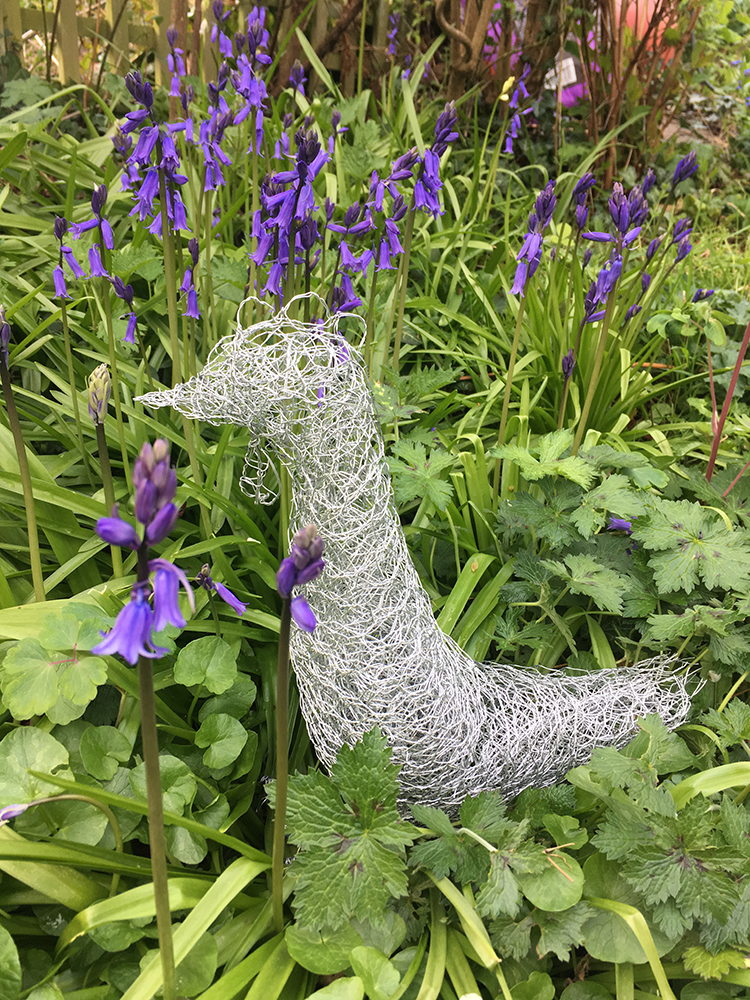
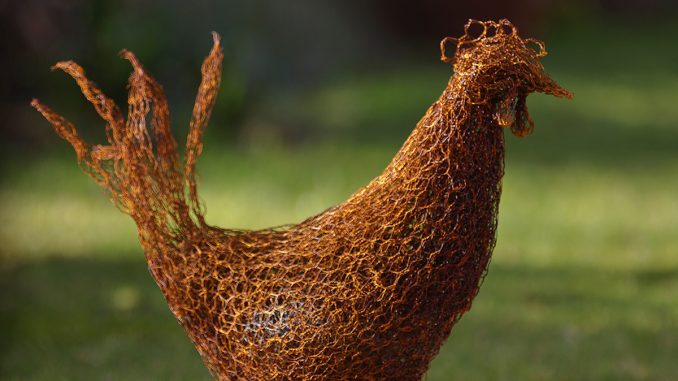
I thoroughly enjoyed learning how to make a wire chicken for my garden at ‘Curiously Creative’ last weekend. I have always encouraged people to include statuary and sculptures in their garden, and although there is an ever-increasing choice on the market, nothing beats being able to make your own. In fact one of my fellow ‘wire-workers’ had come back for the chicken workshop, having made a heron on her first course. Impressively industrious, Beverly Gamble is opening her garden for the National Garden Scheme and wanted to include some eye-catching focal points, so decided to make them. You can visit her south facing, family garden and see her wonderful wire sculptures at 105 Heath Park Avenue, Cardiff on the 8th September.
I made a few wire pieces for my own garden last year in an attempt to recycle an old chicken wire fence, but enthusiasm definitely outweighed expertise, with one ‘wire man’ ending up sitting down as I just couldn’t get him to stand! So it was lovely to learn the proper techniques and finer points and to end the day with a rather cute bantam – that did stand on it’s own!
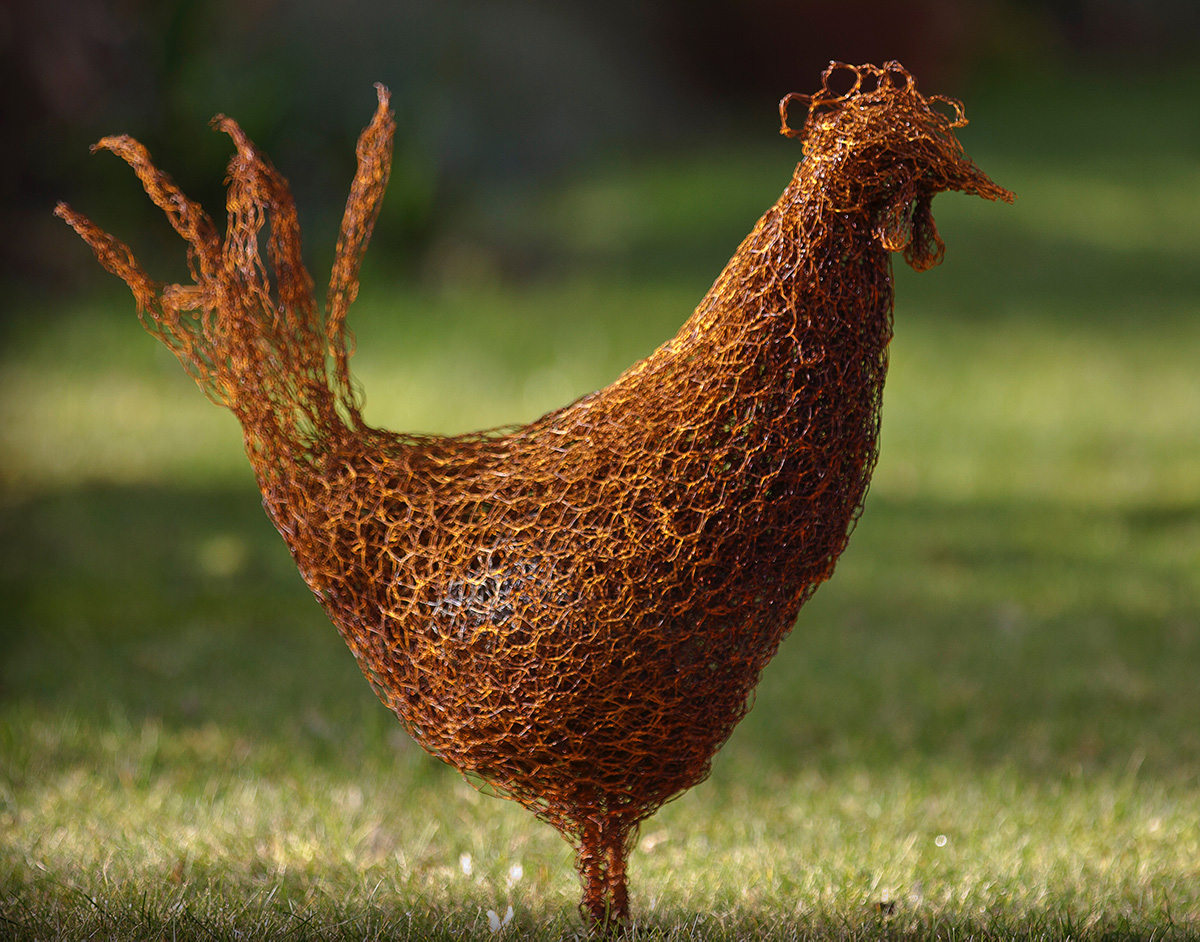 Lynne Littler teaches with passion and humour, the best recipe for learning. And she shares her tips and skills generously – like how to get a rusted effect on your wire sculptures. I’m not so generous, so you’ll have to take one of Lynne’s classes to find out. We worked in a lovely relaxed atmosphere at her studio at Craft Renaissance, near Usk. As well as being able to buy Lynne’s own wire sculptures there, The Gallery has lots of other gift ideas and a lovely little café too, which is handy if you are being dropped off and picked up or just fancy a recce for a workshop!
I ‘hen-joyed’ my day so much that not only have I made two more chickens this week as Easter presents but have also booked to go back to learn how to make the most beautiful delicate wire garden birds on the 20th April. There are a few spaces left on the morning course (10.30-1.30) and Lynne has lots of other wire and willow courses running throughout the year; I highly recommend treating yourself or someone else, as a present.
More details and examples of Lynne’s beautiful work at www.lynnelittler.co.uk
Sick-amore Seedlings
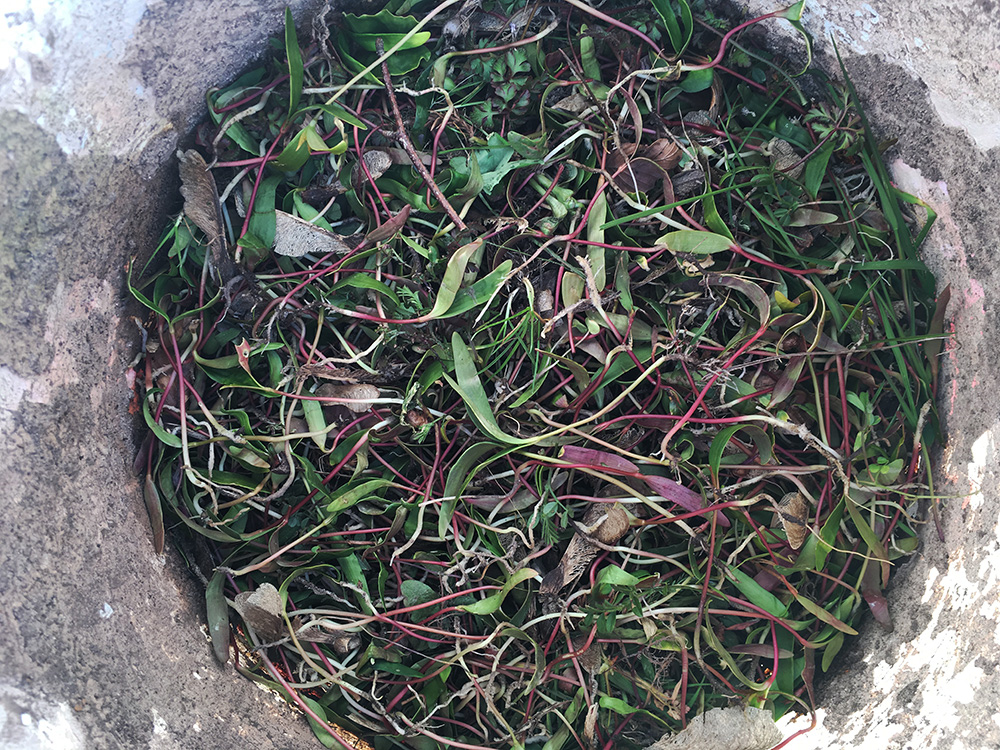 As I have been weeding bucketfuls of sycamore seedlings out of paving and flowerbeds recently I am reminded that they are not only annoying, but can be deadly too. Tragically last year a friend’s pony died after grazing the sycamore seedlings in his paddock. My friend has owned and bred horses all his life and had no idea of the dangers but, alarmingly, vets across the UK are reporting meteoric increases in the number of cases of Atypical Myopathy, or ‘sycamore poisoning’. A frequently fatal disease of horses, it thought to be caused by the ingestion of hypoglycin A, a toxin contained in sycamore seed and seedlings. Most outbreaks are reported to happen in the autumn as the seeds contain more hypoglycin A, but spring outbreaks are also on the rise as horses ingest the seedlings.
Mild weather conditions are linked to outbreaks of Atypical Myopathy, which is thought to affect the concentration of toxin in the seeds and mild springs, summers and autumns. However, ongoing research shows that bad weather also seems to trigger the disease, which results in muscle damage and particularly affects the muscles that enable the horse to stand and breathe. Horses with the disease may develop a range of signs but typically become very dull, weak, stiff and trembly. The first signs are often lethargy, a quiet demeanour or reluctance to work and the most common misdiagnosis in cases of Atypical Myopathy is colic, as the first stages can appear very similar. Although severely affected horses may die, the good news is that with prompt, aggressive treatment cases they often can recover very quickly.
The concentration of the hypoglycin-A toxin varies between sycamore seeds, and even between seeds from the same tree! Therefore a horse that eats a large volume of seeds might get lucky and eat some with low levels of the toxin, whereas another might only eat a few seeds that contain sufficient toxin to cause a problem. It is thought that not giving any supplementary forage or feed, makes ingestion of the seeds more likely. It is also probable that older horses are less likely to become affected, maybe because they develop some tolerance to the toxin.
As always, prevention is better than cure, but if you notice your horse showing any of the signs or symptoms call your vet without delay. The sooner your horse receives treatment, the stronger his chances of making a full recovery. And do please share this information with other horse owners. I too have been around horses all my life and had no idea until last year’s tragedy.
Weather Lore
 I am sure that when the clocks went forward an hour recently, the calendar went back a month.
It has been bitterly cold in work lately and the period between 11thand 14th April is traditionally known as the Blackthorn Winter as the frosts mimic the white blossom on the blackthorn trees.
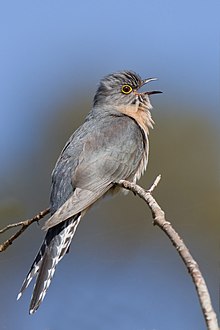
And don’t forget to listen out for the cuckoo – if he arrives early in April, we will have a dry summer but the later he appears the worse the summer will be. I hope he’s not stuck behind a slow moving Brexit!
Leave a Reply