
Taken from Lynne’s weekly column ‘Green Scene’ for the Western Mail. 17th September 2016 
Euro Wasps
 I have noticed that there are far fewer wasps’ nests around this year, and the one or two I have found I have left well alone as I have ‘brokered a deal’ with them. You may have heard me talk about his on Radio Wales with Eleri Sion last year – I was told during my stay at Damanhur in Italy that insects understand the words ‘Yes’ and “No’ (or at least the vibration) and therefore if you tell them what is permissible and what’s not they’ll understand. So for the last 3 years I have tried this out with huge success. With ants and wasps in particular.
One year I had a huge wasp nest at the entrance to a shed which I used every day plus a nest at dog-nose-height in a vent in the cottage wall. I told both nests that they could stay if they left me, my dog and any visitors alone. The minute anyone (or dog) got stung, I would annihilate them and any other nests I found consequently. I passed close by to both nests for the whole summer and had no problem with the inhabitants.
Eleri was not as convinced, and nor were several listeners, but I can only share my own experiences!
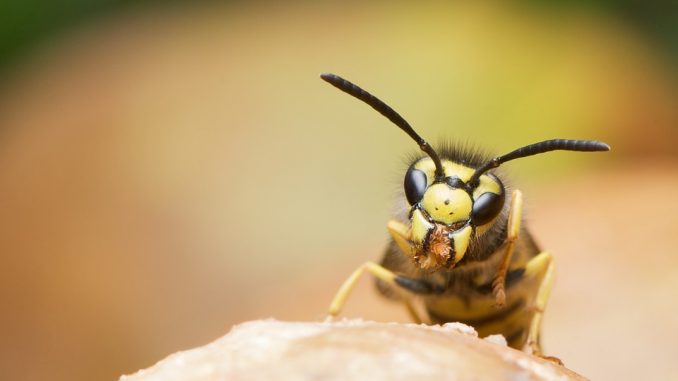
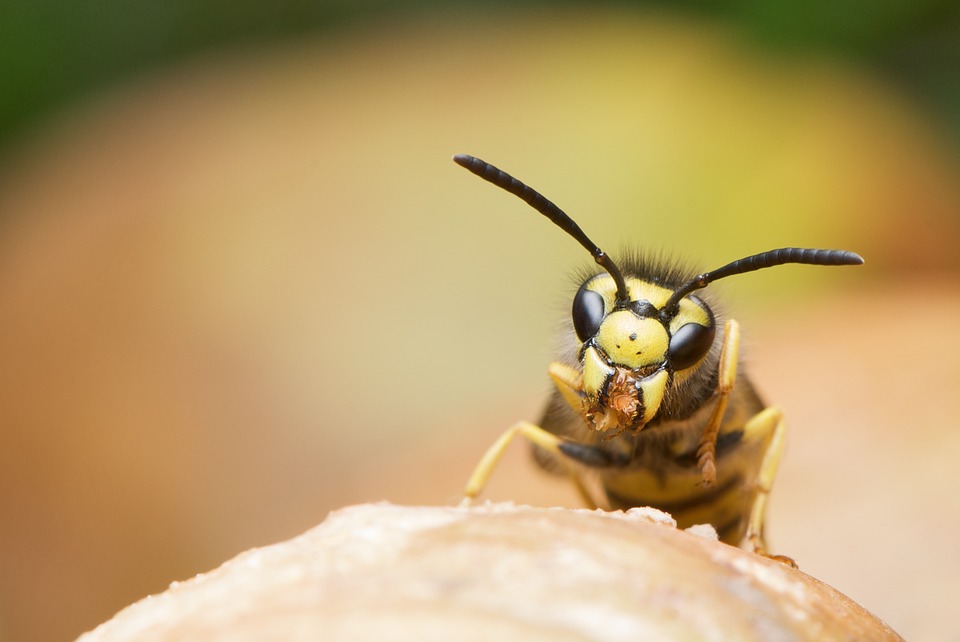
Anyway, I digress, as a client found a wasp’s nest in his garden recently and noticed they were bigger – and more bad tempered – than most wasps. Calling the local pest control out, (he doesn’t buy into my theory either) he learned that the German wasp (sometimes called Euro wasp too) has found it’s way to Wales. Apart from being a little bigger than our common wasp, more aggressive and having a more painful sting, there is another way to tell them apart. Apparently if you look closely at their face, there are usually three small black spots instead of just one. Good luck with that!
The Sting!
 Of course it’s that time of year where wasps are traditionally more bad tempered than usual. The worker wasps have finished tending the hive’s queen this summer and are spending their spare time getting drunk on hedgerow fruit and windfalls like apples, pears, plums and damsons. They will apparently sting for the hell of it now, and need no provocation or reason. Although I have to be honest, I have stayed sting-free for three years following my theory – even at this time of year and whilst picking a lot of windfalls (often covered in wasps) for my pet pigs.
And of course, if you don’t have ‘a special relationship’ with your stripy guests, you may be unfortunate enough to find out that they are also capable of stinging repeatedly, whereas bees can only sting once and then they die.
Although interestingly, bees can actually sting wasps repeatedly without dying. Wasps will sometimes try to rob a hive of honey and I have often witnessed a small gang of honey bees roll up a wasp and sting it to death at no risk to their own life. You’ve got to love evolution!
I Spider.
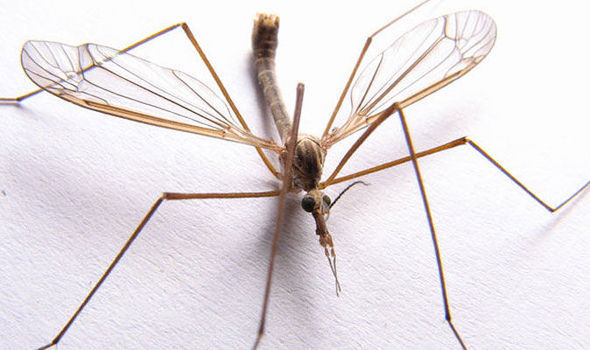 And as well as being ‘wasp season’ apparently the UK has a record number of daddy-long-legs to deal with this autumn too as a result of a late warm summer.
A record 200 billion of them are expected to hatch in the UK this year because above-average temperatures and the right amount of rain will have helped them grow in their underground tunnels.
Although the insects were voted the world’s second scariest creature after ‘proper’ spiders in a recent poll, they are harmless and literally incapable of ‘hurting a fly’. Once hatched from larvae (known as leatherjackets, and often a bigger problem for gardeners that the adult) they live for only a few days, says the charity Buglife.
If you find one, catch it gently, release it outside and wish it well for the rest of its very short life. They play an environmentally important role and are a huge source of food for birds at this time of year.
The term ‘daddy-long-legs’ is actually used to refer to three different animals – crane flies harvestmen and cellar or vibrating spiders. Sometimes crane flies are distinguished by being called ‘flying daddy-long-legs’, (these are the ones that I was brought up calling daddy long legs) and the cellar spiders by being called ‘daddy-long-legs spiders’, but it is common for all three just to be called daddy-long-legs.
And that’s not the only identity crisis they have – whilst they are arachnids, they’re actually more closely related to scorpions than they are to spiders. They don’t produce silk, have just one pair of eyes, and have a fused body (unlike spiders, which have a narrow Marilyn Monroe-esque “waist” between their front and rear).
With such notoriety and mystique surrounding it’s classification, the origin of the name daddy-long-legs is rather unclear and disappointing. It probably came from a 1912 novel of the same name, by Jean Webster – the book is about a girl in an orphanage whose benefactor is a tall man. Since he has long legs and she does not know his name, she calls him Daddy Long-Legs.
Leave a Reply