
Taken from Lynne’s weekly column ‘Green Scene’ for the Western Mail
16th April 2022
 Easter’s Gone Crackers
One old (and nearly forgotten about) Easter tradition is that potatoes should be planted on Good Friday. Apparently Catholics planted potatoes on Good Friday in order to make them holy – and therefore OK to eat – and the seed potatoes were often sprinkled with holy water before being planted.
Another theory for Good Friday planting is that because Good Friday was the first day off for many after Christmas and therefore it was the first chance for gardening.
And another explanation has links to another age-old tradition of ‘gardening by the moon’. Although a lot of people think this method is purely based in folklore and superstition, there is also scientific research to support the findings. It is fascinating.
At it’s most basic, it is thought that just as tides are highest at the new and full moons, gardening by the moon works on the premise that water also rises in the soil at this time and that seeds absorb most water at a full moon. It appears that Good Friday is always a good day in the cycle of the moon to plant root crops.
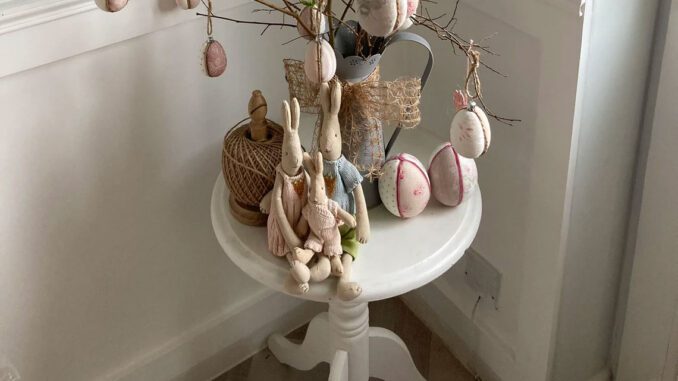
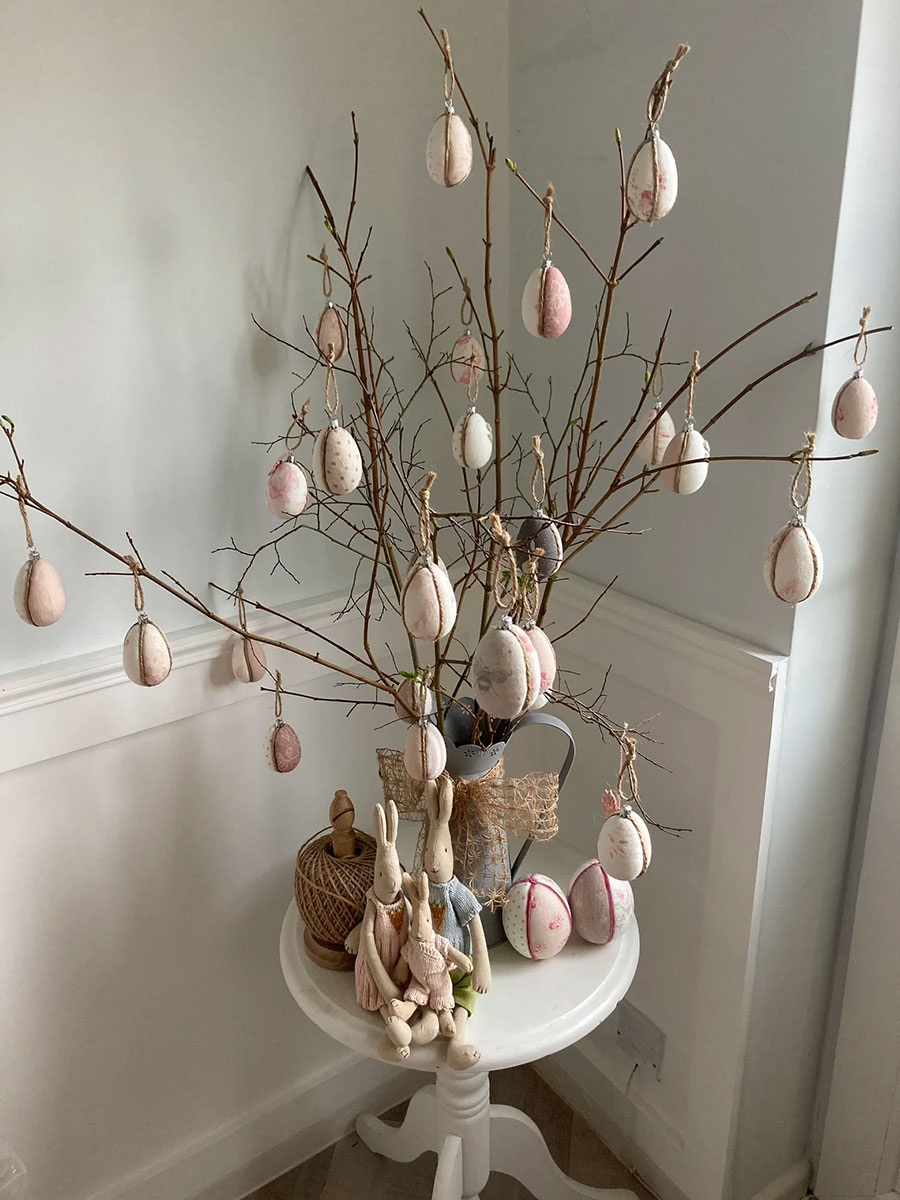
But it seems we are getting bored with these age-old traditions and replacing them with newer ones – Easter crackers, Easter wreaths and decorated Easter trees. According to research by the retail analysts Mintel, Easter was estimated to be worth £550m to UK retailers in 2016, and the figure is rising. In 2021, almost one in 20 Britons brought home decorations for Easter, rising to one in ten between the ages of 25 and 40, and it’s predicted that this year, with social distancing rules no longer imposed, householders will be buying even more decorations. Retailers sold out of ‘Easter egg kits’ weeks ago and it seems that chocolate eggs are being overlooked in favour of painted, decorated ones and even eggs beaded with Fabergé-inspired designs – all of which are used to adorn special Easter twig trees. At John Lewis, sales of Easter trees are reportedly up 65%. Really?
It’s a fad – I mean ‘tradition’ – that has passed me by thankfully. It seems that Easter will soon be the new Christmas. ‘Eye-roll’.
Peas and Love
 After I suggested that you sow garden peas in half eggshells full of compost and give them as a gift in an egg box with the message ‘Hap- pea Easter’ last week, my brother asked, “You didn’t tell them my way then?’ To be honest I forgot.
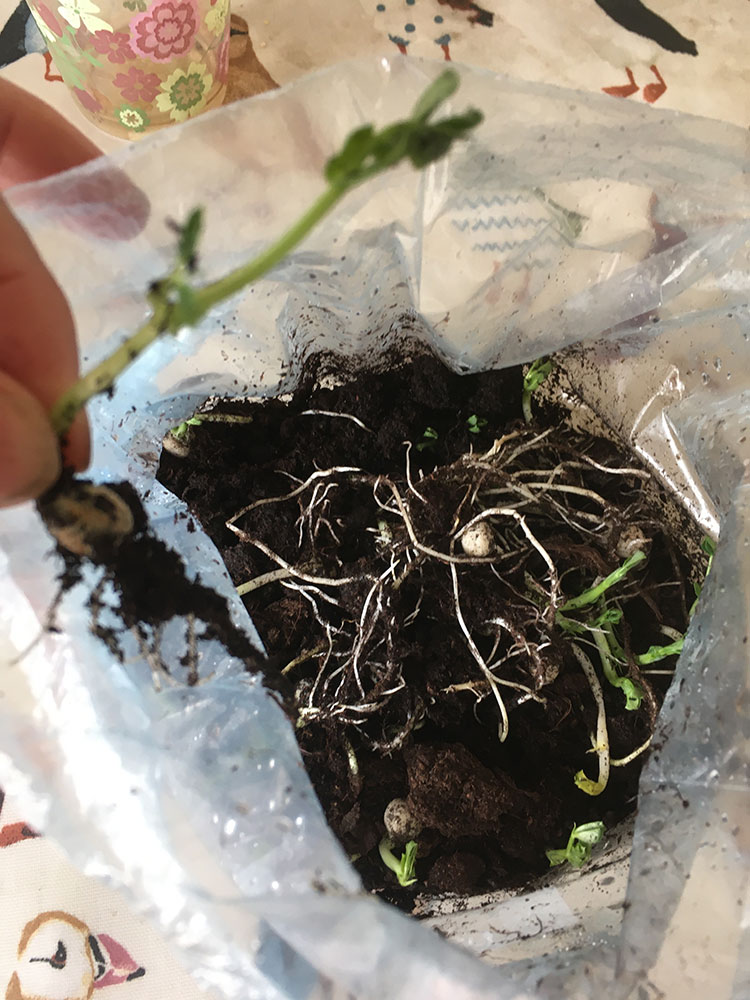
My brother always germinates his peas by putting the seeds (dried peas) in damp compost in a freezer bag, tying the bag loosely and leaving the bag on a sunny windowsill. They germinate within weeks and always have lovely long ‘tails’ (as he refers to the roots) on them. To prove his point he brought me a bag over ‘for Easter’. Note to Self: Forget his methods more often! His pea seedlings are way more advanced than the ones I sowed in my green house in the traditional method and have lovely ‘long tails’. Referring to the fact that these seeds have actually germinated in damp compost in a plastic bag, I said to my brother, “Nature’s amazing, mind.”
“I put them in the bag,” he reminded me.
One of my very clever gardening friends always sows Leo’s dried peas (in the distinctive cardboard box) from the supermarket. He has sown them for years with consistently good results. They are a fraction of the price of traditional peas seeds and it’s worth sharing a box with friends, family and neighbours.
Gild the Lily
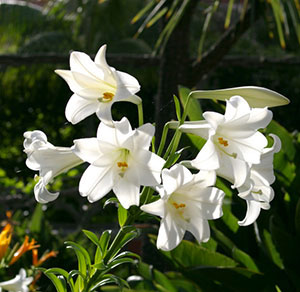 The traditional Easter Flower is the lily, with the white lily being a symbol of purity. I read that the single flower stem coming up from a bulb represents Christ coming back to life 3 days after his crucifixion. The Easter lily’s (Lilium longiflorum) trumpet-shaped flowers are probably best recognised as a traditional Easter decoration.
Be warned though – together with a reminder that chocolate can be fatal for dogs – the RSPCA advices that all parts of lilies including the flower, leaves and even the pollen, can be fatal to cats. This relates to all lilies, not just the Easter lily – and in the garden, not just as cut flowers. For more information visit RSPCA.org.uk
Not surprisingly, different countries have different Easter flowers. In the UK and Russia the pussy willow is also regarded as ‘the’ Easter Flower. And the earliest association of Easter with a particular flower is with the narcissus, and which is still the tradition in parts of Europe.
Lilies can be planted at any time from early autumn to mid-spring. Planting in autumn often helps them settle in and become better established before they start to put on their new spring growth, but spring planting is a better option if your soil is heavy and wet during winter. Choose a sunny spot, preferably where the plant receives a little light shade at its base, and plant each bulb 15-20cm deep in a well-drained soil, enriched with well-rotted organic matter or leaf mould. Space them at 15-30cm intervals and provide support before the flowers appear.
If you want to save a ‘potted’ Easter lily, place it on a sunny window after flowering and water when needed. Plant outdoors next month in a well-drained, sunny border or suitable tub, ensuring the bulb is about 6 inches below the soil surface. The original plant will die back within several weeks of bloom and this spent growth can be cut off at ground level. New growth usually emerges by summer and if you are lucky you may be rewarded with a second bloom in September.
Have a lovely peaceful Easter weekend and remember if you are planning a visit to a garden centre, some have to close by law on Easter Sunday, so check opening times first.
Leave a Reply