
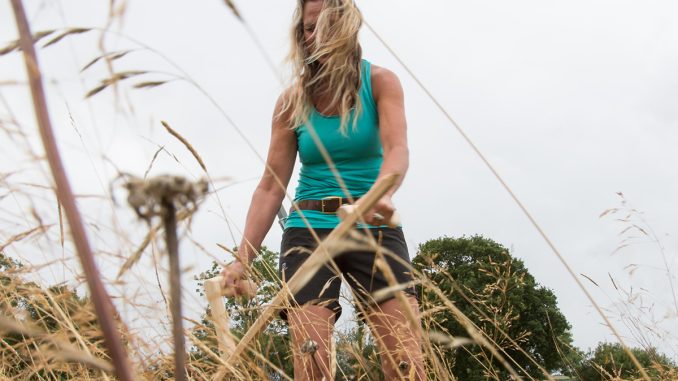
Taken from Lynne’s weekly column ‘Green Scene’ for the Western Mail
21st March 2026

Birthday Blessings
Last week I completed another circuit around the sun and celebrated my 59th birthday. It is a time for regard and reflection for sure, as I am now able to reach out and touch 60 on the nose. There are too many of my ‘favourite’ people who haven’t made it this far. Dad (Bob) died at 54, my best friend at just 19, and far too many other people, whom I loved and laughed with, won’t have the privilege of seeing out their fifth decade. It is indeed a privilege.
I love Carl Jung’s observation, ‘Most mid-life crises come from trying to live the second part of your life like you did the first.’
I have learned not to. My tolerance for negativity, gossip, drama and small-talk has expired. My circle of friends is very small but perfectly formed. I have learned that inner peace is far more satisfying and attractive than outer trinkets. Being rich is not about having great possessions, but in having few wants. Health is true wealth, gratitude unlocks life and contentment is not connected to how much I have but how much I enjoy.
Some people try to fight aging and turn back their odometers. Not me. I am the way I am because I have journeyed many roads less travelled, and a lot of them weren’t paved.
Joan Rivers summed up aging beautifully: “I wish I could tell you it gets better but it doesn’t. You do.”
Super Scythe
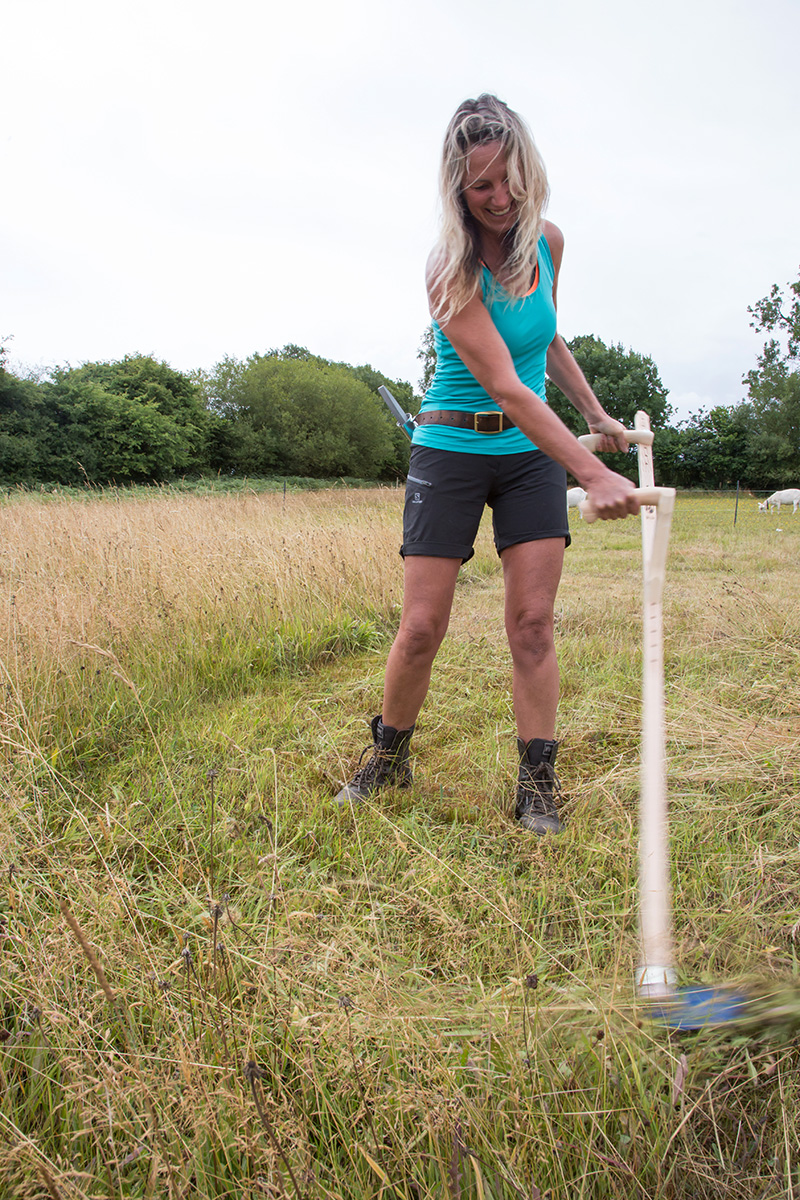 For my birthday, I treated myself to a scythe.
Possibly not a present that immediately springs to mind for most people but I have wanted one since doing a scything course in west Wales a few years ago.
To be honest, as well as the date, I was inspired by the rising cost in fuel. I explained to the boys in work, that if things continue the way they are going, when they can’t put fuel in their mowers and strimmers, at least I will be able to scythe. The lightning response from my brother was, “And how will you actually get to work?”
I obviously didn’t think that one through, but in a few months if you do see me walking to work carrying my scythe like the Grim Reaper you read it here first.
Lilies of the Valley
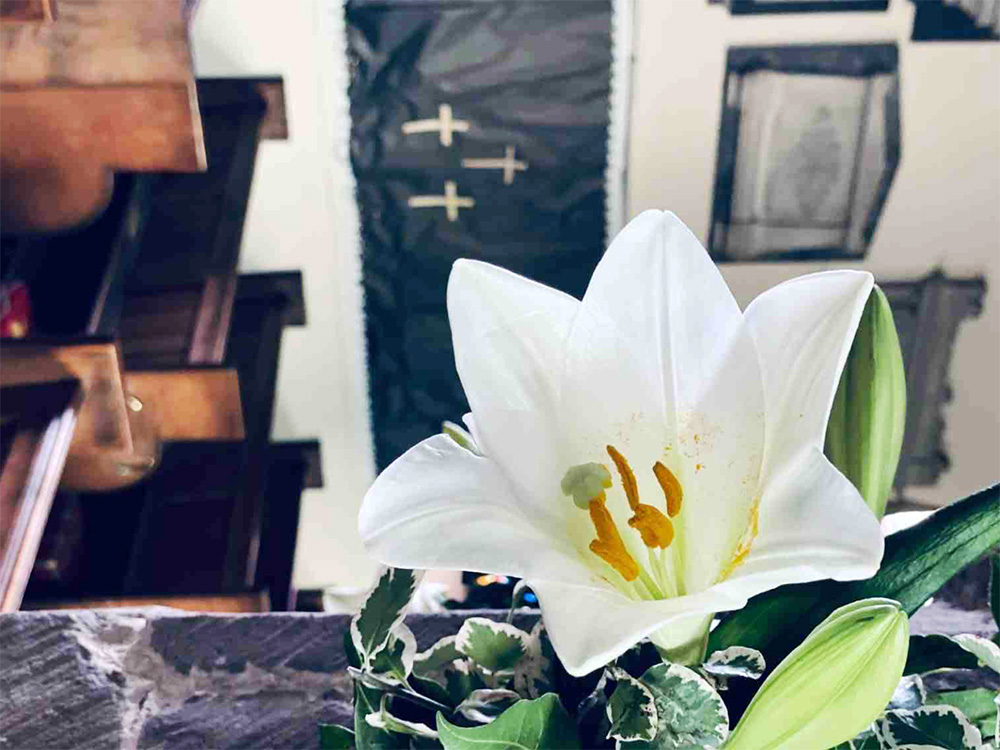 St Catwg’s Church in Llangattock are currently preparing for their Easter Lily Festival by inviting you to dedicate a Lily to a friend or in memory of a loved one. Names will then be written in a Book of Dedications, which will be on display from Easter Sunday.
Each lily costs £7 and payment can be made by bank transfer, with all the necessary details and form for dedications on their website www.llangattockchurch.org/lilies/
You are invited to view the lilies in the church any time from Easter Sunday morning onwards, the wonderful local ‘Lily Ladies’ work hard to create the most striking, poignant and meaningful displays. And of course, the fragrance is just ‘scent-sational’.
Scent-sational
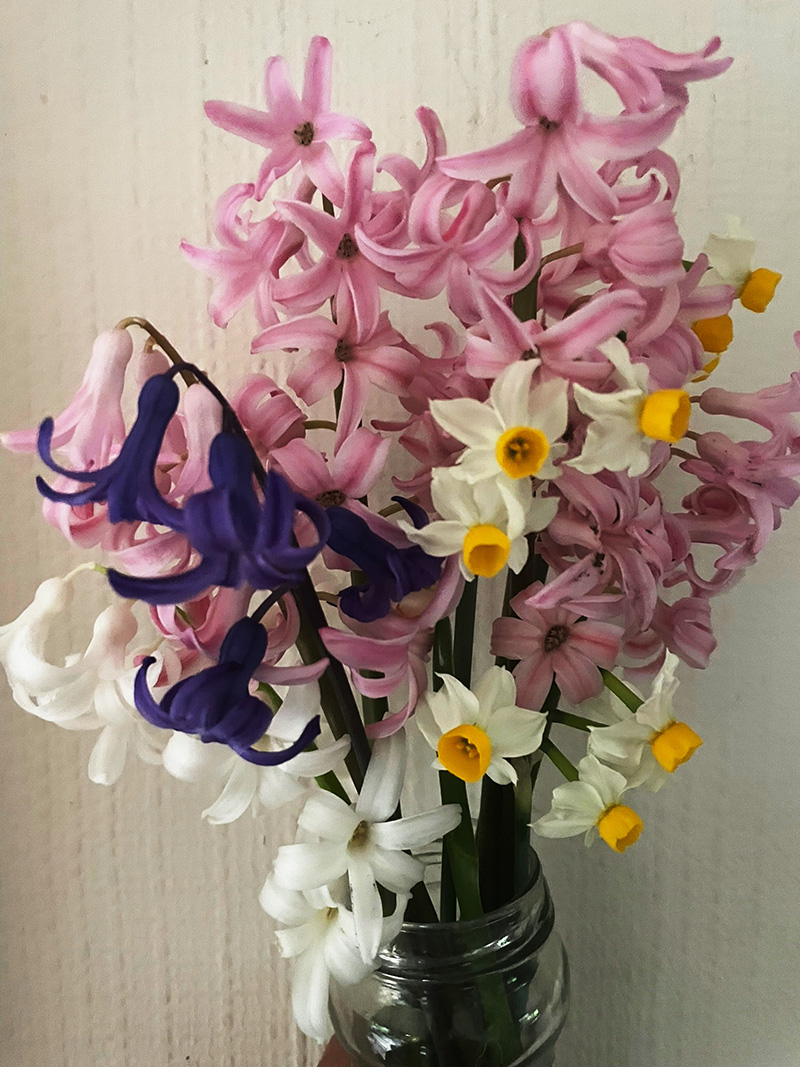 I currently have a little vase of hyacinth and narcissi from the garden next to my computer and the scent from those is pretty scent-sational too. It never ceases to amaze me just how much ‘punch’ nature can pack into flowers. And it is a great reminder to remember how important it is to include ‘scent’ in the garden. There are lots of scented shrubs, bulbs, perennials, and even annuals to choose from and with a bit of planning you can easily get fragrant flowers throughout the year, from Daphne bholua and Mahonia japonica in the winter through to scented night stocks as summer bedding. There are the more well known scents like hyacinths, jasmine, lilac, lilies, pinks and roses but also the lesser-known scented beauties like osmanthus and heliotropes.
Scented plants are best planted next to a regularly-used path or doorway, place where you sit or planted in containers so that you can move them to one of those places when they are in bloom and elsewhere when not. One of my clients has a couple of lilacs in large pots on castors so they can be wheeled onto the patio when in bloom and relocated when not. It’s a great way to get the most out of the plant and space.
Sadly a lot of scent is bred out of some plants in preference for longer-lasting blooms and jazzy colours or flower shapes. In most blooms, scent production and length of flower life are tightly linked by a plant hormone called ethylene. In short, ethylene makes a flower produce more scent but at the cost of the length of flowering, as the flowers fade quicker. Less ethylene obviously causes the opposite effect. So many plant breeders, with the best intentions, have made showier, longer-lasting flowers with little or no fragrance.
For many pollinators, the flower’s smell indicates where the plant is and when it’s ready to be pollinated, and an extraordinary finding at Kew Gardens showed that some plants even ‘drug’ bees. Citrus and coffee flowers have caffeine in their nectar, which when consumed improves the bees’ memory for those flower scents. This means that bees will recognise these flowers more easily and revisit them more frequently and therefore be more efficient pollinators to these plants.
So whilst flowers that fade a little faster is a small price to pay for the fragrance we enjoy, we need to remember that fragrant flowers weren’t actually designed for us.
Spring Has Sprung
We are now officially in spring. Whilst meteorological spring started on March 1, astronomical spring began yesterday. Astronomical spring follows the date of the spring equinox, which is determined by the Earth’s tilt as it travels around the Sun. In the northern hemisphere the spring equinox varies between 19 to 21 March each year and this year was the 20th.
Coincidently – or not – the 20th is also International Day of Happiness. It was created by the General Assembly of the United Nations in 2012 to recognise the relevance of happiness and well-being as universal goals and aspirations in the lives of human beings around the world.
The resolution was initiated by Bhutan, the only country that measures success by the happiness of its people rather than by economic output.
Known as the Kingdom of Happiness, Bhutan has some interesting factors which contribute to that title. It has a constitutional requirement that at least 60% of the country remain green (currently that’s around 70%). Mountains are considered sacred. It is one of the few nations whose national identity is rooted in spiritual philosophy while embracing modern life. It is the world’s only carbon-negative country and has 100% natural agriculture with no use of chemical pesticides. The tourism model is based on “high value, low volume.” And, due to Buddhist respect for life, animal slaughter is prohibited.
In Bhutan, inner peace, not wealth, is accepted as the true measure of prosperity. And the Bhutanese don’t have to wait until the second stage of life to realise that.
Your outlook on life is superb. You live your life and enjoy what you do.
Kept it up.
Wonderful philosophy on life. Happy Birthday!