

Taken from Lynne’s weekly column ‘Green Scene’ for the Western Mail
9th May 2026

Birdie Song
Following on from my cuckoo column last week, I want to share that www.woodlands.co.uk is celebrating the beauty of British birdsong, by sharing tips on how to identify what you’re hearing. Whilst it’s lovely just to appreciate the background soundtrack of birdsong whilst you are walking, it is even nicer to have some sort of knowledge about which birds are serenading you. Many of them may be hard to spot but I think being able to identify their individual calls is a mark of respect to them all.
Woodlands, who specialise in all aspects of selling, buying and managing woodlands throughout the UK, begin their songbird list with the easily identifiable ‘chiffchaff’. Like the cuckoo, they are named after their simple repeated song sound, ‘chiff-chaff’ and are enthusiastic, often singing for minutes at a time. The bird itself is small and olive-brown, often flitting restlessly among branches as it hunts insects. If you can sit still for long enough you will be rewarded by seeing it flit though the tree canopies.
They are so popular that there is even a Welsh woodland named after them for sale on the website. Chiifchaff Woods in Whitney-on-Wye, Hay-on-Wye, is described as a ‘Broadleaf woodland, in ancient woodland surroundings, teeming with both common and rare species of wildlife in a very quiet, very beautiful part of the Wye valley.’ You can email tamsinandmatt@woodlands.co.uk for more details.
The blackbird is said to produce one of the most beautiful songs in the British countryside and people are often surprised to realise that it is the well known bird that is responsible for such a melodic song. Its tune is slow, rich and flute-like, with pauses between phrases that give it a calm, reflective sound.
They often sing from high perches in trees or on garden walls early in the morning or at dusk, leading the dawn chorus. However, they also make a harsh repeated ‘clucking’ sound when alarmed, to warn of perceived danger.
You won’t hear the great spotted woodpecker sing, but you will hear him ‘drum’ as he taps its beak quickly against tree trunks or branches. Woodpeckers drum on trees to establish territory boundaries, attract mates, and stay in contact with a partner. Unlike when they forage for food, this rapid pecking, or drumming, on resonant surfaces can reach speeds of up to 40 times per second. If you manage to spot one, it’s unmistakable, being black and white with a bright red patch beneath the tail.
Once you know the song thrush’s song, you’ll always remember it, thanks to a very clever trick. It sings short, catchy, musical phrases and repeats each one several times before moving on to the next. It’s the Andrew Lloyd Webber of the bird world and isn’t shy about performing, as it chooses exposed branches to sing from, where its voice can carry through the woodland.
I am always in awe of the little wrens and have lots of them in the garden at the cottage. They may be tiny but they have a huge voice, which never ceases to amaze me as they shriek and trill totally belying their size. You will more often or not spot a wren out of the corner of your eye as it hops along the woodland floor, preferring dense vegetation.
 I’m also incredibly lucky to have a couple of tawny owls, which visit the cottage every night. Their well-known ‘twit-twoo’ always makes me smile as they ‘chat’ to each other. Interestingly, this familiar sound is usually a duet with the female making the ‘twit’ call (I’ll let you make of that what you will), while the male responds with the deeper ‘twoo.’
I have occasionally seen the owls out in the day although it’s not common, but they are synonymous with woodlands.
I have the Merlin app by Cornell Labs, (merlin.allaboutbirds.org) on my phone, which is a great learning tool for recognising bird song, and for discovering the less common calls.
Show Time
The ‘RHS Garden Shows’ have kicked off with Malvern Spring Show, which ends tomorrow (Sunday), and which means the Chelsea Flower Show is ‘looming’. I spent over 10 years visiting Chelsea Flower Show on the VIP and Press Day, before the show opened to the pubic, which I think will always be one of the privileged highlights of my life. Having unfettered access to the gardens, and to interview designers, construction teams and celebrities was always fascinating and a lovely break from actually doing the work myself.
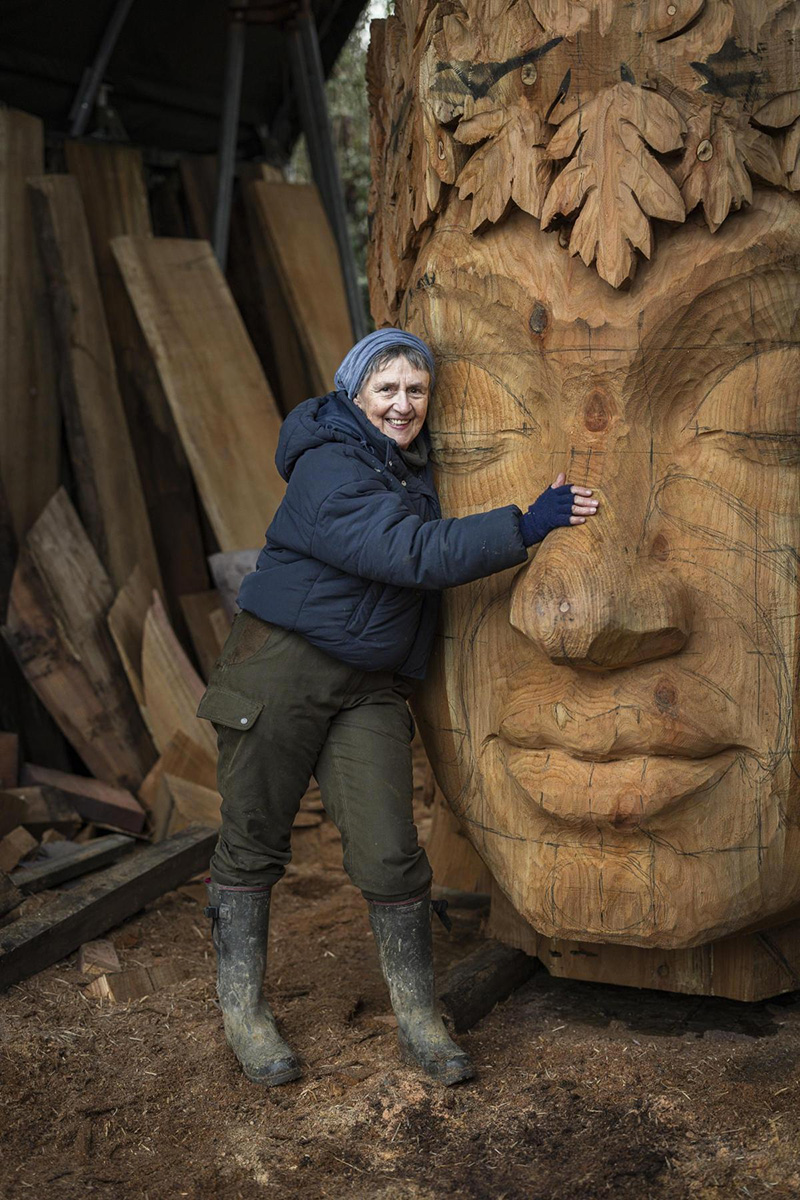 This year, Chris Wood, an internationally-renowned competitive chainsaw artist and wood carver from Newport, is contributing to a show garden, which will mark the centenary of The Campaign to Protect Rural England (CPRE). In what’s thought to be a RHS Chelsea first, Chris is crafting part of the main sculptural land art feature of the exhibit using chainsaws.
He has spent months intricately carving the huge 7m x 3m garden artwork, depicting the head and torso of Mother Nature, at his workshop in Newport, Gwent, and will be adding the finishing touches at the world’s most famous flower show just before it opens on 19 May in London.
The Campaign to Protect Rural England Garden, titled, ‘On the Edge’ is being designed by award-winning Sarah Eberle for this year’s RHS event and is reliant on a team of creative artisans including Chris, and renowned west Wales-based willow sculptor Tom Hare. Also contributing to the garden are the fabulously talented Yorkshire stone walling artisans Lydia and Cuthbert Noble.
Stone Ranger
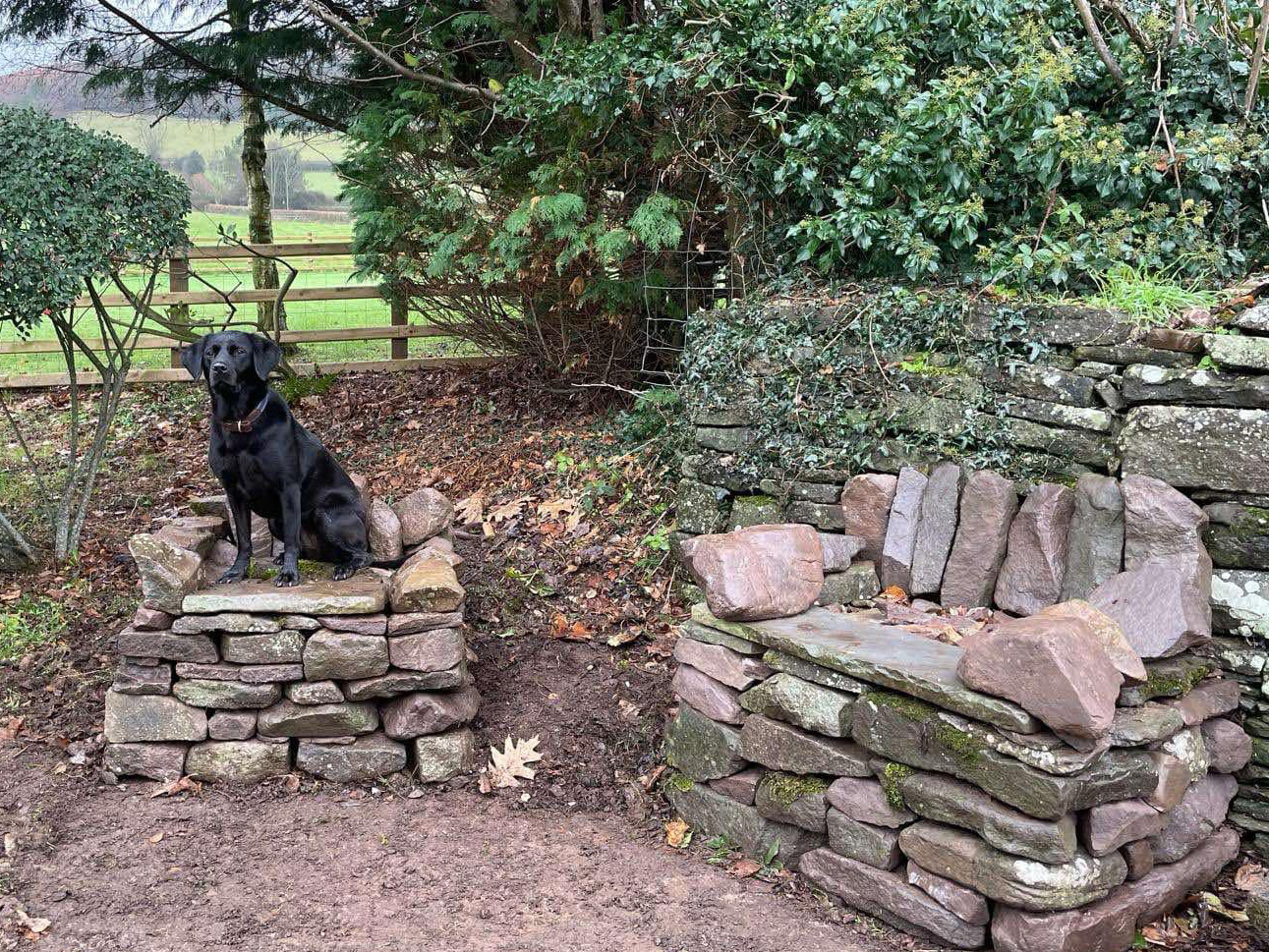 I have competed in a dry stone walling competition with sister and brother duo, Linda and Bert, (obviously not in the same category – but the same field), and Bert (along with Rhubarb, his faithful collie) was the examiner when I passed my level 2 dry stone walling exam last year.
Being proactive, and slightly obsessive, I don’t have too many things left on my bucket list, but being able to wall and create the calibre of features that are half as impressive as Linda and Berts, is one of them.
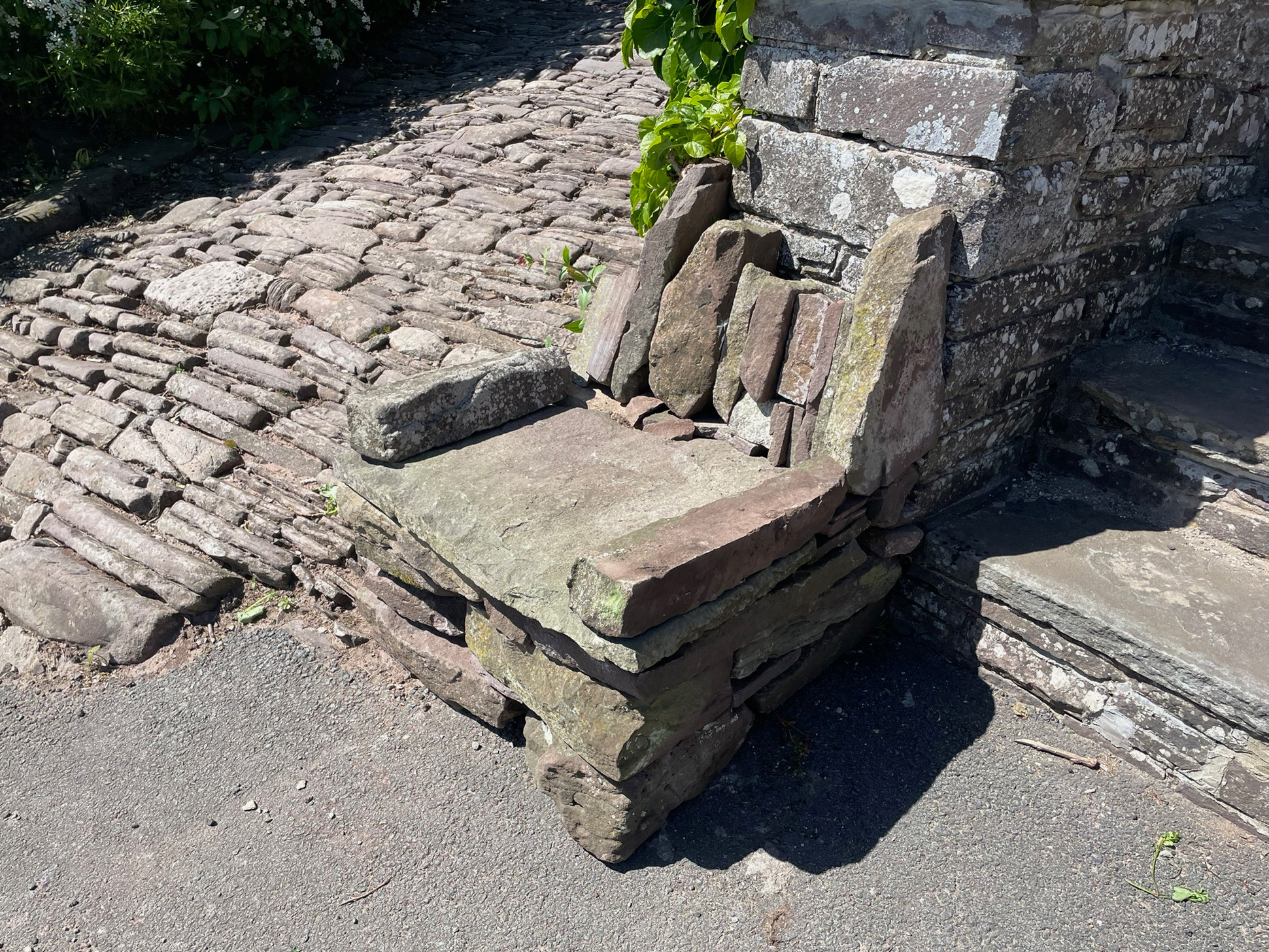 I am already building up a reputation for being a ‘dry stone chairer’ as I build up a dry stone furniture portfolio – more DSF (Dry Stone Furniture) than DFS – and I absolutely love it.
It has often been said that I have sap in my veins but I also think that I have stone dust in my bones.
Hi Lynne,
Your comments about blackbirds brought back a memory. In the dim and distant past, when I was a lowly Constable walking the streets of Weston super Mare on nights, I was stood up high in a multi storey car park overlooking a large part of town, including two pelican pedestrian crossings.
I heard the familiar high pitched bleeping of a crossing and looked to see who was around at that time of night. I saw nobody. The bleeping started again and then again. Still no sign. Then I noticed that none of the lights changed. So I went to take a closer look. Just a short distance from one of the crossings, there was a blackbird, perfectly mimicking the sound! Who says that walking alone at night was boring!