

Taken from Lynne’s weekly column ‘Green Scene’ for the Western Mail
31st August 2019
 Art on a Postcard, please …
We can touch September on the nose now, and despite the record breaking temperatures of the Bank Holiday weekend, it’s already feeling autumnal. At last things are slowing down in the garden – including gardeners – as they go to seed.

Do remember though, seeds mean new plants! If you are happy allowing your herbaceous stock to do it’s thing freely in beds and borders that’s great, but if it’s planning to sow, or throw, it’s seeds over paths and patios then that will only mean more work next year.
Although I often wonder at this time of year if, in theory, the gardener is still in charge, so do endeavour to collect seed wherever it threatens to bring more work than pleasure. You can then sow it where you want to or even swap with friends and neighbours. Or if you have as much time as Monty Don, you can sprinkle the seed onto prepared seed trays and grow them on to plant out next spring. He does that with foxgloves, whereas I just cut the dried stems off and shake them where I want them to grow.
Plants like alchemilla mollis, for example, will have done a sterling job of covering the ground and sticking their frothy flowerheads out over paths, paving and lawns. But be warned – if left to go to seed now they will only creep forward and commandeer those spaces.
You have to be ruthless with the secateurs – similarly with herbs, although if you cut these back in stages you will stagger the regrowth and still have fresh herbs to use going into the winter.
Seedheads like fennel are stunning now and add interest to the garden at this time of year, but if you are not quick with the chop they will also self-seed as though their life depends on it – which of course it does.
If you want to take advantage of particularly stunning seedheads, in someone else’s garden, then why not join a day-long painting and drawing course at Trostrey Lodge, Bettws Newydd, near Abergavenny NP15 1JT next month.
Greta Hart is the ‘Artist in the Garden’, and artists – aspiring, perspiring or otherwise – are encouraged to come along and capture the magnificent surroundings on a postcard.
‘Art on a Postcard’ is being held on 5th, 12th and 19th September from 10 am. It is all wonderfully relaxed and informal, so please take your own equipment and sandwiches. There is a small fee of £4 for admission, and contributions will be made to local charities, Papillion in Abergavenny and Bees for Development in Monmouth.
What a lovely way to thank the bees for providing the poppy seed heads, wildflowers and numerous other splendid plants that you will be inspired by.
For more details please contact Frances Pemberton on 01873 840 352.
Naked Ladies
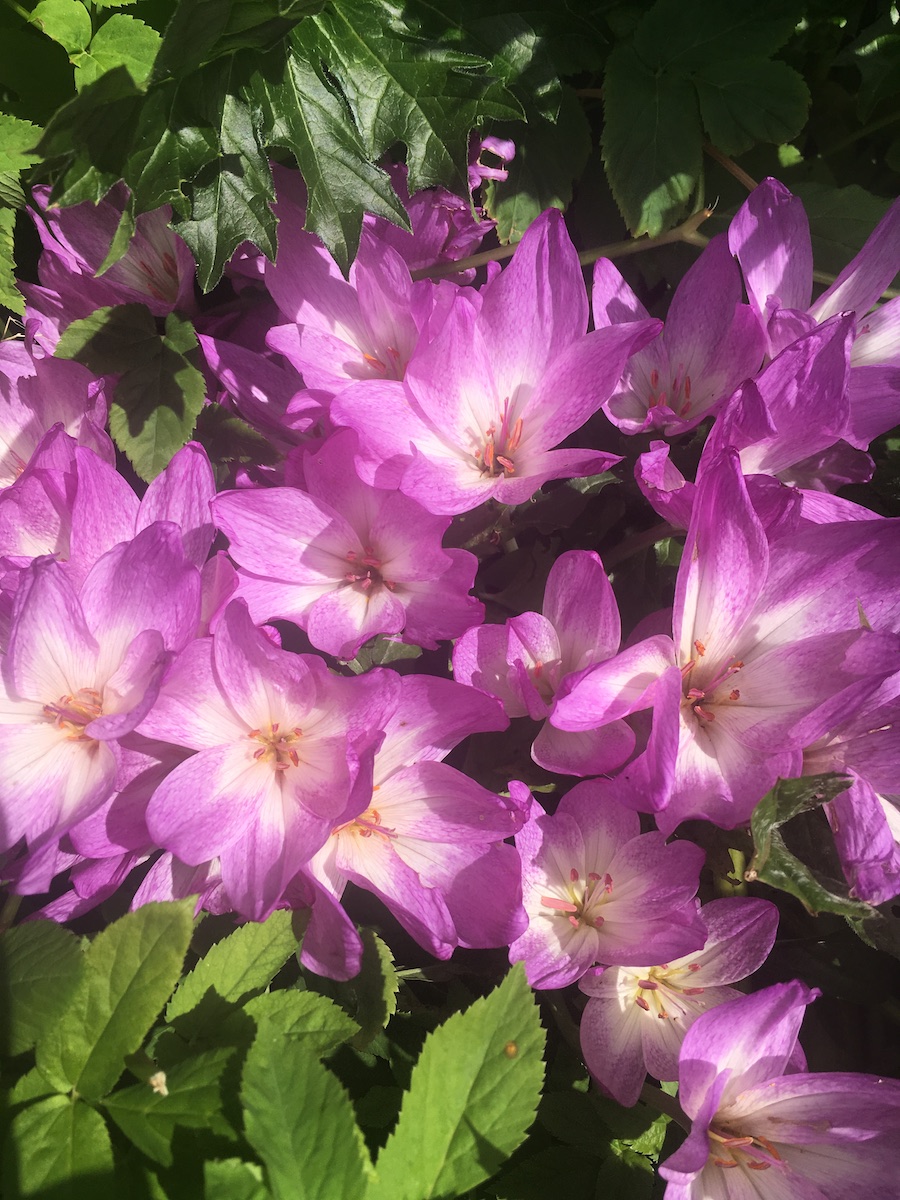 I always delight in finding half hidden plants that I have forgotten about in my garden. They are usually engulfed in a blanket of ground elder – the bane of my cottage garden. Last week it was the pretty purple flowers of the autumn crocuses that caught my eye en route to feed my chickens, and reminded me that there are in fact several clumps around the garden. Clipping away the ground elder revealed them in all their glory (see pic).
The autumn crocus is not actually a crocus (who says gardening is straightforward?), but a member of the Lily family. They are commonly referred to as naked ladies, as the leaves appear in the spring and then die back before the summer, so the flowers bloom alone – or are ‘naked’.
As you can imagine, finding ‘naked ladies’ in your garden isn’t without its perils. Their much-appreciated late summer colour and beauty belies the fact that all parts of the plant are extremely poisonous. Sadly, the leaves are often mistaken for wild garlic in the spring and have actually resulted in several human deaths. Of course, the plant is also poisonous to animals and pets. In 35 years of gardening I have never known an animal be ill or die after eating a poisonous plant in the garden but it does happen, you only have to ask the vets. Inquisitive puppies are apparently at most risk, so do please take extra care if you have a little one in your garden.
Anti-depressants
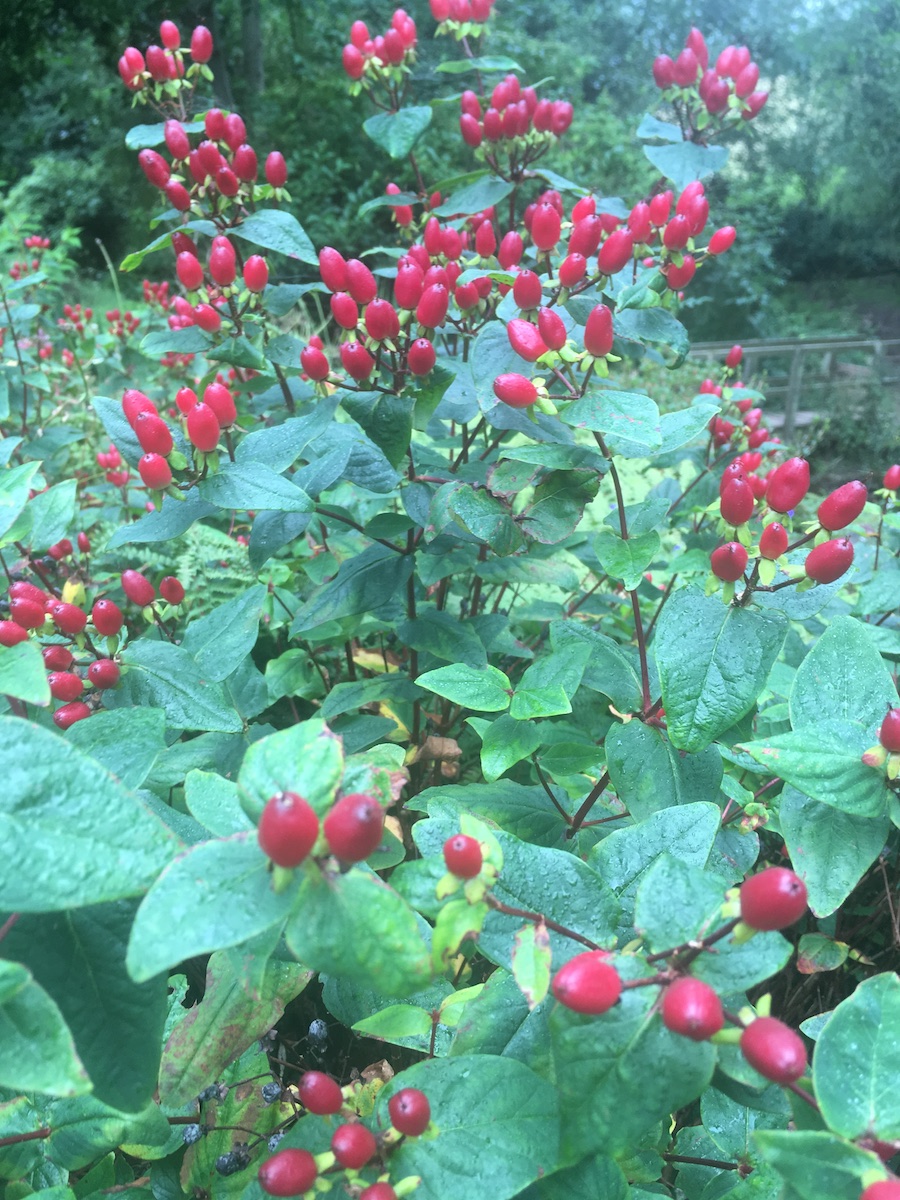
Other ‘beauties in the border’ this month include the hypericums. Commonly known as ‘St Johns Wort’, this plant is widely used as a herbal remedy for depression and anxiety. The sight of the stunning berries that follow the yellow flowers are also, in my opinion, excellent for lifting the mood!
Traditionally available in mostly red and burgundy tones, hybridization has more recently given us an array of great new berry colours including cream, peach, pink, orange, yellow, green and white. The intensity of colours and shades of each variety will vary slightly depending on season and weather conditions.
Hypericum Magical Beauty and H. Magical Innocence both have fabulous salmon-coloured berries (see pic). Hypericum Magical Green Power and H. Magical Green Revival will be adorned with large, shiny green berries. Hypericum Magical Impression has beautiful red berries that keep their colour over a long period of time (see pic). Hypericum Magical Summersun has beautiful, big, yellow berries, Hypericum Magical Universe has black berries and Hypericum Magical White Fall has beautiful white and cream berries.
That’s a ‘berry’ wide choice!
Leave a Reply