
Taken from Lynne’s weekly column ‘Green Scene’ for the Western Mail
24th January 2026

Winter of Disconnect
Oh my word, how long is this January? The positive part of me reassuringly realises that we are already ‘well over’ halfway through, but the larger part of me keeps wondering if we are ever going to get to February – and let’s face it, that month is hardly ‘first prize’ is it.
It’s lovely to see the snowdrops coming out and even some very early daffodils are blooming in places – they are almost-certainly the exceptionally early variety, Rijnveld’s Early Sensation – but I can’t eloquently express just how much I am looking forward to some warm spring sunshine.
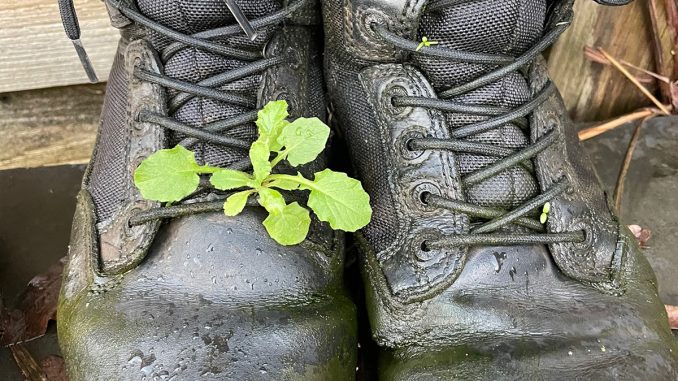
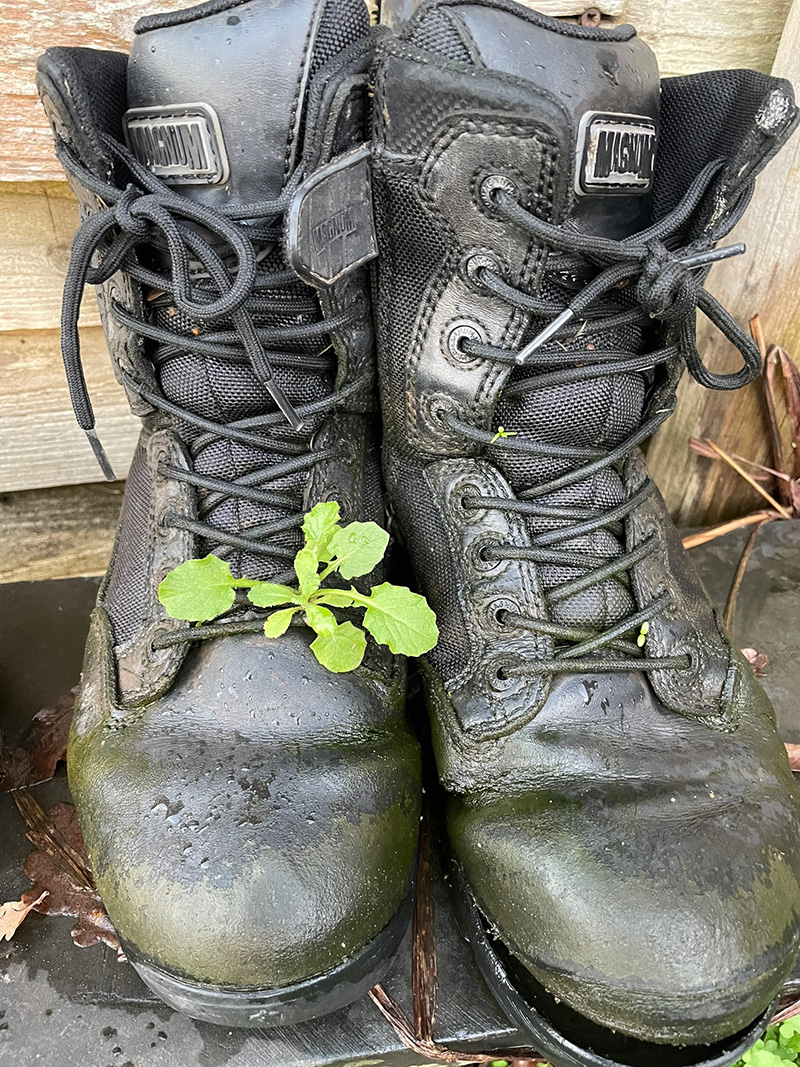
I recently noticed the little mustard seedling growing out of an old pair of work boots which are waiting to be nailed to a beam in the barn and turned into ‘nesting boots’. So if a little tiny mustard seed can have the tenacity to grow at this time of year and believe in itself no matter what the conditions, then surely so can I.
I’m sure that once the weather improves, I will be unstoppable again – until it gets too hot, of course, when I will probably very quickly become stoppable again.
Winter Beauty
 As well as some early spring bulbs ‘making an effort’ at this time of year, a client has a beautiful winter-flowering clematis hugging a trellis at the moment. It’s stunning and is also providing great cover for the birds visiting an adjacent bird feeder.
The most common, and easiest-to-grow winter flowering clematis are varieties of the Mediterranean native ‘Clematis cirrhosa’, which includes ‘Freckles’, ‘Wisley Cream’ and ‘Jingle Bells’.
They are all hardy enough to survive (and even thrive) in our winters and will cheerfully flower at some point between November and February. I highly recommend making room for one in your garden – just for the beautiful blooms and hope it brings at this time of year.
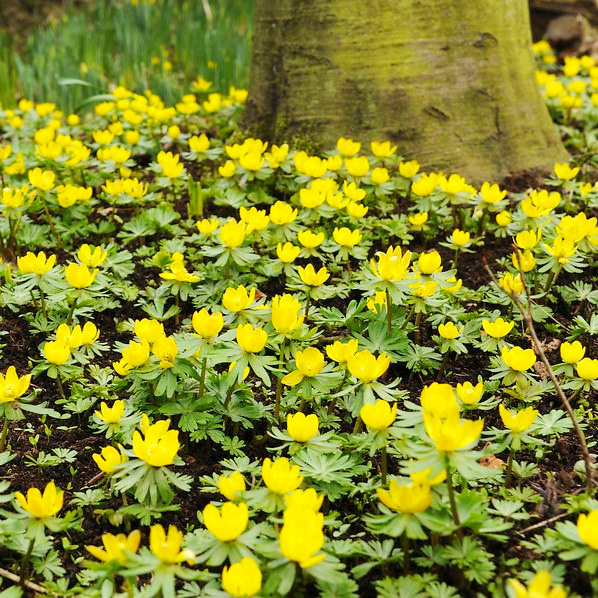
Another client also has a beautiful carpet of winter aconites showing off in a wooded part of his garden. I think any flowers at this time of year just lift the spirits and it’s easier than you (probably) think to get colour on several levels and places in the garden right now.
Winter Butterflies
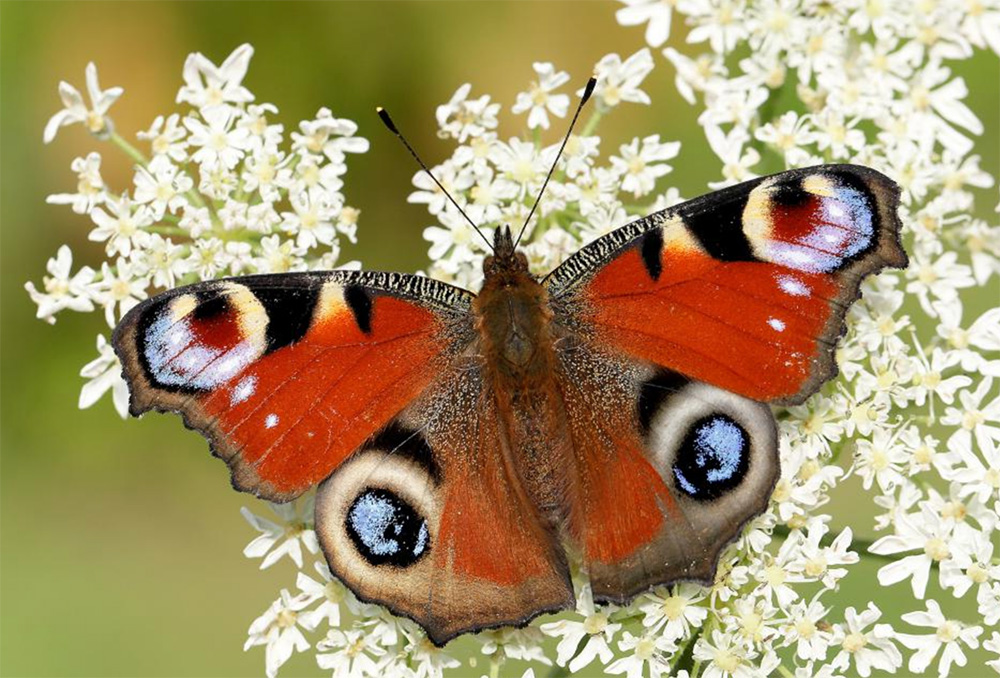 Last week, a friend sent me a photo of a lively Peacock butterfly that she found fluttering around in her utility room, asking if it was normal to see these at this time of year. It is.
Although our winter is typically too cold for butterflies to stay active, they spend the coldest months in a dormant state. Technically insects don’t hibernate, but it’s a very similar process. Most butterflies survive the winter as caterpillars, a chrysalis or even an egg, but a few species can spend the winter as adult butterflies.
The two you’re most likely to find inside your house, or even the garden on a sunny day, are the small tortoiseshell and the peacock. So, if you see one during the colder winter months, it’s likely to be a hibernating adult which has been woken up by a warm spell – a bit of sunshine (through glass) or the central heating. I always remember my nan describing bitterly cold but sunny winter days as being ‘a nice day through glass’.
Whilst warmer winter days can prematurely rouse them from their cool, dark hiding spots, they still need to conserve energy. If your enthusiastic butterfly is in a shed or unheated space, it’s best just leave it alone settle back down and finish its winter rest as nature intended.
But if it’s been roused from a warmer spot indoors, then relocate it gently into a cool, sheltered spot like a shed or log store, so it can continue hibernating safely.
So the good news is that not only is it not unusual to see a butterfly in action at this time of year, but it is also a sign of a healthy butterfly population.
Winter Warmers
 I know how those butterflies feel, but rather than wait for a sunny day in order to be active, I have been relying on my heated waistcoat and hand warmer.
If you are an active all-year-round outdoorser (or live in a very old and draughty cottage on the side of a mountain) then they are game changers. I was very sceptical of both initially, thinking they were both just one more ‘gimmick’ and something else to have to recharge regularly, but I am now on my third winter with both and am still ‘excited’ about them.
The waistcoat is great either under a coat in the harsher conditions or as a bit of extra ‘oomph’ whilst waiting for the woodburner to reach temperature – or sitting at the computer for any length of time. There are lots of choices now but I have to say mine was the lower end of the price range and I haven’t felt the need to upgrade. My hand warmer was a gift and is just perfect for reawakening my fingers after wearing wet gardening gloves or just for a bit of luxury in my pocket whilst walking.
You can also get heated scarves – which I’ve been tempted by not yet succumbed to, and heated socks. The heated socks I wore years ago when I had a motorbike were bulky with a large ‘battery pack’ (but still worth the hassle), whereas now they are very ‘sleek’ and a lot easier to wear. I haven’t got any of these (yet) either as I still get a bit grumpy about having too many things to recharge, but it’s nice to know they are an option.
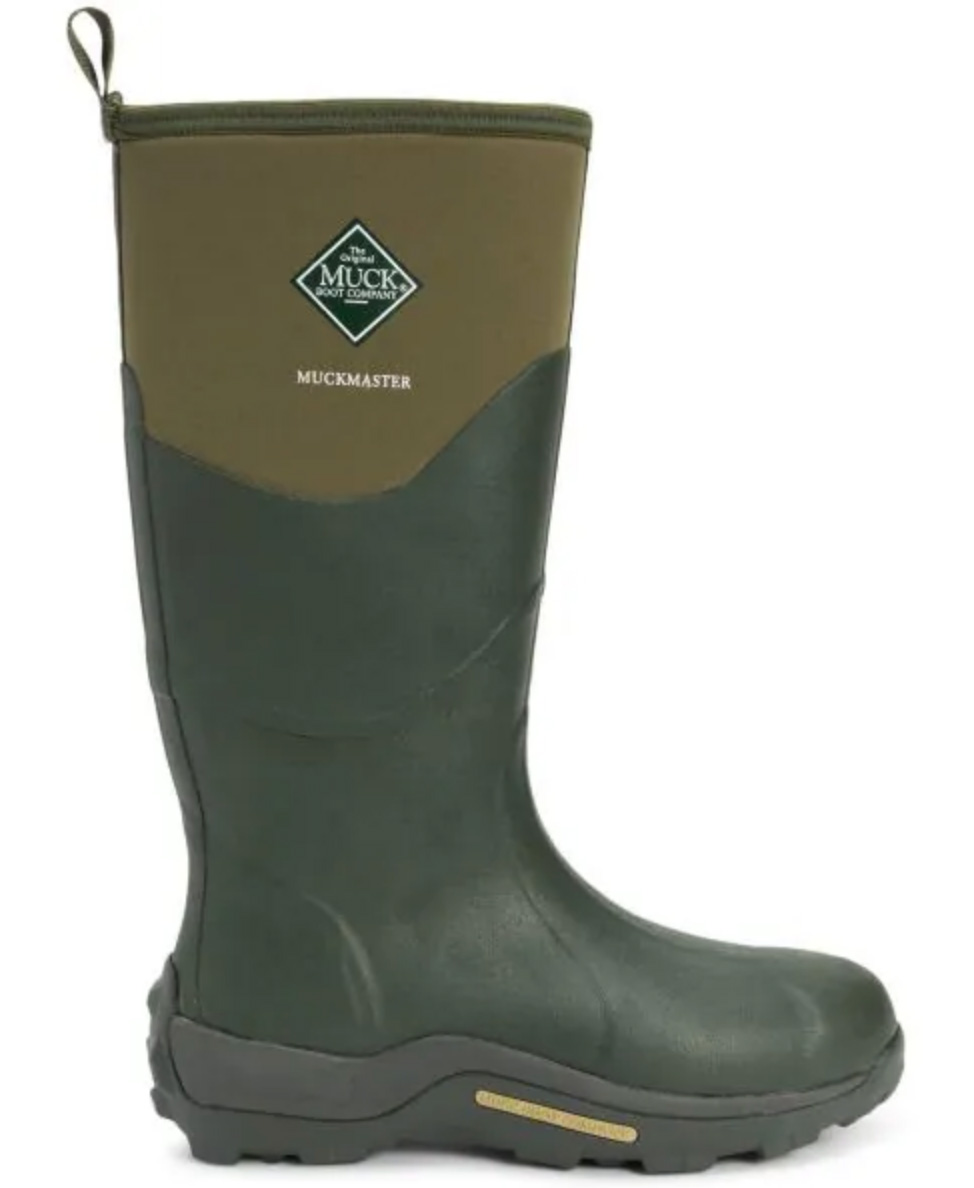
This winter my feet have been kept nice and warm in the cold, wet weather by a pair of Muck Boot wellingtons which are insulated, have a toe protector (for my dry stone walling), and are non-slip. I wear them with a pair of Genuine British Army ECW Arctic Socks (available from Army Surplus stores) and they’ve proved a perfect pairing. It’s only taken me around forty-five winters to get it right.
I’ll leave you with the wise words of novelist Sinclair Lewis, “Winter is not just a season, it’s more of an occupation.”
Leave a Reply