

Taken from Lynne’s weekly column ‘Green Scene’ for the Western Mail
9th July 2022

Underground Overground
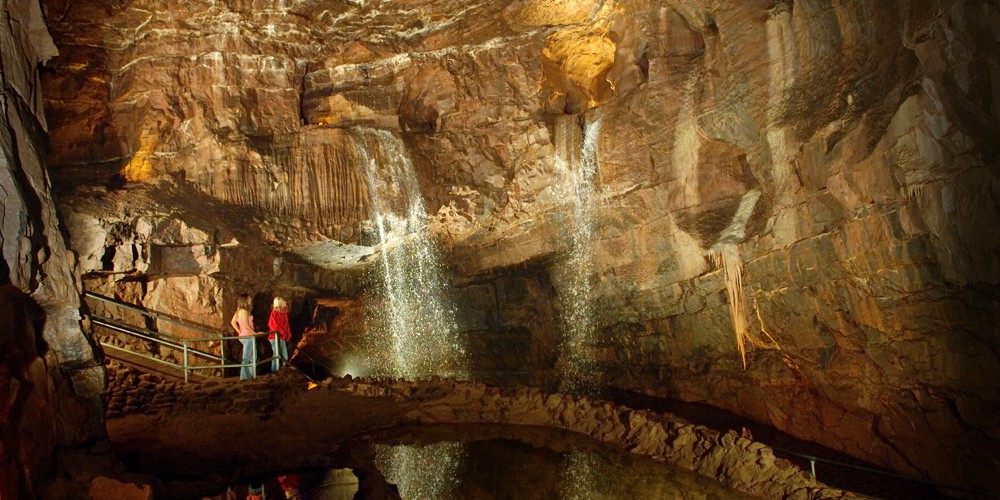 I recently visited Dan yr Ogof Showcaves for the first time since being part of a school trip, and was fascinated by how much they have developed. It’s incredibly clever to be able to retain and mange the authenticity of the original caves and yet keep up with, and even surpass, the more modern essential aspects of technology and of course, conservation.
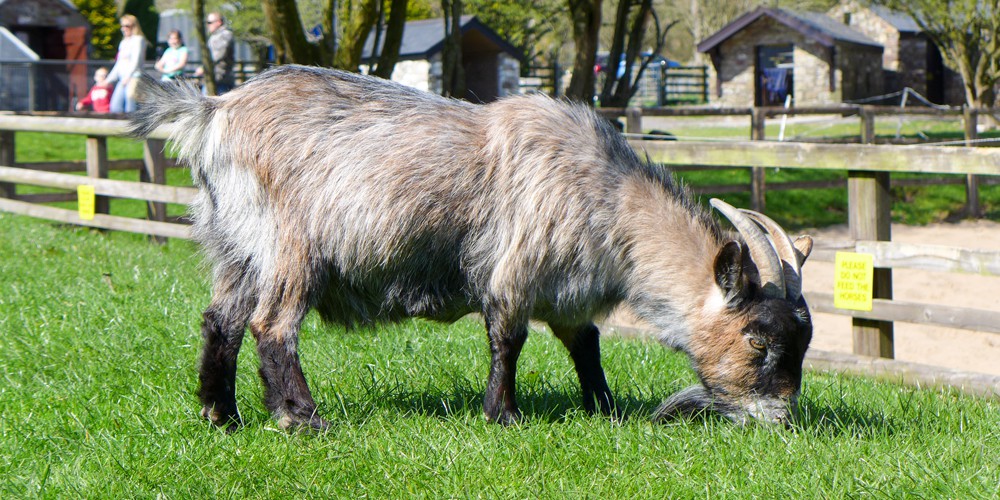
As well as the world-renowned caves, you can now visit the Shire Horse Centre, where they also breed these magnificent horses, and/or try and name the 220 different life sized dinosaur models throughout the park. At Mr Morgan’s Farm you can meet the goats and Shetland ponies, see alpacas and llamas grazing in the fields, and try to keep up with the cheeky chipmunks as they race through tunnels above your head. You can have adventures in the huge covered playground with a Kart track and aerial walkways, relax amongst the stone circles, use the latest interactive technology in the museum, unearth fossils in the fossil house, wonder at the reconstruction of an Iron Age Village and even pan for gold.
 And of course you can stay on site too, choosing from the recently redesigned and renovated campsite and caravan park or stay in the beautiful self catering accommodation in their Brecon Beacons Resort. There is a covered heated swimming pool, gymnasium, games room, sauna (some cottages have their own sauna) and coffee shop, and pets are welcome. (One per cottage). You are also ideally situated to enjoy all the wonderful walks, landscapes, views and history in the area too.
You do have to go online to book a visit now – please have a look at www.showcaves.co.uk for more details.
Added Attraction …
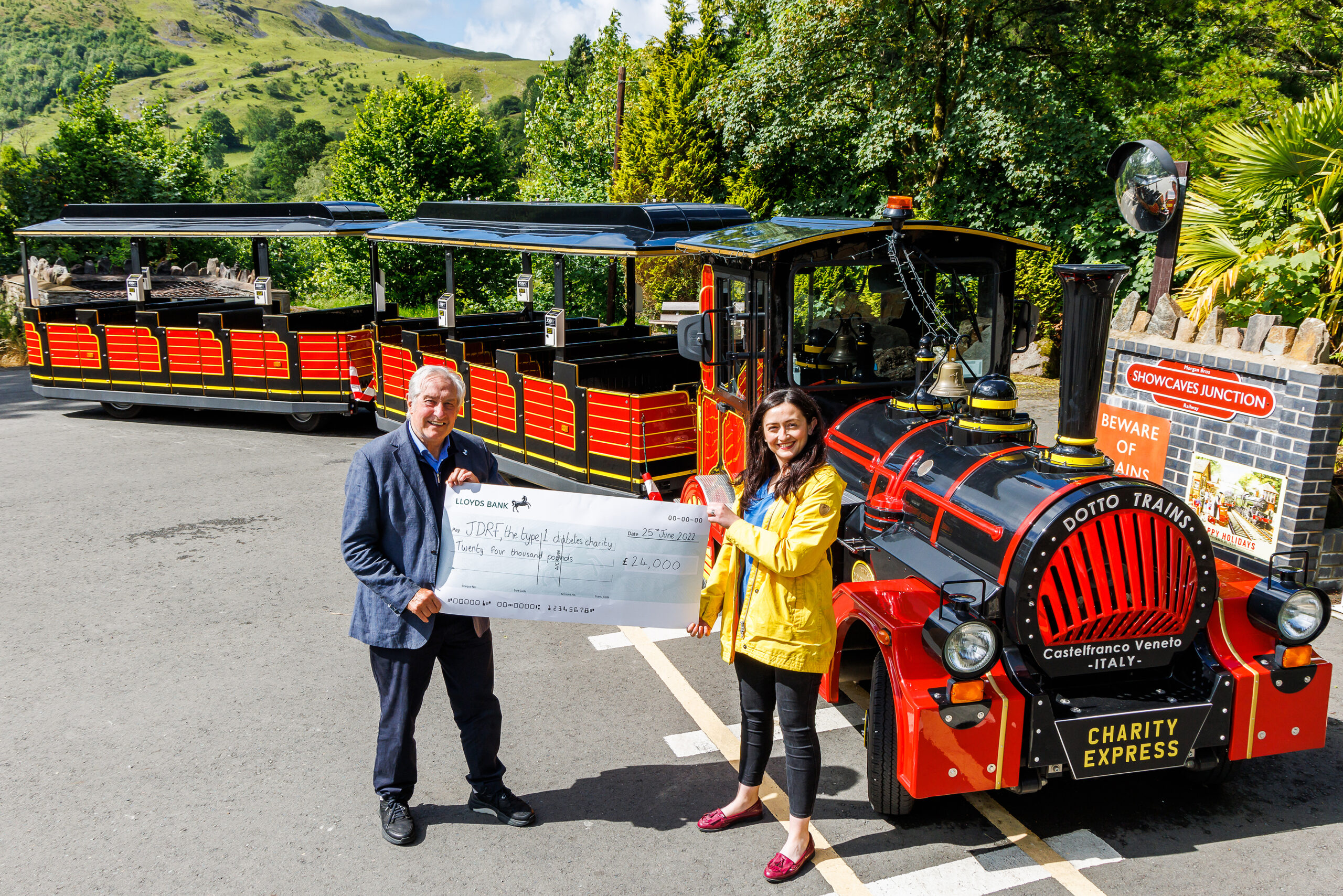 With a long history of green credentials, including large scale tree planting, hydro electric power generation and general conservation, The National Showcaves Centre for Wales has also been running a unique Charity Land Train, taking visitors around the attraction.
It’s free to use for visitors but there is a donation box, should people want to contribute to a charity.
The charity currently being supported is the Juvenile Diabetes Research Foundation (JDRF) and the Charity Train has raised a staggering £24,000.
Legendary rugby player Sir Gareth Edwards has just presented the cheque to JDRF at the Showcaves. I would love to have seen visitors faces as they realised Gareth was an added, albeit temporary, attraction, that day.
Slow Mow
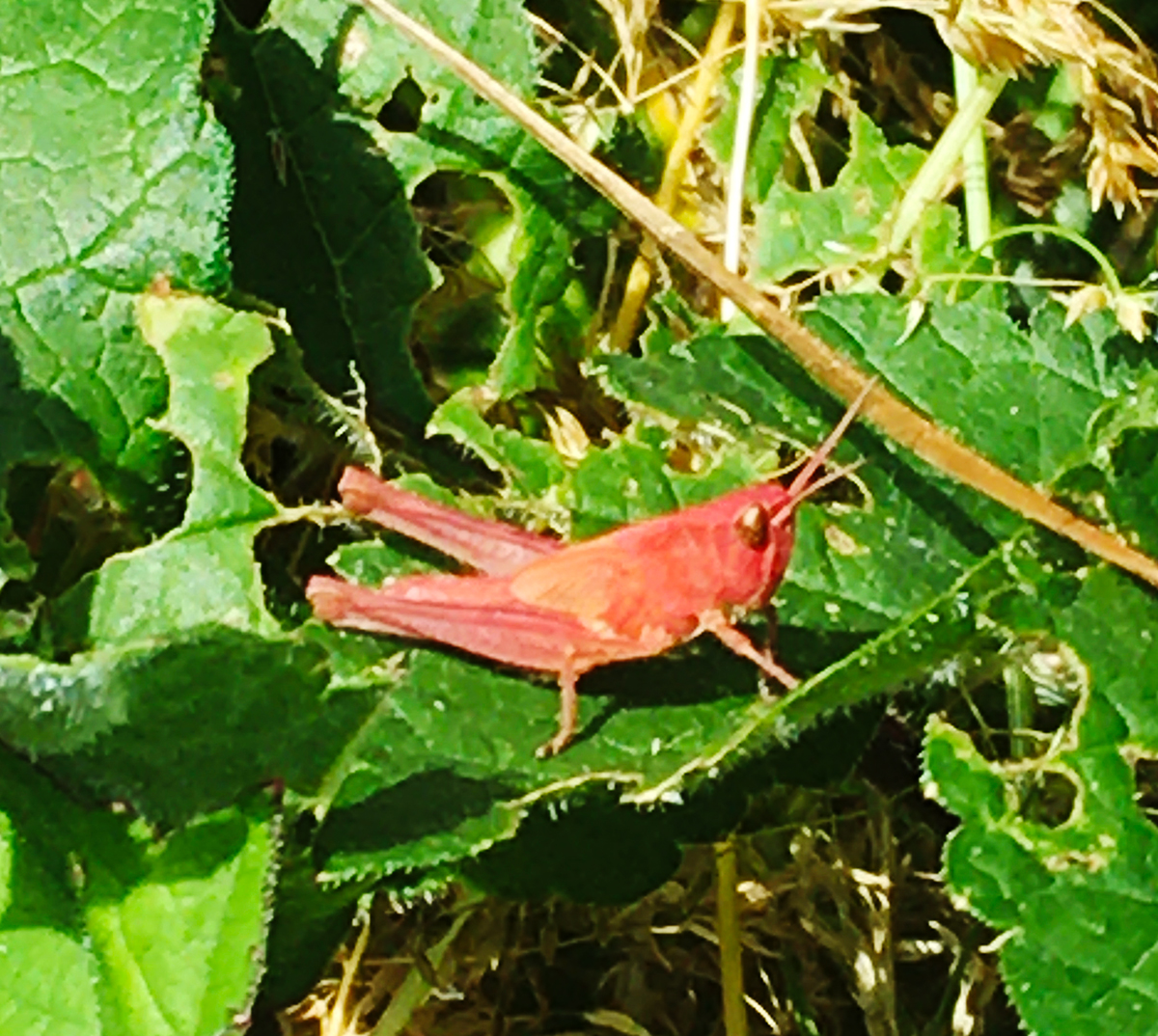 Choosing to cut back some grass from a gravelled path with shears rather than a strimmer in a garden near Abergavenny last week, I was rewarded by spotting this little lass. I haven’t seen a grasshopper for years and my first thought was (rather irrationally) ‘Wow, they do them in pink now.‘ As you can see in the photo, the head actually looks a bit like a shrimp.
Checking it out a little later on the ‘tinternet’ and I discovered that the pink grasshoppers are quite rare. It’s thought that the shrimp-pink colour of these rare grasshoppers may be caused by a genetic mutation, similar to that which affects albino animals. In some cases the pigments are reduced, and in others there is an excess of pigment. Here the red pigment is excessive, which results in the pinky colouring.
A few months ago I wrote about the white blackbirds that I had spotted locally. A friend had also spotted a black and white blackbird (no, not a magpie) and both lots of unusual colouring are caused by a genetic mutation.
Research shows that the pink grasshoppers are likely to be juvenile females (seems a bit too Barbie-esque for me) and apparently will often mature into the usual green and brown grasshoppers that we are more familiar with, in early autumn. Although occasionally they will retain their ‘individuality’ and stay a pinky-purple colour.
It is thought one reason that we don’t see many of the pink or purple insects is that they are less camouflaged and therefore more obvious to prey. I must admit, this one nearly fell prey to a very inquisitive Yogi.
If you want to encourage grasshoppers into your garden, leave grassed areas uncut and just listen out for that unmistakable ‘chirp’ they make by rubbing their back legs together. If you have ever tried to catch a grasshopper (as most kids of a certain generation will have) you will know that they can catapult themselves a huge distance. The equivalent for humans would be to jump at least the length of a football pitch. Impressive isn’t it.
I didn’t realise that grasshoppers also have wings and are strong fliers. They will use their strong back legs to ‘launch’ themselves and then continue to fly out of reach of predators when necessary.
The only reason I found this rare grasshopper is because I was using shears instead of a strimmer and then on Friday evening Monty Don was cutting back drifts of cow parsley from around his pond and advised on using shears, as you can be more selective about what you remove. I’m not sure a strimmer is even quicker in some of these circumstances, by the time you have raked up the mess a strimmer makes. It’s also a lot more ‘meditative’ to use clipppers or shears if feasible and much safer for hedgehogs and slow worms of course.
I’m not a huge fan of ‘No Mow’ as we need useable grassed spaces too, but I think I am going to start a Slow Mow Movement.
Treat Your Best Friend
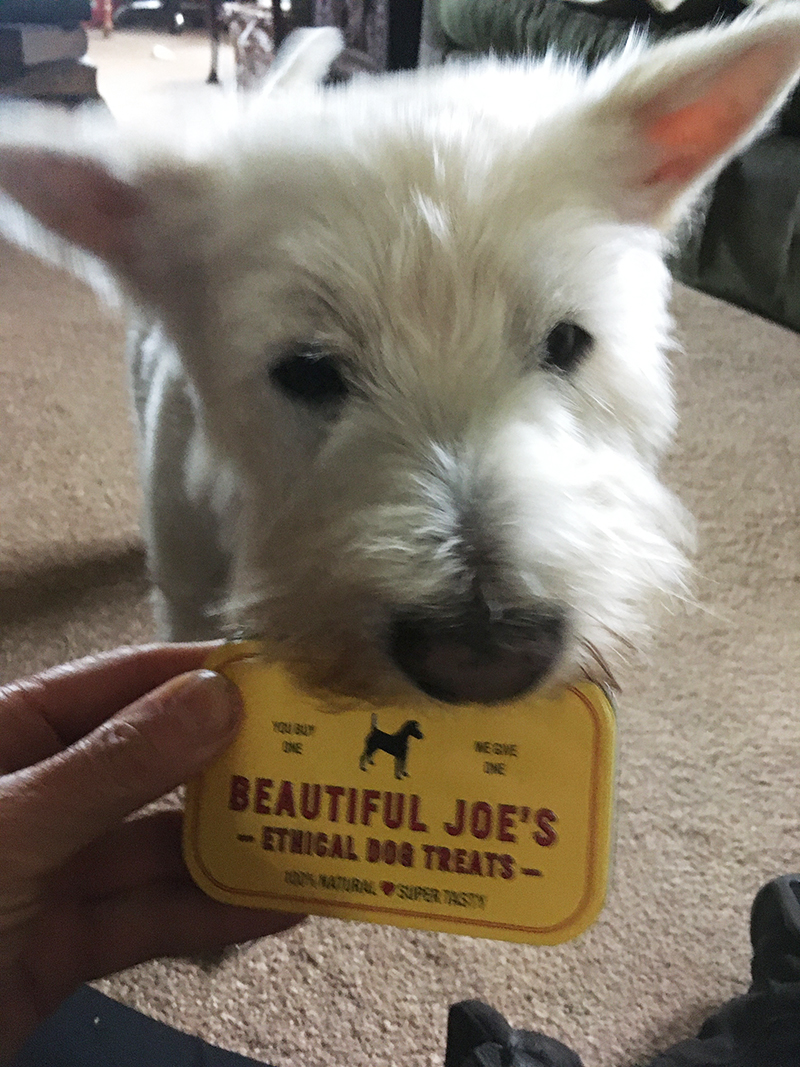 I make ‘home made’ treats for Yogi as often as I can but sometimes my intentions are more impressive than my execution. Thankfully I have just found a wonderful back up. A friend sent a packet of Beautiful Joe’s ethical dog treats in the post, (addressed to Yogi Allbutt, of course) and she almost mugged me for them (Yogi, not the friend).
Not only are the ox liver treats natural and handmade but every time a 50g packet is sold, the same quantity of treats is donated to a rescue home. So you are not only ‘treating’ your best friend, but also a not-so-fortunate dog too. You can order individual packets of treats, a lovely tin to keep them safe in your pocket and gift packs (Yogi is already writing her Christmas list).
To date 113,697 packets have already been donated to 110 rescue homes and you can recommend a home to be included on their donation list.
More details at www.beautifuljoes.com
Yet again a lovely read!
We have a black and white blackbird visit us in the autum when they migrate south to avoid the harsh winters of Russia and Northern Europe.
I didn’t know until recently that the blackbirds that overwinter here are not the same families that join us in spring and summer!