
Taken from Lynne’s weekly column ‘Green Scene’ for the Western Mail
23rd May 2020

Tricks of the Trade
 I am having a lot of emails and messages from readers who are getting frustrated with their gardens being ‘out of control’. ‘How do I cope?’ ‘Where do I start?’ “What am I doing wrong?” are all common questions.
At this time of year I am normally looking after about ten gardens, including my own, and there are a few ‘tricks of the trade’ to keep them all looking a little less jungle-esque. Be warned that in a few weeks time, when all the herbaceous stock is at full throttle, we normally have thunderstorms and biblical rains which will flatten it all. Mark my words – probably around the end of the month. So start by staking as much as you can now, to at least prevent that disappointment.
Otherwise, try to keep all paths clear; either by staking herbaceous growth that is already threatening to stop foot traffic by collapsing over the paths, (pre heavy rain), or by cutting back shrubs. You shouldn’t have to cut back shrubs too much. If you are constantly hacking back a shrub to allow access or a view, you have the wrong shrub for that spot and it is kinder to remove and/or replace it than to keep on cutting it back.
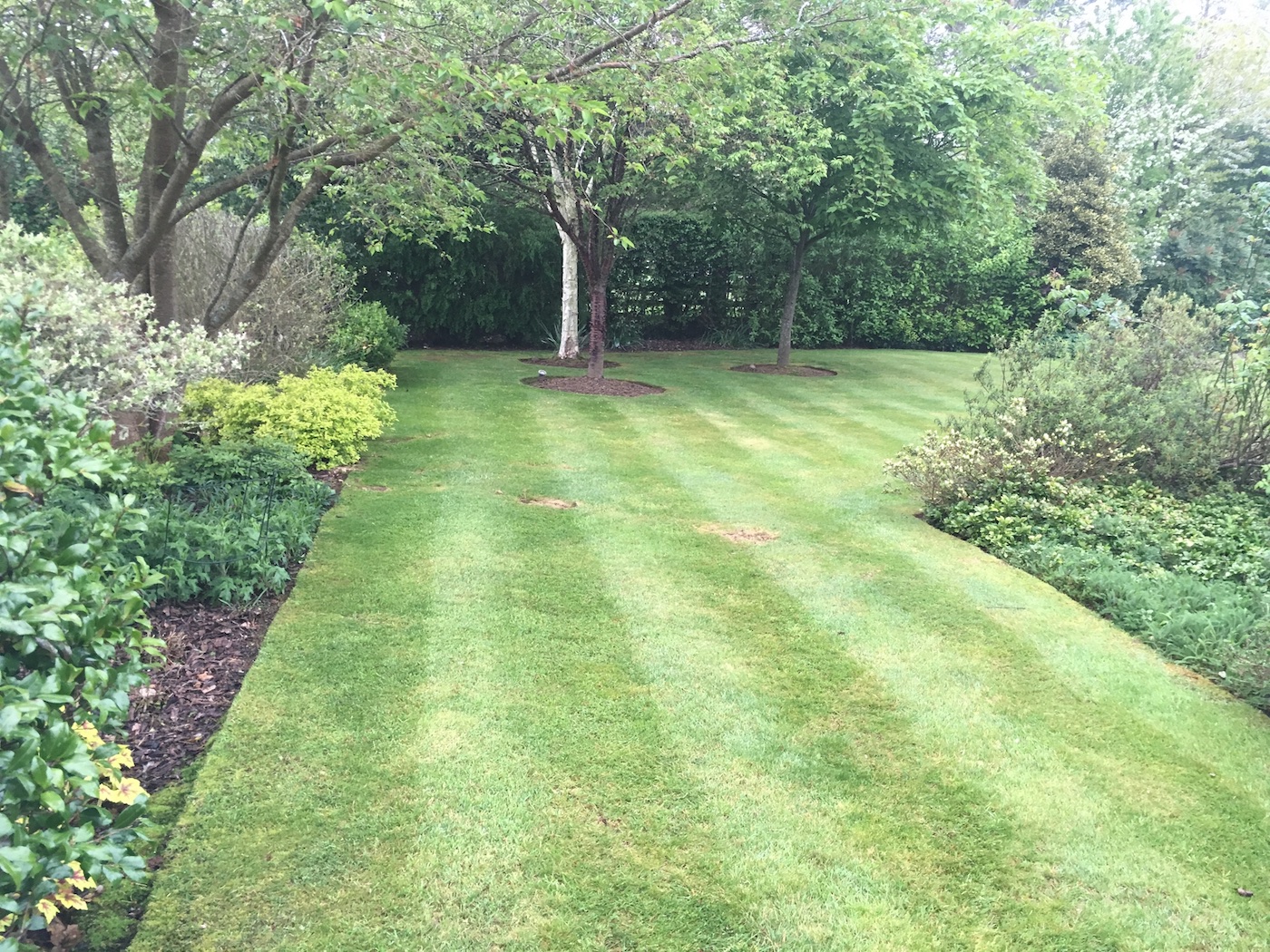
Similarly, try to keep enthusiastic shrub and herbaceous growth from encroaching too much onto lawns. It is all very nice to ‘soften the edges’ but allowing plants too much free rein will kill the grass underneath – as well as looking ugly when you mow a bit off them each time! Be warned though, don’t be tempted to mow over Pampas grass – their leaves will actually stop a mower by wrapping around the blades.
Keep grassed edges of the lawn neatly clipped where it meets the flowerbed and paving and paths. A neatly cut grassed edge will make the whole garden look neater. Endeavor to keep the front of all flowerbeds clear of weeds and just pull the bigger weeds out of the rest – until you have time to go through them all. Keeping the edges neat takes your eye to that and means you can get a way with a lot more in the rest of the flowerbeds.
Keep climbers tied in to their supports. Nothing says ‘I can’t be bothered’ more than a climber that has collapsed into a bed or over a path. As obvious as it sounds, keep climbers growing against the house cut back around windows too. Letting stuff grow over the windows will look as although the house is derelict – let alone the garden!
And finally keep patios and paths weed-free. Or be brave and let ‘appropriate’ plants grow in the cracks. My own flagstoned back yard happily hosts Welsh poppies, bluebells, aquilegias and little daisies. Many would treat them as weeds but I have seen similar photographs in posh magazines as ‘country-cottage design ideas’. The cow parsley in my flowerbeds also looks lovely at the moment. Who cares if it was my idea or nature’s?
It’s all about confidence and how you portray different sections of your garden. If all else fails, telling people, ‘It’s meant to look like that, I saw it in a magazine’, often works wonders.
Bee Kind
Something else that is always demanding my attention at this time of year, by going bonkers, are my honey bees. Traditional bee keepers will tell you that only bad bee keepers let their colonies swarm but just as I was getting demoralised by the thought of being a bad bee keeper a few years ago, I went to a lecture by Bees for Development’s Dr Nicola Bradbear who eloquently explained the difference between intensive and extensive beekeeping.
Intensive beekeeping is all about the honey production – and therefore all about the bee keeper(s) whereas extensive beekeeping is more about the bee and allowing them as natural a life and environment as possible. As well as letting my bees swarm (as they would in the wild), it also means that I haven’t taken any honey from them for the last few years, choosing instead to leave it for them for their winter stores. Contrary to popular belief, bees don’t work their little furry bottoms off so we can have honey, it is for them to store and to use as food through the winter.
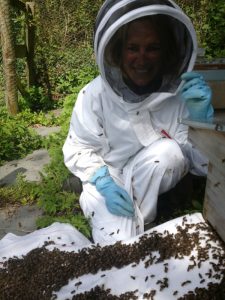
It is a contentious issue, suffice to say I keep my bees the way I choose – and let others do the same. And I was rewarded last week by a large swarm landing in my own garden – rather than departing! Normally when I collect a swarm, I shake the box of bees directly into their new hive but I have read about letting bees walk up a white sheet into the hive and was keen to try it.
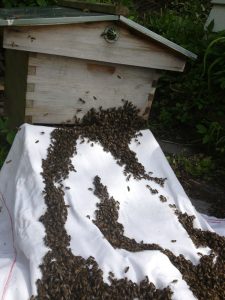
It is one of nature’s many beautiful and yet inexplicable wonders. After collecting the swarm in a cardboard box – not enough room here to describe exactly how, but if you are interested it is well worth a ‘Google’ – late one balmy evening I made a temporary ramp to the entrance of their ‘new’ hive and covered it with a white cotton sheet. Then I tipped the box of around 30,000 bees at the bottom of the ramp and waited. And waited. After about 10 minutes of just watching the big sea of writhing bees, (and getting a little nervous in case they weren’t going to ‘walk’), slowly a few bees took the lead and headed towards the hive entrance. Slowly but surely the mass of bees slowly organised itself and walked up the ramp and into the hive entrance. It was one of the most amazing experiences ever. And will never be forgotten.
I feel so blessed to have been able to witness it and still wonder at their immense capabilities. Coincidentally, last Wednesday was World Bee Day, a day used to raise awareness of all types of bee. Great idea, but lets not forget that these little wonders need to be respected and revered by us every day that has a ‘y’ in it.
You can read more about my ‘natural’ bee keeping journey here www.lynneallbutt.co.uk/605/
Leave a Reply