
Taken from Lynne’s weekly column ‘Green Scene’ for the Western Mail. 8th September 2018 
Toadally Gorgeous
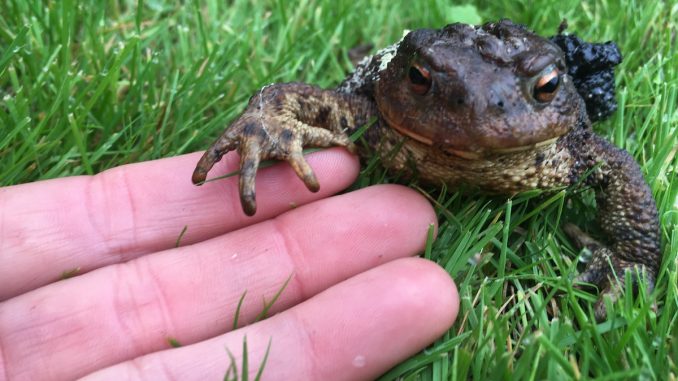
 Common Toads can be found in woodlands, scrub, rough grassland, wetlands and some gardens. If you are lucky you will see them on mild nights, as they are usually nocturnal. They burrow beneath the earth in the day and come out at night to feed. If you see one out in the day (unless you have disturbed it resting), it is likely to be poorly. This one was certainly very sluggish and had a big sore on his back, sadly possibly caused by a strimmer.
Toads have always been considered the gardener’s friend as they feast on slugs, snails, ants and beetles. They don’t have teeth so can’t chew, but will pretty much swallow any living animal that they can manage, which even include newts, young frogs and even small mice.
Toads can become very tame and friendly and can be offered titbits such as live mealworms. With regular feeding they can even be encouraged to come to you when called! How cool is that?
Toad Safety
 Although the Common Toad is a widespread species in Britain its population is in decline, which has led to it being listed as a Priority Species in the UK Biodiversity Action Plan.
The main threats to toads in the UK are the loss of breeding ponds and disruption of migration routes. Road building and development have created many obstacles for toads travelling to their breeding sites, as well as the loss of these ponds as a result of house building and other developments.
A new report also suggests that frogs and toads are vanishing in Britain because garden ponds have fallen out of fashion, with people filling in existing ponds as they are considered too messy or too much work, and housing developers, designers and landscapers are not incorporating new ones in their plans.
The RSPB said information gathered from its annual Big Garden Birdwatch, which also asks people about what other wildlife they see in their gardens, showed a decline in sightings of the amphibians. This year, toads were seen in 15 per cent of gardens and outdoor spaces, down from 28 per cent a few years ago.
Creating a small pond, with an adjacent wood and stone pile for refuge, in your garden could make all the difference. And surprisingly, unlike a lot of amphibian species, Common Toads like ponds with fish. This is because Common Toad tadpoles are poisonous to fish, which gives them a greater chance of outcompeting frog tadpoles. They continue to be able to secrete toxins as adult Common Toads, which obviously deters a lot of predators, with the exception of hedgehogs, stoats, weasels, rats herons and corvids such as crows and magpies. And if they manage to avoid these critters, they can, rather impressively, live up to 20 years.
Cross Toads
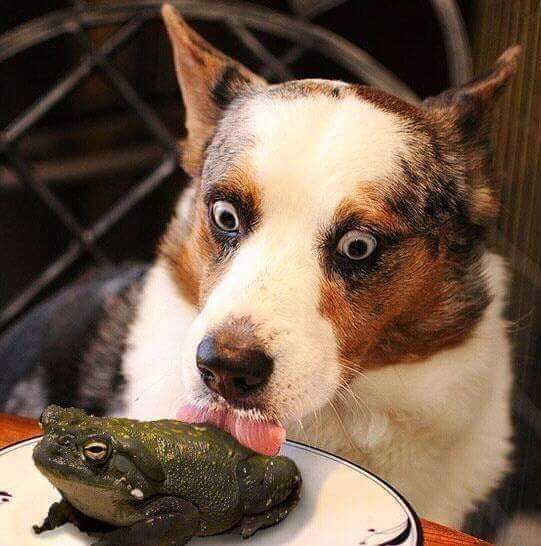 All toad species possess paratoid glands on their back, which secrete venom (a thick, milky liquid) when the toad is threatened. The larger the toad, the larger the parotoid glands and the greater the volume of venom secreted.
Unfortunately, some dogs seem to find toads quite fascinating and will try to pick them up and play with them. Dogs (or cats) that have mouthed, or even licked, a toad can start foaming or frothing at the mouth, vomiting and showing associated signs of distress like head shaking, pawing at the mouth and whining.
You will need to thoroughly flush out their mouths with water, taking care to prevent swallowing of the irrigating fluid. But, as occasionally toad venom poisoning has proved fatal if left untreated, I would always recommend taking your pet to the vet if you see them ‘retrieving’ a toad, or think they may have.
What’s in a Name?
 The binomial name for the Common Toad is Bufo bufo. The binomial system of naming species uses Latin words. Each name has two parts, the genus and the species. For example, human beings belong to the genus Homo, and our species is sapiens – so the scientific name is Homo sapiens.
Some zoological names of species consist of two identical and are known as tautonyms. For some reason, I have always found them amusing.
Other examples include:
- Rattus rattus – black rat.
- Puffinus puffinus – Manx shearwater
- Milvus milvus – red kite
- Dives dives – melodious blackbird
- Bison bison – American bison.
And that reminds me; how can you tell the difference between a buffalo and a bison?
You can’t wash your hands in a buffalo.
——————-
Footnote: Sadly my little friend died, and looking at the photo, it does look as though he was reaching out for, and received, comfort. Nature can be tough; I hate the death side of things but he did kindle this column. Toadally inspirational.
Leave a Reply