
Taken from Lynne’s weekly column ‘Green Scene’ for the Western Mail
6th September 2025

‘Ti-Tea
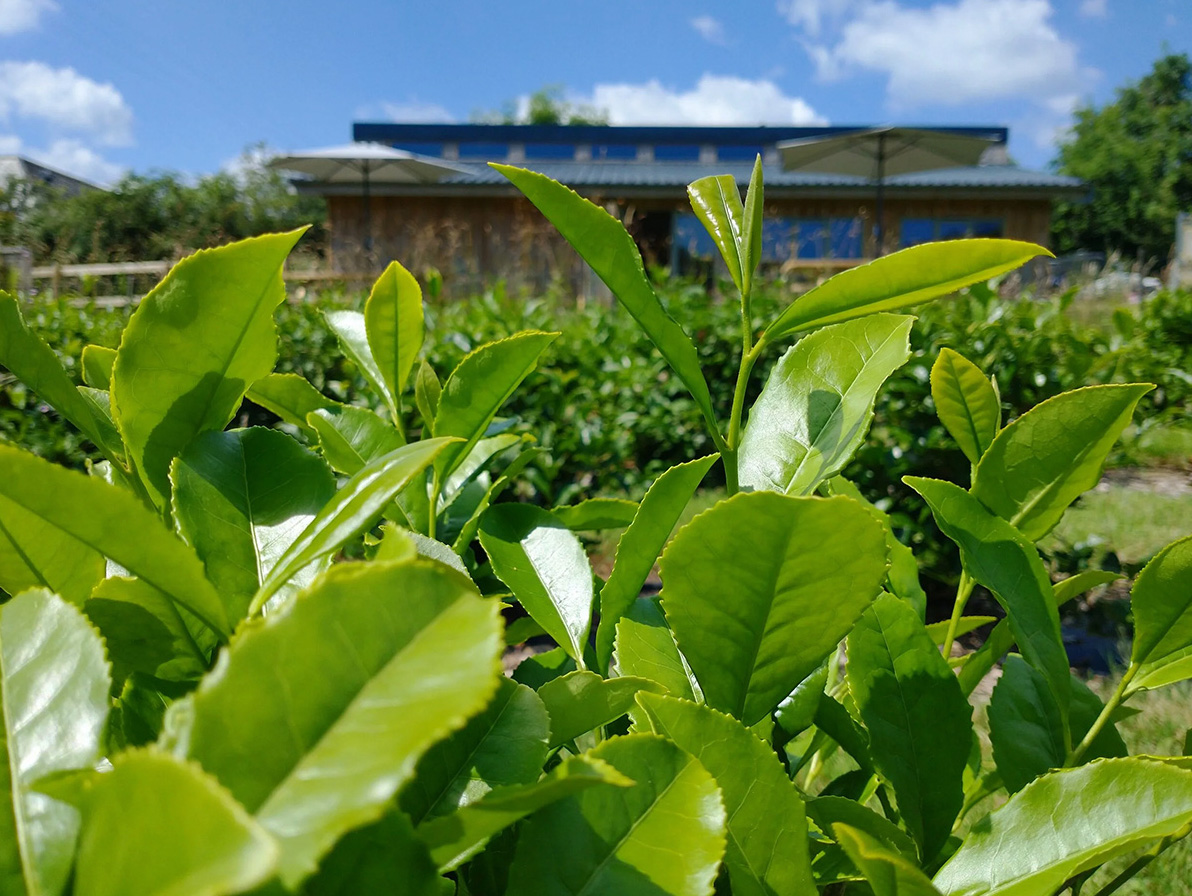
Thank you to a few readers for getting in touch last week after reading my recommendation for ‘tea from Brecon’. I hasten to add, it is ‘shipped’ from Brecon, not grown there. But as my readers pointed out, that possibility might be creeping closer. Although Britain has been a highly devoted tea importer for years and years, it’s quietly been producing its own for a while too. Ten years ago, Jo Harper was a nurse in Devon and after ‘banging on about possibility of growing his own tea’ for a while, his wife told him ‘either do it or shut up about it’.
I can’t help but wonder how many successful enterprises began that way.
Anyway, Jo ordered 1,000 seeds of Camellia sinensis from China in an online auction and with no experience, but much research, planted them in holes instead of the more conventional method of digging pits to preserve the mycorrhizal networks already in place, and keeping the soil biome intact.
Unfortunately, only thirty plants emerged from the thousand seeds that were initially planted. But undeterred, the following year, Jo sourced plants from other places in the UK, including ornamental tea bushes. He used cuttings and ultimately relied upon Nepali and Georgian-sourced seeds as his cultivation base.
He and his wife, Kathryn, kept researching, learned from their mistakes, got regular irrigation in place and five years later, ‘things started to happen, and plants started to live.’
Today, Jo tends 10,000 plants on the 14-acre ‘Dartmoor Estate Tea plantation’ in Devon, which last year produced 20kg of award-winning tea, with the taste being described as ‘outstanding’.
Jo said, “We’re noticing that, when we go to London, that actually the biggest group of fine specialty tea drinkers seem to be in their 20s and 30s, and drinking tea without milk and sugar. It’s a growing trend and I think the picture will look different in another ten, fifteen, twenty years’ time,”
He added, “We have dedicated ourselves to tea, and in a way, have become peasant farmers.”
Who knows maybe that will be on the curriculum at Agricultural College soon. And tea might be grown in Wales. Would it be called Ti-Tea? I hope so.
Toadally Besotted
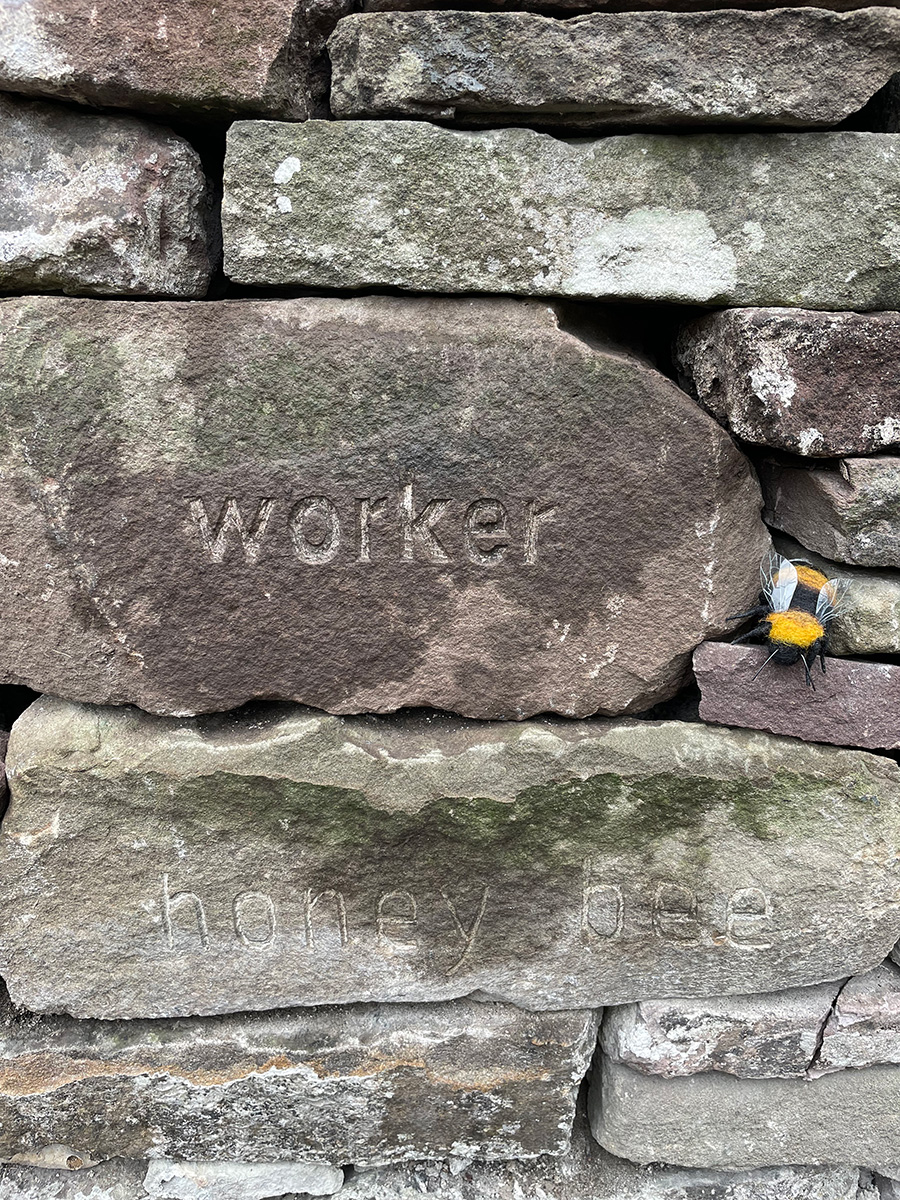 I’m still loving my dry stone walling – and am still personalising it whenever suitable.
Years ago I engraved some stones before using them to build a wall around my apiary, but they have been swamped by nettles and other vegetation that I leave in situ for my bees. So I rescued them, re-defined them and put them in another wall at the cottage.
‘Messing about’ with a stone wall isn’t everyone’s cup of tea, especially the ‘traditionalists’, but I like experimenting and as the saying goes, ‘Creativity is allowing yourself to make mistakes. Discernment is knowing which ones to keep.’
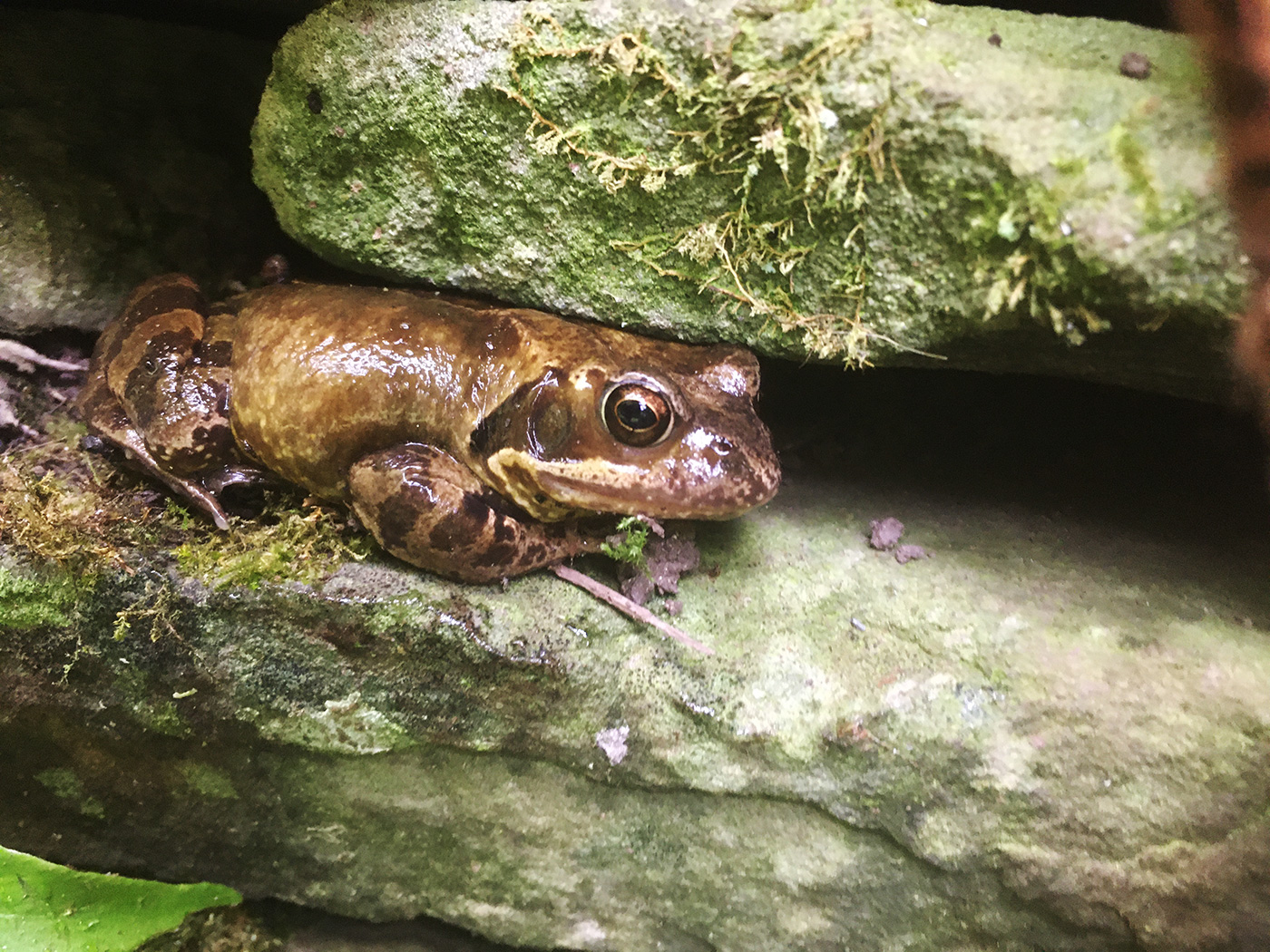 I found a little toad whilst rebuilding a wall last week, which reminded me of the huge practical importance of the dry stone walls for wildlife, and not just the aesthetic quality of them. Although, let’s face it, dry stone walls do look bloomin gorgeous.
When I rebuild, I always leave enough little gaps for toads, voles and other wildlife. Whilst walling near Pontardawe in the summer, as I dismantled a wall, I disturbed a small adder. As he was the size of a big slow worm – and I had gloves on – I caught him and relocated him so I could keep on walling.
I can do without finding too many of those, but it’s a good example of the diversity of wildlife that a dry stone wall can home.
Worse than Orchids
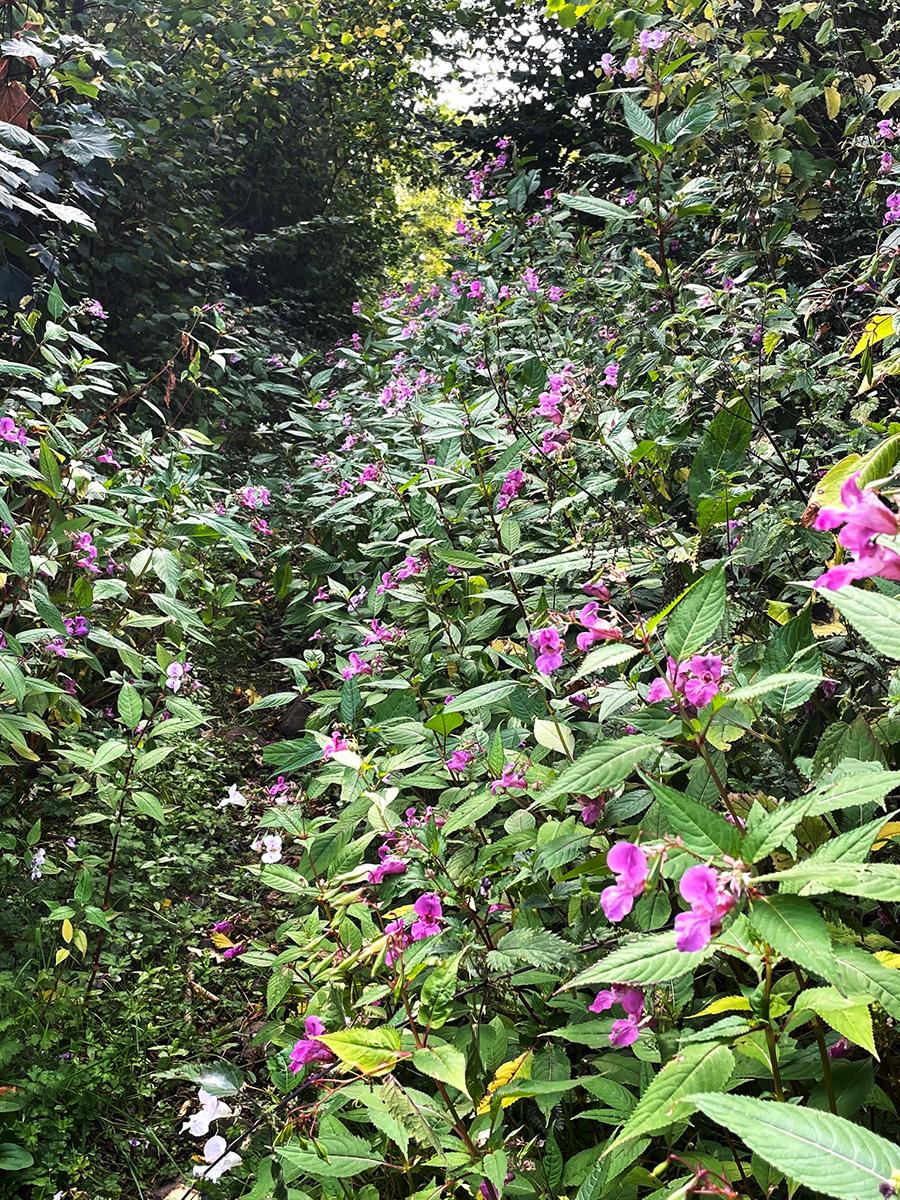 I always remember when I started keeping bees, being told that if there are five beekeepers in a room and you ask them all the same question, you’d get five different answers. I have since learned that the same can be said for a lot of things, including the merit of some plants.
Impatiens glandulifera, commonly known as Himalayan balsam, is now rife around some of the local footpaths and bridleways and is becoming more of a ‘problem’ in general in Wales. It is insanely invasive, with seeds being carried by water, animals and unsuspecting people ‘popping’ the seedheads (which explode violently) for entertainment. One of the common names for the plant is Policeman’s Helmet, as apparently kids liken popping the seedheads to knocking off a policeman’s helmet.
The Latin name tells us that it is a relative of the popular bedding plant Busy Lizzie, and, as the common name suggests, it’s native to the Himalayas. It has become a troublesome weed in the UK as it crowds out native plants and can lead to riverbank erosion when it dies back in winter. Riverbanks are one of its favourite habitats and it will often be seen flanking various watercourses as the seeds are waterborne. It’s actually illegal in the UK to cause it to spread, although it often is unknowingly done so, with seeds even being carried in the tyres of fisherman’s cars which have been parked on riverbanks.
It’s a shame it’s so enthusiastic really, because in many ways it is the perfect plant – which is why it was imported by the Victorians as an ‘exotic garden plant’. The late flowers have a sweet nectar and it provides a good source of food for bees late in the season – controversially (and somewhat secretly) making it popular with beekeepers. When honey bees visit the flowers they get a dusting of fine white pollen on their backs and so it’s easy to see where they’ve been ‘dining’ when they come back to the hives.
It is fast growing, reaching up to 4 or 5 feet tall in a single season and completely undemanding, which contributed to making it a popular addition to the backs of borders in Victorian gardens.
Despite Busy Lizzies being an absolute favourite of pigs, because of their tasty roots, I have never been keen on the ‘municipal plant’, and whilst I want to like the Himalayan Balsam, obviously I can’t because of its boisterous nature – and I’m not alone. Joseph Hooker, the famous botanist and director of Kew, who was trying to sort out the Impatiens genus when he died, called them ‘deceitful above all plants’ and ‘worse than orchids’.
Funny Forensics
And finally, because I am still chuckling about a random comment this week, I just had to share.
A neighbours grandson came into my cottage for the first time and I mumbled a half hearted apology about ‘the mess’ – in my defence we hadn’t had rain for months and therefore house work had been elusive – he simply shrugged and replied, “Knowing you, your lifestyle and the work that you do, if your house had been immaculate I would have thought you had probably murdered someone and cleaned up the evidence.’
It still makes me laugh out loud. So comical and yet so astute.
Cornwall has a thriving Tea Plantation – Tregothan .