
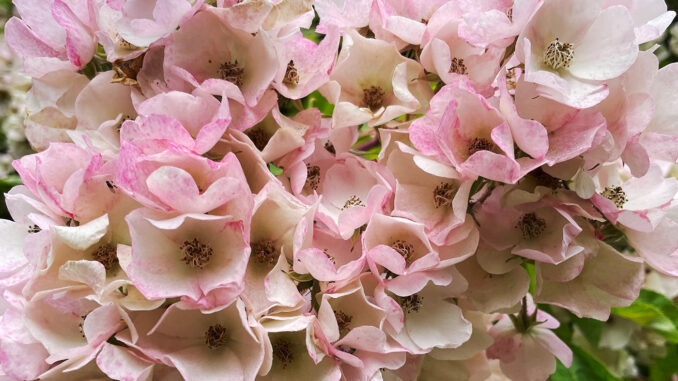
Taken from Lynne’s weekly column ‘Green Scene’ for the Western Mail
13th July 2024

Thunder Fever
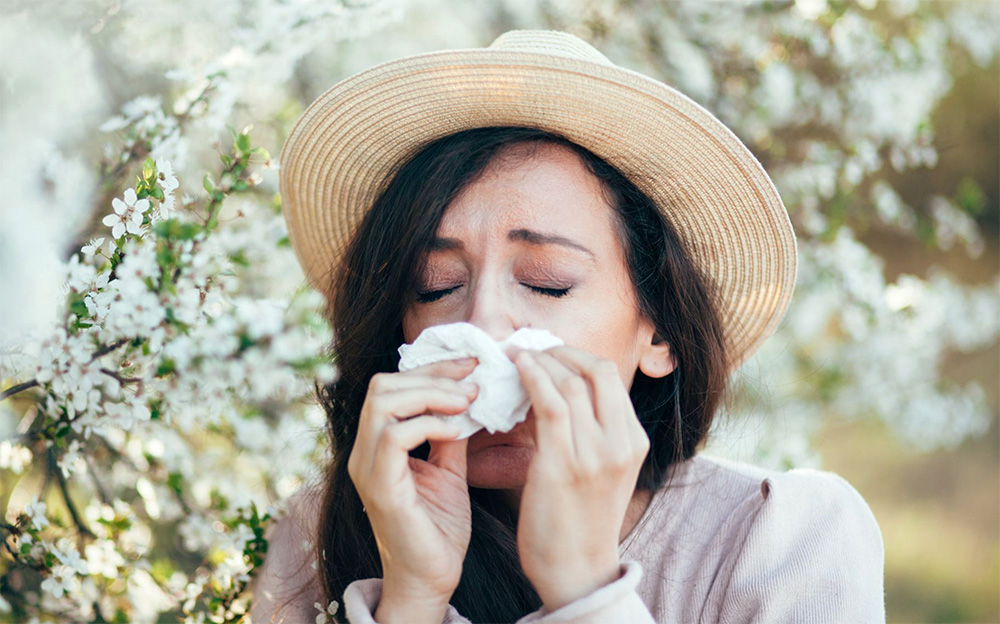
Despite the overcast, almost wintery conditions of late a lot of people are suffering from hay fever. Most people associate pollen allergies with hot, sunny, summery days and therefore the increased symptoms in recent weather conditions have been a bit confusing.
But have you heard of thunder fever?
We seem to only have a few days of sunshine now before stormy conditions take over – flattening all the tall, elegant herbaceous plants and billowy cow parsley. It drives me mad. One day everything in the garden is looking lovely and the next it has been beaten over by heavy rain and is flopping over paths and lawns, looking totally defeated by the weather. And I get soaked trying to push through the paths through my ‘wildflower meadow’ on my way to feed the chickens.
But it is much worse for hay fever sufferers, as when thunderstorms and a high pollen count collide, people with allergies experience the phenomenon known as ‘thunder fever’. This thunderstorm-hay fever is a more intense version of hay fever and can cause symptoms like shortness of breath, runny or blocked nose, sneezing and coughing, fatigue, itchiness, headaches, wheezing, chest tightness, loss of smell, earache and watery eyes.
Thunder fever seems to worsen hay fever symptoms because the moisture and extra humidity in the air that comes with summer storms can cause the allergens to break down. This raises the pollen count and increases pollen density in the air and it’s these pollen particles that cause all the problems.
Storms can also unsettle the atmosphere, stirring up all allergens and pollen particles in the air, which will also increase irritations and allergies.
Things that could help include taking a spoonful of local honey each day. Despite there being no scientific evidence, the theory is that by eating local honey, you’re ingesting local pollen. Many believe that this allows your body to build up a resistance to pollen, thereby reducing your reaction to it and relieving hay fever that’s caused by pollen. I know a lot of people that it has worked for.
Another simple trick is to put a thin film of Vaseline inside each nostril, as that will trap pollen particles and stops them from entering your nasal passages and irritating your sinuses.
I was helping a local farmer to haul hay a fortnight ago – it’s a bit of a tradition from childhood with my brother and I always stacking the bales in the barn as our neighbour suffers badly from hay fever. This year he definitely wasn’t quite so ‘sneezy’ (although still didn’t go in the barn) and he put it down to something he had from the doctor – so if honey and Vaseline don’t work for you, there is that option too.
Offer Support
Meanwhile in the garden, as the forecast looks as though short spells of sunshine are going to be followed by thundery conditions for a while, just endeavor to keep ‘floppy plants’ (not an RHS term) cut back or tied back from the pathways and lawn edges.
I have used old garden tools like forks and spades put in the ground and run string between them – the old tools look like features in themselves and are a lot safer than bamboos, for people and dogs. Also stake any tall herbaceous plants that need some support – it’s usually better to be late than never.
Climbers – especially roses – are often adversely affected by heavy rain too, so make sure they are nicely tied in. And I have given a lot of my wild geraniums ‘the chop’ now as they had become more ‘barrier than beautiful’ (not an RHS term either). Chances are I’ll get a second late bloom that way too. “Every cloud and all that … “
Thorny Subject
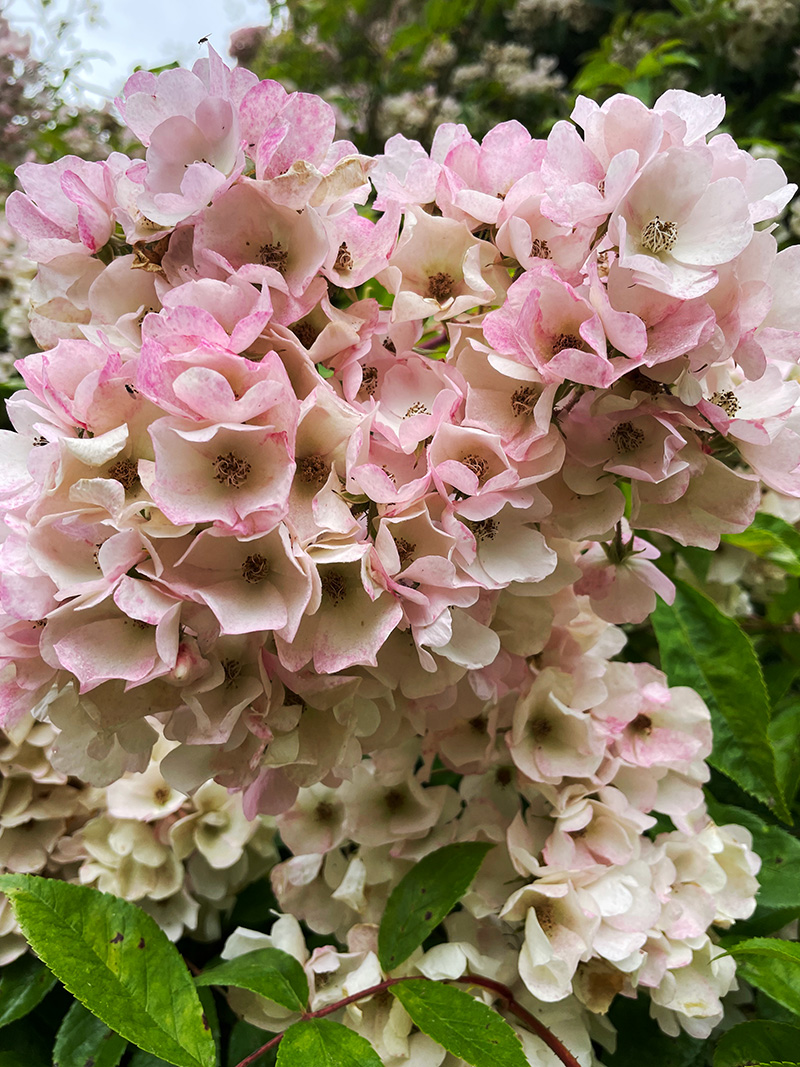 The stunning Multiflora rose, (Rosa multiflora), in the photo is currently in all its glory in a client’s garden. Although these enthusiastic rambling roses are said to be able to reach heights of up to 20 ft, this beauty is a lot taller than the house.
Used in America for erosion control and as living fences, or natural hedges, to confine livestock, it was also discovered to provide effective habitat and cover protection for pheasants, northern bobwhite, and cottontail rabbits and food for animals such as songbirds and deer.
More recently it has been planted in highway median strips to provide crash barriers and reduce headlight glare from oncoming traffic. That’s a hard-working plant.
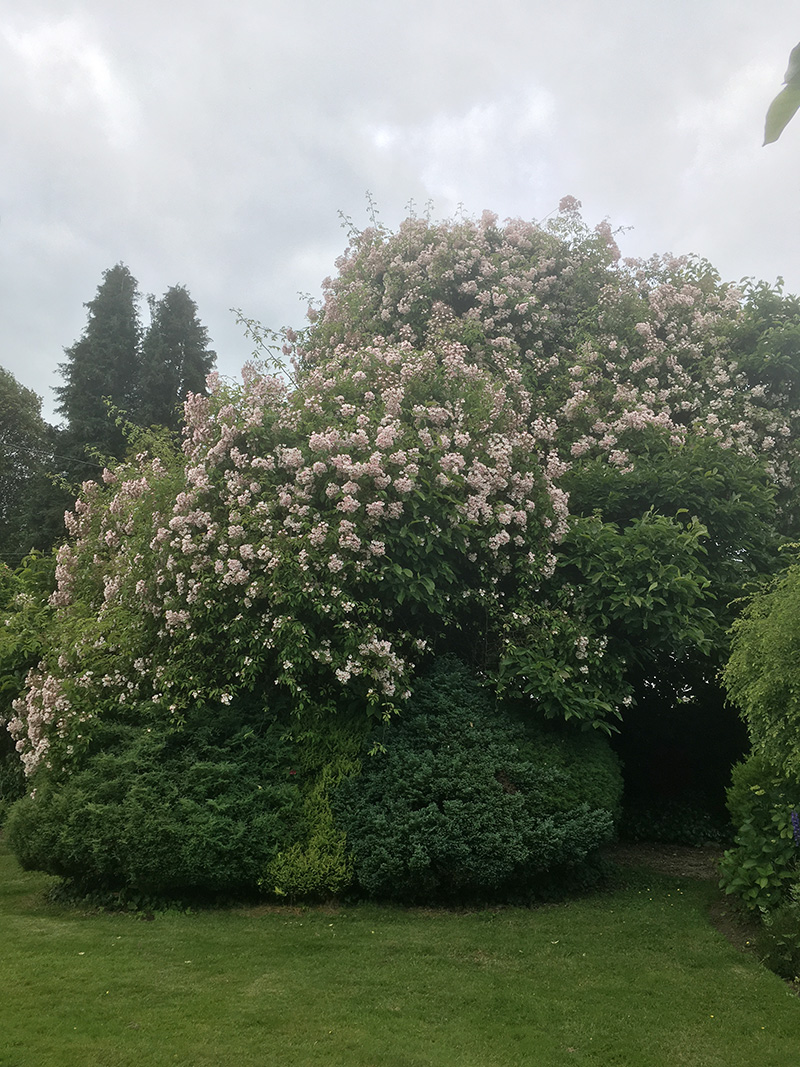 However, the extensive and pervasive growth of the multi-flora rambler has resulted in it being classified as either a noxious weed, prohibited invasive species or even banned in 13 states, including Connecticut, Massachusetts, New Hampshire, New Jersey, and Pennsylvania.
It is also ranked among the top forest invasive plant species for the north-eastern area by the US Forest Service.
It just goes to show what is revered by some is repelled by others and beauty really is in the eye of the beholder, or gardener.
Cast an Eye July
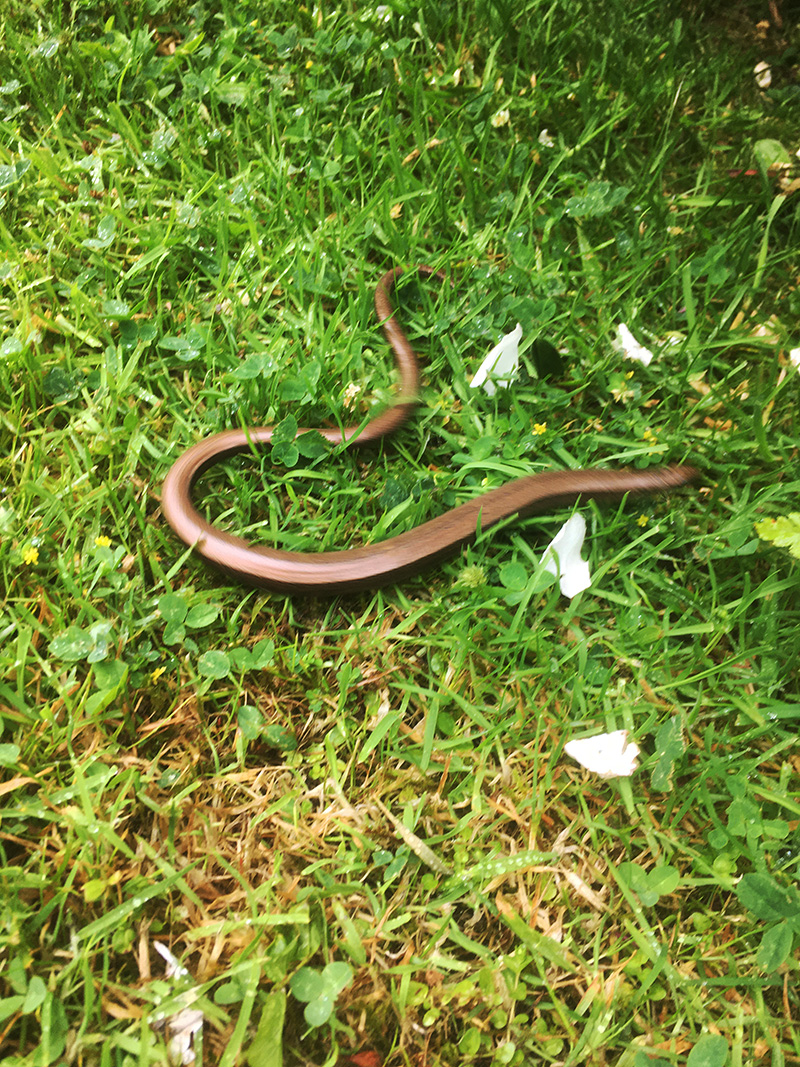 I’m hearing some horror stories about people strimming their lawns after No Mow May and Let It Bloom in June.
When left to grow, the long grass becomes home and a place of safety to lots of wildlife who are then under threat when the grass is cut.
Sadly I have heard about several slowworm victims and the Hedgehog Rescue Centres are warning that strimmers are now the biggest cause of injured ‘patients’ and that their injuries often lead to death.
So if you are strimming long grass – particularly under hedges – please take time to check the area thoroughly for unsuspecting wildlife.
This slow worm (pictured) was one of the lucky ones that got away.
St Swithin’s Day
All superstitious gardeners and farmers will be waiting to see what weather next Monday brings.
The 15th July is St Swithin’s Day and folklore has it that if it rains on St Swithin’s Day, it will rain for the next 40 days and 40 nights. The forecast (at the moment) is actually for a dry, sunny week so let’s keep our fingers crossed.
As a local farmer said recently – ‘the trouble is that we have 6 months of winter and five months of bad weather.’
Leave a Reply