
Taken from Lynne’s weekly column ‘Green Scene’ for the Western Mail
14th March 2020
 There’s Humphrey About
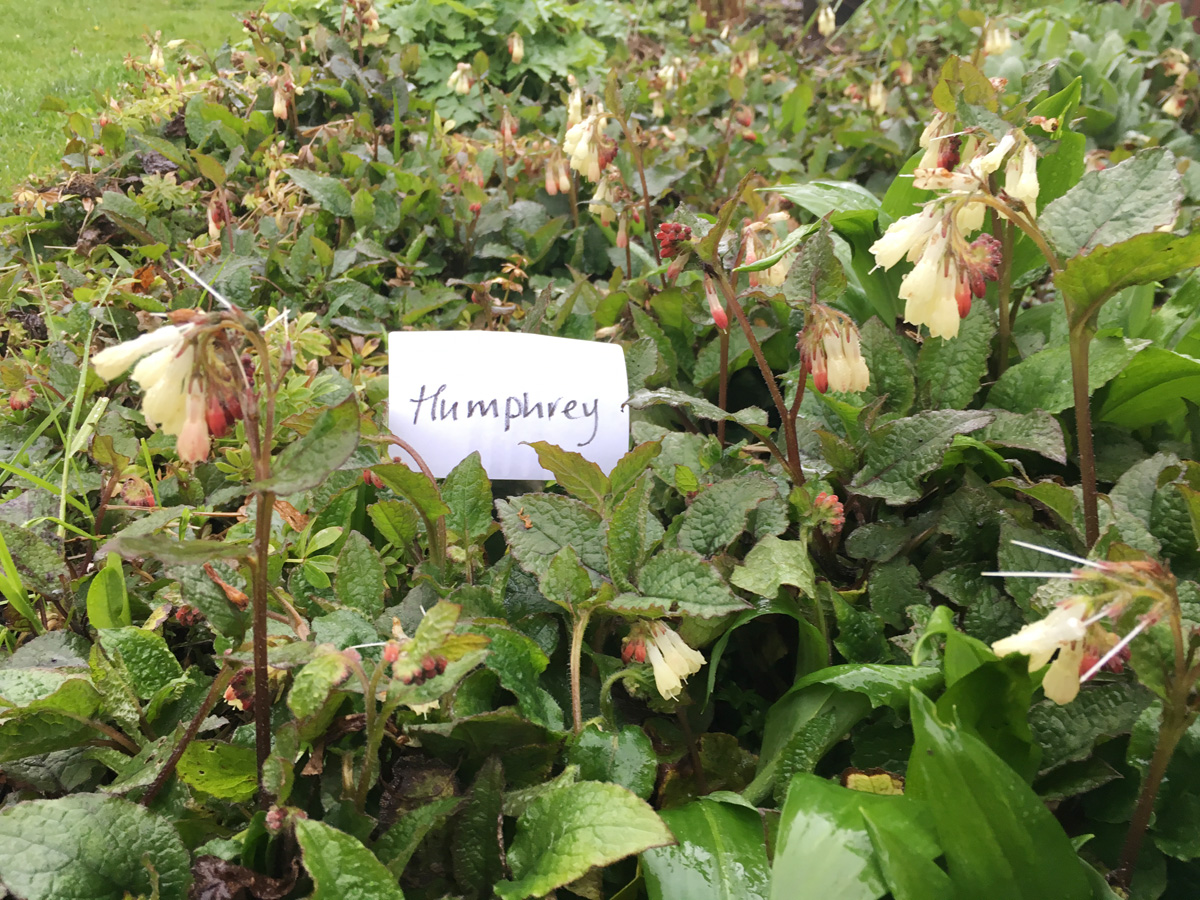
Spring is definitely springing. Daffodils are taking over from snowdrops, cherry blossom is indeed ‘cheery’ blossom and one of my favourite things is in all its glory – my carpet of comfrey!
I spent two years planting comfrey around the cottage as ground cover, and now it is so rewarding at this time of year with the daffs growing up through it. It’s not the common comfrey, Symphytum officinale, but Symphytum tuberosum, (tuberous comfrey), a much smaller species about a foot tall with masses of creamy yellow flowers. It grows as ‘eagerly’ as the common comfrey, which is what makes it such good ground cover, is also drought tolerant, (don’t even go there) and the bees love it. It is what I call a ‘hard-working plant’. My favourite type.
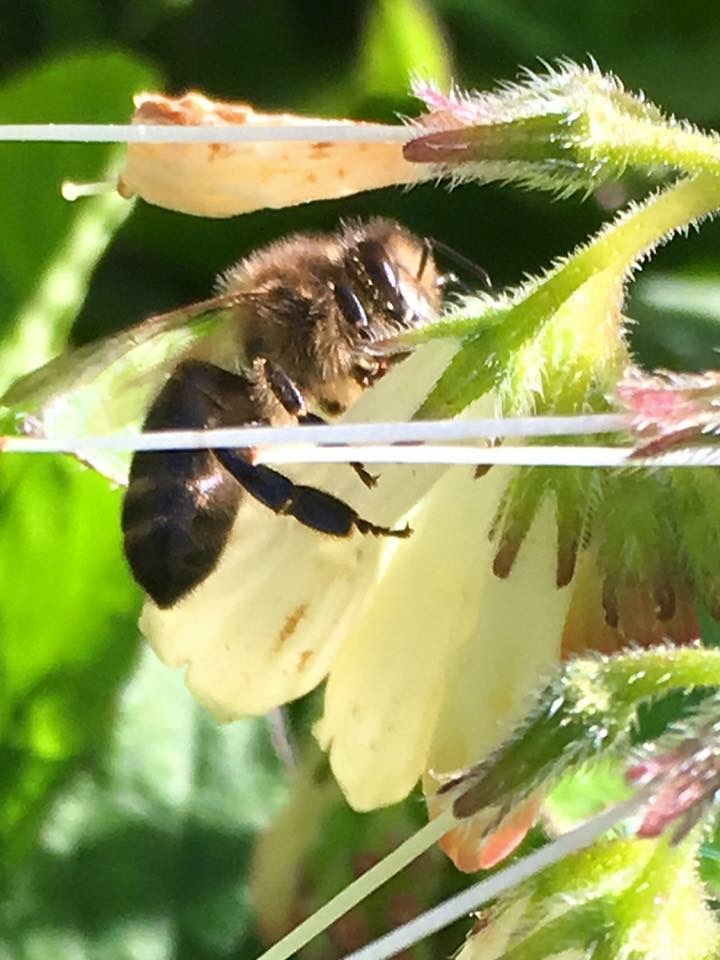 Mentioning bees – that reminds me – please leave your dandelion heads intact for the bees – raising the blades on your mowers if necessary for that first cut – it’s easier on the machine and the person using it too. Dandelion flowers provide an essential source of early food for the bees, which are out foraging after their winter hibernation and need to build up energy and stores. Thank you.
Back to comfrey – it belongs to the borage family and the apothecary’s plant was grown for the healing qualities of its roots, which would be ground up into a poultice and liberally applied to broken bones or open wounds, hence the common name, knitbone.
I also grow another variety, S. orientale, an elegant comfrey growing to 3 ft high, with bright green leaves and an open crosier of lovely white flowers. Unlike S. tuberosum, it forms a neat clump and self seeds in a restrained manner. And the revered plants woman, Beth Chatto told me that one of her favourite varieties is the robust, moisture-loving S. asperum (prickly comfrey), which she grows in her woodland garden. This tall comfrey, which can reach 5ft in height, has gentian blue flowers encased in ruby red buds, but is a plant for the wild(er) garden.
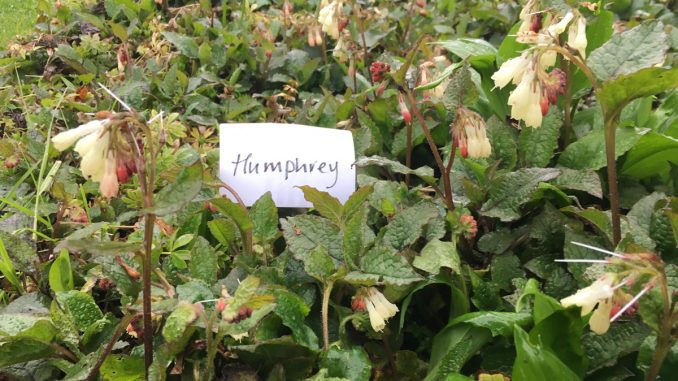
I was recently advising a client to include comfrey in their garden and couldn’t resist telling her that my brother calls comfrey, ‘Humphrey’.
“Oh how sweet,” she replied. “How old is he?”
“51”, I had to confess!
Grow Your Own Luck
I am a firm believer in ‘thoughts become things’ but how about growing your own luck? New for 2020, seed specialist Mr Fothergill is offering shamrock seeds, which can be grown in pots all year round.
 Clover and shamrock are often confused and it’s not surprising. Clover, also known as a trefoil, is the common name for various species of plants in the Trifolium family. Perhaps the most distinguishable feature of clovers is their alternate compound leaves, which usually have three smaller leaflets – or very rarely four, which is considered lucky.
Shamrock is actually a Gaelic word meaning ‘little clover’, and whilst is often used to refer to types of clovers, it should be noted that the term is not actually associated with any specific clover species. There are over 500 different species of Oxalis that are commonly known as Sorrels or Shamrocks too, and many of them are considered to be weeds.
A clover must have three leaves to be considered a shamrock. If the clover has more or less, then it is not a shamrock. Hence, all shamrocks are clovers, but not all clovers are shamrocks. There is also debate in the botanist community about which plant family shamrocks truly belong to. I told you it was confusing.
The three leaves of a shamrock are said to stand for faith, hope and love. A fourth leaf stands for luck as is the case with a clover. It is a rare genetic mutation which is responsible for the extra lucky leaf, although whilst filming in St David’s for BBC Wales years ago, I recall a gardener actually growing a four-leafed clover plant. Although considered lucky, he had no luck in propagating it and neither did I – although I have found a few four leafed clovers in my lifetime.
Anyway, much easier to grow the shamrock from Mr Fothergills and hope for a four-leafer. The seeds make great presents – and not just for St Patrick’s Day – and are easy to pop in the post with a card. The easy-to-grow seedlings will appear in just a few weeks from sowing.
RRP £2.15 for 1400 seeds and available from most garden centres or www.mr-fothergills.co.uk
Strong Be-leaf
 You will see some amazing things in nature if you take the time to look. I try to share as many of them as I can with you and this week is no exception.
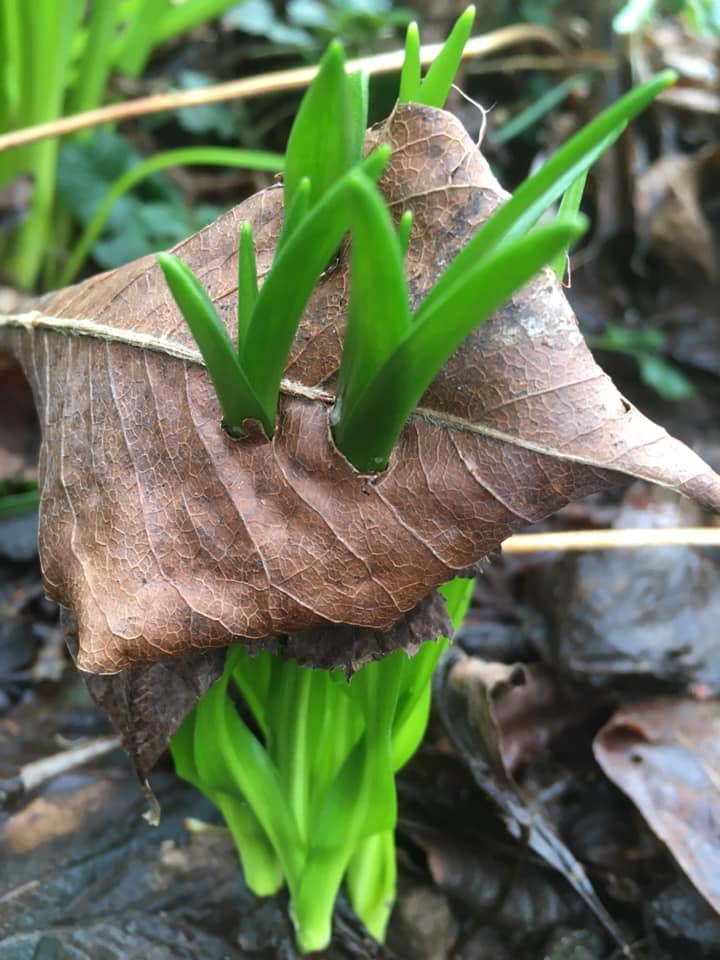
Whilst gently clearing a flowerbed of last year’s leaves, I found that the pointed tips of some developing bluebell leaves had pierced an old autumn leaf. (see photo).
Amazing power really; you would have expected the leaves to have just dislodged the leaf as they grew, but no, speared right though! The tips of spring bulbs are notoriously strong – especially snowdrops – to enable them to push through the toughest of ground, and even ice, if necessary. I suppose, bearing that in mind, spearing a leaf was a breeze!
Leave a Reply