
Taken from Lynne’s weekly column ‘Green Scene’ for the Western Mail
15th March 2025

Pseudo Pots

For Mum’s recent Thanksgiving Service at Llangattock Church, I used a lot of cut foliage, viburnum, catkins, teasels, and even camellias to fill large tubs at the entrances of the lych gate and the church. They were so popular that I have put some similar pots there permanently and will keep them filled with fresh foliage and colour throughout the year, which will be a lovely thing to do in memory of Mum too.
It’s something I have been doing for years for clients at Christmas and I’m thrilled that more people will benefit from the simple idea. Just replacing foliage every few weeks means that the tubs will always be seasonal and have colour each month, whereas if you plant them up with shrubs or plants you have a restricted flowering time – or the expense of replacing them.
The compost needs to be kept quite wet as it’s the only moisture that the cut foliage has, and strong winds sometimes mean that the contents are spread far and wide but that’s the only drawback. You do need a good source of foliage and flowers to cut (thank you to all my clients in advance) and some fleshy stems don’t respond well, but overall I think it could catch on!
Garden Central
 Aber-Gav-enny Garden Centre generously provided the pots and compost for the Church displays and they and most garden centres have a great selection of everything at the moment, from decorative pots to new plants and all types of seating to ‘must-have’ statuary as they anticipate a busy spring.
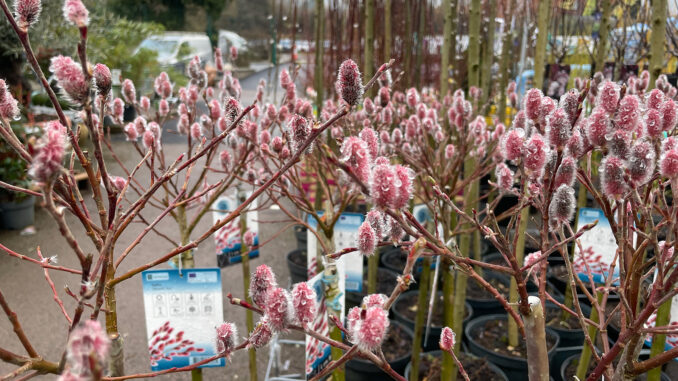
I was sorely tempted to give a metal pig and a(nother) large ornamental giraffe a good home and I loved the pretty pink furry buds of the decorative Pussy Willow called, ‘Mount Aso’ or ‘Red Cat’, which would look fabulous in the garden or a vase.
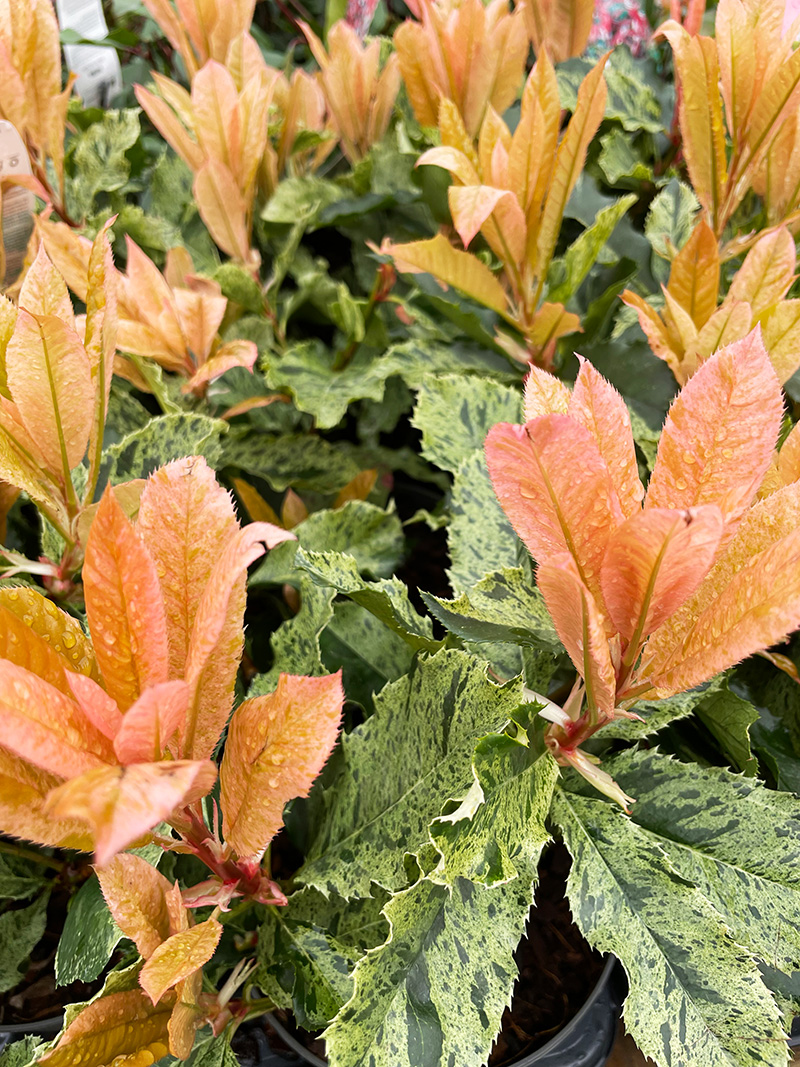
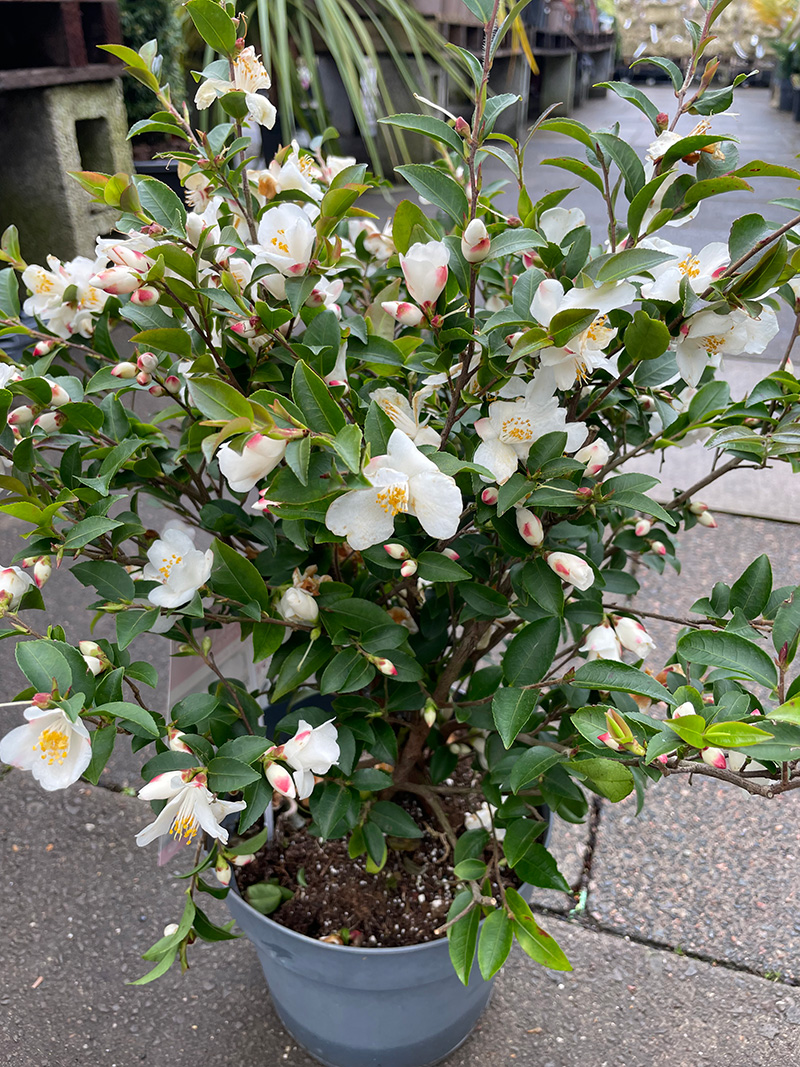 A stunning little camellia, ‘Beauty Blush’ will provide welcomed early colour in a client’s garden and I also bought a couple of Photinia serratifolia ‘Pink Crispy‘ which will eventually provide a nice, evergreen hedge for another client, with the added interest of the mottled leaves and new pink leaves.
It’s a great time of year to visit garden centres – they are just full of hope and ‘springness’.
Accidental Seed Heroes
I also started stocking up on seeds last week too. Every year I have a tatty batch of seed packets left which I never got around to sowing. Some of packets have even been faded in the sunlight so I literally don’t know what they are. But every year I mix these ‘shelved seeds’ up in an old cup and sow them in a few large containers, and then just wait to see what I get. It’s more rewarding than it sounds. Last year I had sweet peas, radish, rocket, coriander and cornflowers in the same tub, which looked great and were deliciously ‘pickable’. I’ll let you know what I get this year.
 I’m not sure that you’ll see this random approach on gardener’s World but it’s great fun – even more so for little green fingers, I would imagine. I’m not sure that accomplished gardener and author Adam Alexander would approve of this randomness either.
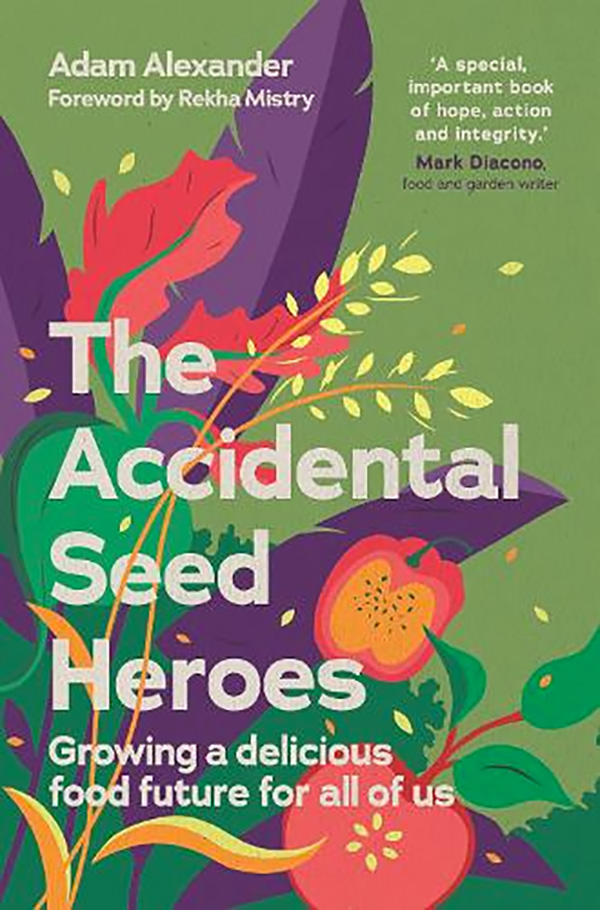
Fondly known as The Seed Detective, I think he has a bit more ‘law(n) and order’ in his garden. Adam is a great story teller and his new book ‘The Accidental Seed Heroes’ is another wonderfully informative read – written in a way that you just absorb and retain the information easily.
I have really enjoyed reading about the ‘crops that will feed us in a changing world’ as Adam shares his interviews with chefs, farmers, scientists and everyday growers around the world, all of whom are championing growing traditional seed varieties and breeding new ones to cope with our ever changing climate. It’s a ‘must read’ for anyone that eats veggies let alone grows them.
More details on his website www.theseeddetective.co.uk
Ivy Idea
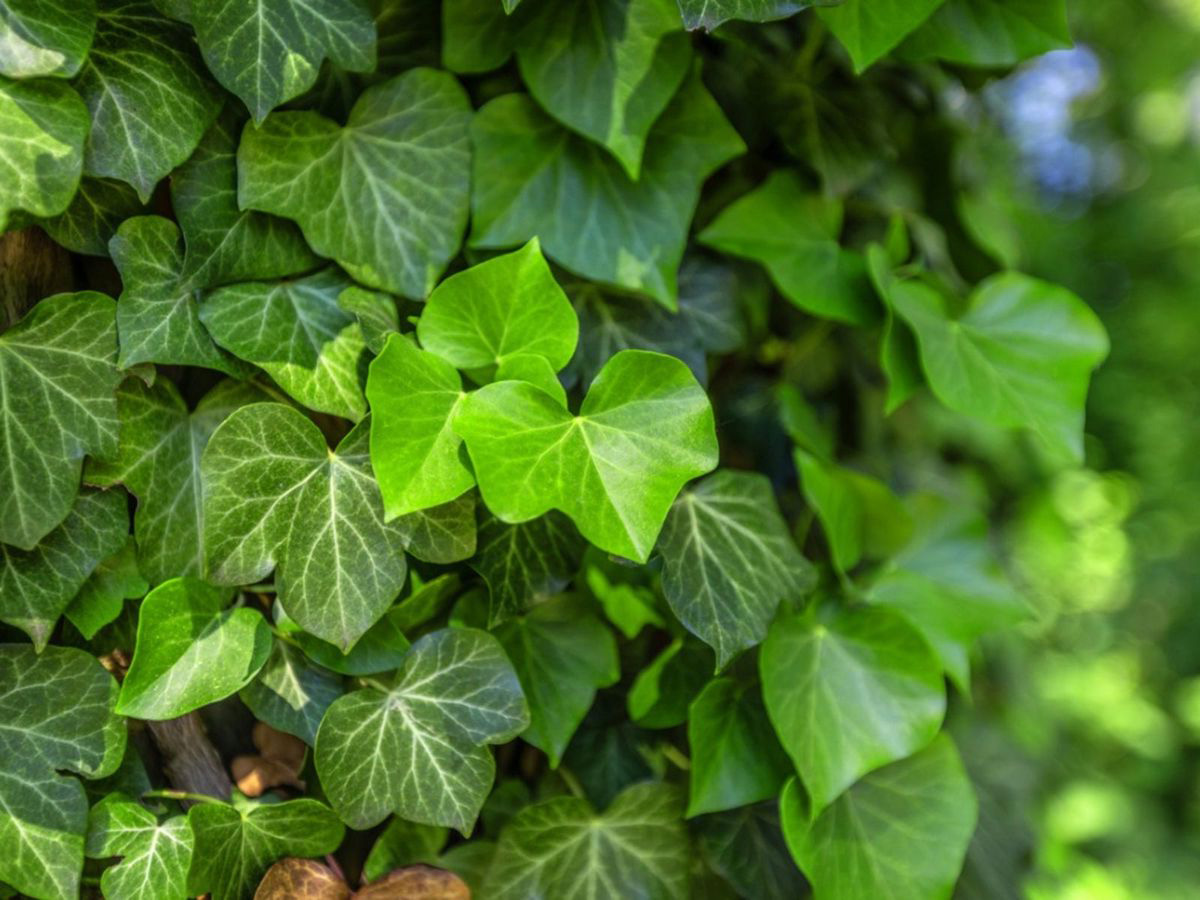 I used lots of ivy in the ‘church containers’ as it does well cut and ‘stuck’ into compost, but I was also I was also sent an even more unusual but interesting use for it last week by Nicola Kelleher from www.woodlands.co.uk
English Ivy contains plant compounds with natural soap-like properties known as saponins, which naturally break down dirt and grime and therefore being described as being ‘as gentle on the environment as it is tough on stains’. Please check you aren’t offending anyone by cutting the ivy – always ask if necessary, and it’s probably sensible to wear gloves as it can be an irritant to some people – after my blistering bamboo encounter recently I am erring on the edge of caution.
So all the ‘elf and safety considered, here’s a step-by-step guide on how to make it:
Collect around 100 younger, waxy, green leaves that are still growing, rather than any that have fallen to the ground. These young, fresh leaves contain the most saponins, which are crucial for the soap-making process.
Wash the leaves and then tear or cut them up to help release the saponins and put the shredded leaves in a pan covering them with about 1 litre of water. Bring the mixture to a simmer, allowing it to ‘cook’ for 15-20 minutes to allow the soap-like compounds to be released into the water.
Once the mixture has simmered, leave it overnight to steep and infuse.
The next day, strain the liquid through a colander to remove the leaves. The liquid may even bubble slightly at this stage, indicating the saponins are working their magic. You can use the back of a spoon to push the leaves through the colander and extract as much of the soapy liquid as possible.
Once strained, decant your homemade laundry soap into any clean bottle or container. Be sure to label it clearly, especially if you plan to store it for later use. My menopausal memory means I’m now used to labelling everything and have a list for every occasion these days.
Nicola recommends using ¾ of a cup of ‘ivy liquid’ per load and advises the Ivy-based solution is tough on stains, works well for everyday laundry whilst being gentle on clothes and, of course, is biodegradable.
Leave a Reply