
Taken from Lynne’s weekly column ‘Green Scene’ for the Western Mail
4th December 2021

Presence of Kind
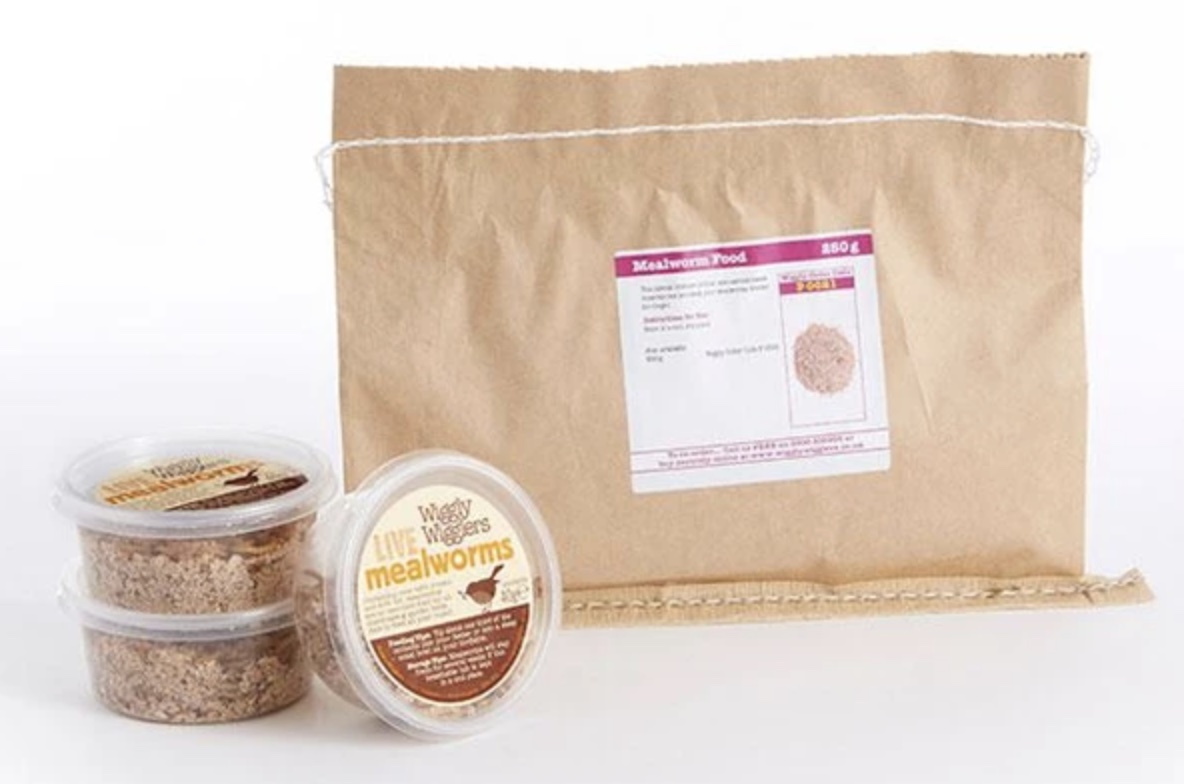
At a talk I gave last week, the topic quickly turned to Christmas presents and suggestions for presents for the gardener who has everything. I have already recommended the fabulous planter system from www.ergrownomics.co.uk and, at the talk, I was reminded that a few years ago I recommended a ‘Grow Your own Mealworm Kit’ – I don’t remember that (thanks menopause) but it does sound very probable. Apparently, it is not something most people would want to unwrap on Christmas morning – unless you are a robin – but I still disagree, so here are all the details again.
It’s quite simple to breed your own mealworms, all you need is the kit and some old margarine tubs to act as your mealworm breeding box and some vegetable waste (mealworms are particularly keen on carrots, potatoes, apples or bananas). The whole mealworm farm kit won’t take up much space and time-wise you will only need about 10 minutes a week. It’s a practical and very inexpensive way to have a continual supply of mealworms for feeding your feathered friends. Available from www.wigglywigglers.co.uk who also have lots of other useful and quirky ideas for Christmas presents.
A lovely present for the ‘person who has everything’, is a sack of bird food and some bird feeders or feeding stations. The birds obviously win with this one too. It will provide hours of entertainment and undoubtedly save lives. It’s a particularly good present for someone spending a lot of time at home (I’m not going to mention the other ‘C’ word) or someone in a care home.
 In my guise as a columnist, I had an email from the RSPB this week stating that the ‘New UK Red List for birds shows that more than one in four species are in serious trouble’.
The red list they are referring to doesn’t restrict travel under new COVID rules; the Red List for Birds keeps track of how different species are doing, and any birds that are rated red are in need of urgent action. Shockingly, more than one in four of our feathered friends are now on that list – 70 species in total, and even worse, as well as many migrant birds, some of our garden species are red-listed too – birds such as starlings and house sparrows.
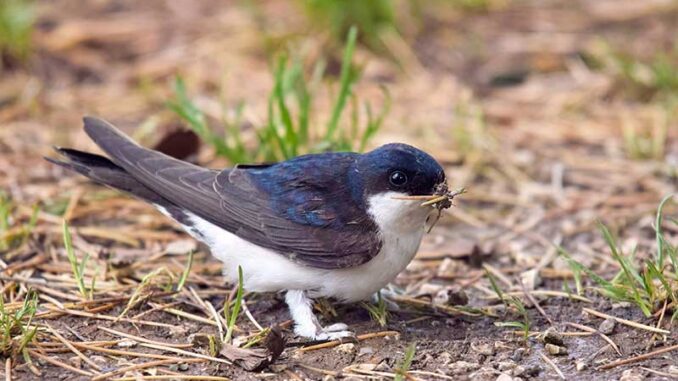
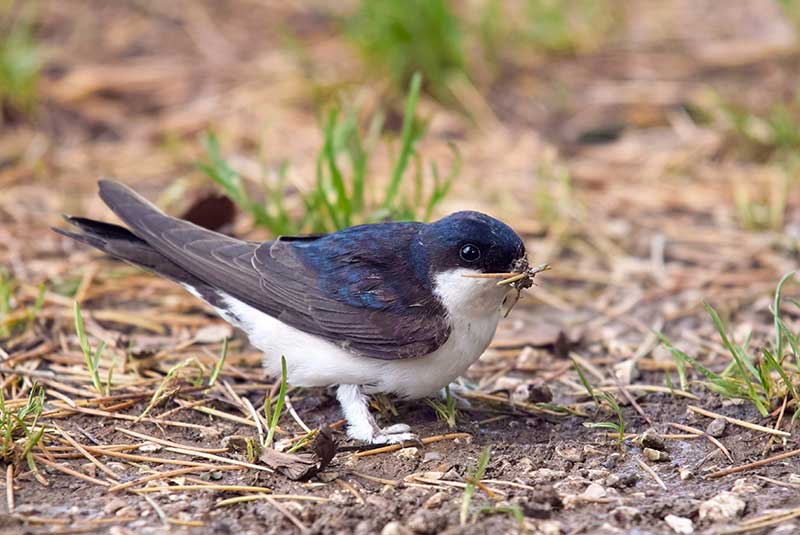 Even more worrying is that the newly revised Red List now includes the swift, house martin and greenfinch – birds which have been added for the first time and means that the list now accounts for more than one-quarter (29%) of the UK species, more than ever before, and almost double the figure (36 species) noted in the first review in 1996.
Swifts and house martins have both moved from the Amber to the Red List owing to an alarming decrease in their population size (58% since 1995). As a long-distance migrant to Africa we know very little of the house martins life outside of the UK, but possible causes of decline include a lack of food, as a result of insect declines, and fewer nest sites from refurbishment of housing and the move to plastic soffits. Putting up artificial House Martin Nest Cups to provide safer nesting sites may not be the whole answer, but it’s a simple positive step many of us can take.
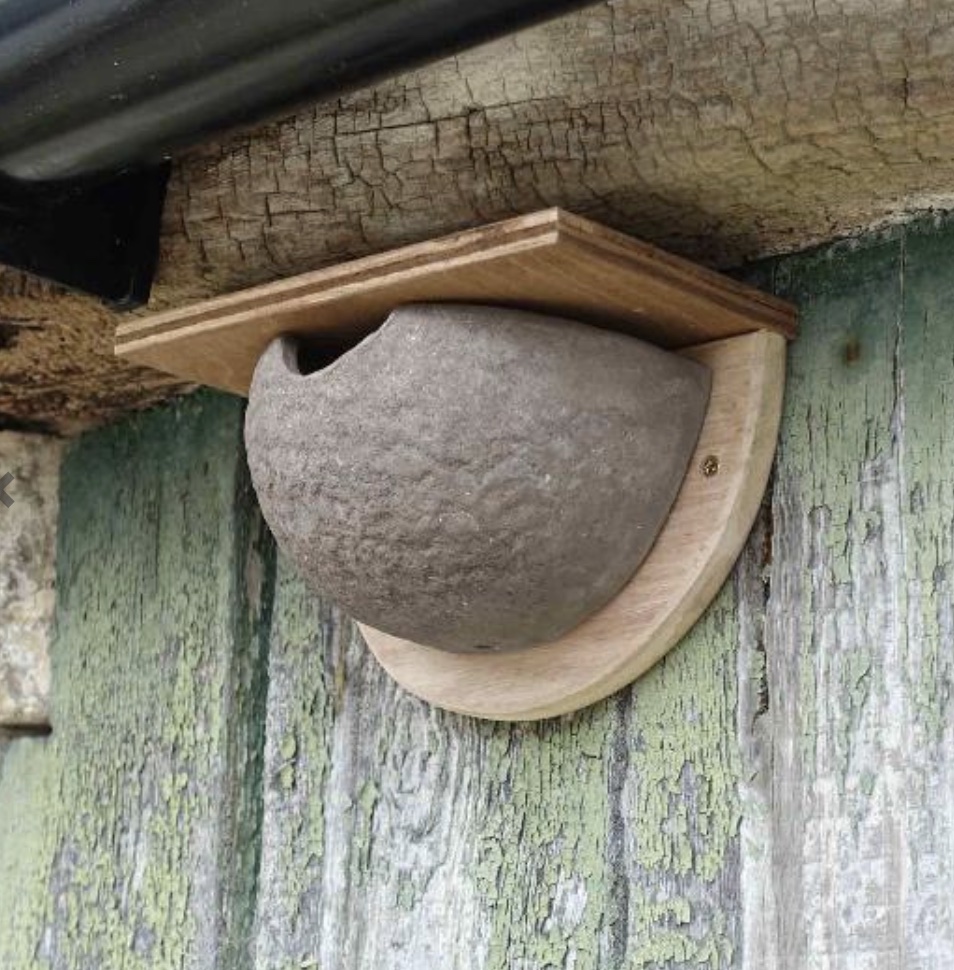 So – how about that as a cool present – a house martin house. You can purchase the high-fired terracotta nest cups, made to the precise dimensions of nests built by house martins, including entry hole, for under £20 from the ‘shop’ section of the RSPB website. www.shopping.rspb.org.uk
And that reminded me of the beautiful Bee Houses you can buy from Bees for Development. Not to be confused with the little bamboo-style bee houses for solitary bees, their Bee Houses are bespoke habitat box for the hard-working honey bees, providing the right sized cavity for a honey bee colony to build its nest and live naturally. The Bee House replicates a hollow tree and simply provides a nesting space for honey bees. It is not a beehive and you will not harvest honey. The intention of the Bee House is to provide wild honey bees with a nesting place – so you can help bees without being a beekeeper.
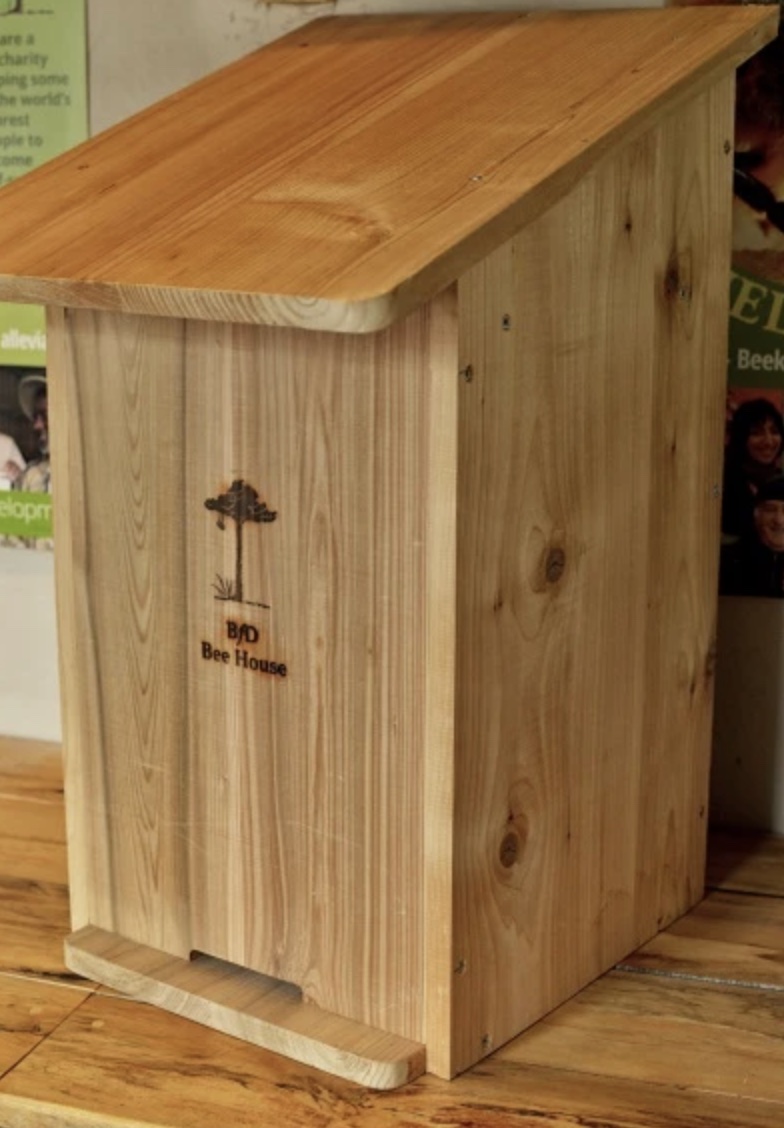 The Bee House is endorsed by world renowned scientist, Professor Tom Seeley who says, “The Bee House designed by Bees for Development matches the housing preferences of European honey bees, so by mounting one on a tree or building, you will help sustain the population of wild honey bee colonies in your region.” Now that has to be a perfect present. More details at www.shop.beesfordevelopment.org where you will also find more gift ideas.
Presents that are ‘easy to send’, include subscriptions to gardening or nature-related magazines and memberships to organisations like the National Trust and the Royal Horticultural Society. Other organisations are available. And a friend is buying her friends online courses for Christmas this year (hope I get a good one). There is a huge range to choose from and starting from as little as £9.99. Have a look at www.udemy.com as an example.
For an enthusiastic gardener, gardening gloves will always be appreciated – I go through so many pairs and there is always something very lovely about putting a new, dry pair on – you can never have too many, especially in cold, wet weather. A good thermal coffee mug is always useful, as is a food flask for soup, if you are a very keen gardener. And I am putting a Jetboil on my own list for Santa this year. The lightweight gas-fueled portable stoves are used primarily for backpacking but are great for gardening and dry stone walling in remote places too.
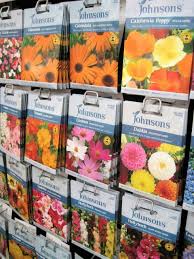 Lovely little gifts, which I like to pop in with a Christmas card, are packets of seeds.
Choose unusual varieties or some thing which has some relevance or you can add a message to, like ‘Lettuce meet up in the New Year or ‘Sorry I’ve not bean in touch.’
Then there’s ‘Hap-Pea Christmas’ or Happy Cress-mas”.
My favourite is a packet of wildflower seeds with the message, “May all your weeds be wildflowers.”
Leave a Reply