
Taken from Lynne’s weekly column ‘Green Scene’ for the Western Mail
26th March 2022
 Our Food 1200
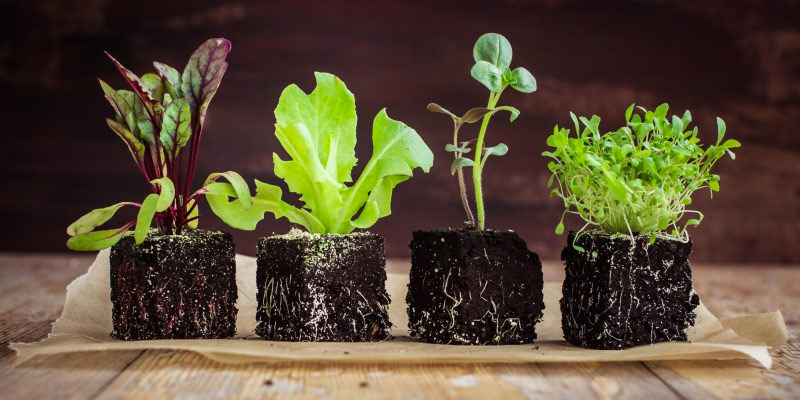
At a time when it is becoming even more important to be able to grow at least some of your own food, a locally managed community benefit society is planning to rebuild the local food economy in Monmouthshire and the Brecon Beacons.
The new campaign, Our Food 1200, is looking for farmers and landowners in Monmouthshire and the Brecon Beacons who have small plots of land suitable for growing fruit and veg to be made available for sale locally.
The aim of Our Food 1200 is to create a network of small-scale regenerative growers serving local communities on 3-5 acre plots, over a period of 10 years.
The search is now on for a total of 1200 acres. That’s all it would take to produce enough seasonal fruit and veg for every household in the region.
This type of farming also generates about 1 job per acre, so they would create at least 1200 ‘pretty satisfying’ jobs in the area.
Support for the project to date has come from the Brecon Beacons National Park Authority, the Vale of Usk Rural Development Programme, the Welsh Government, and the London-based Conservation Farming Trust.
Our Food 1200 is also eagerly awaiting news on funding from the Welsh Government’s Cooperation and Supply Chain Development Scheme.
In the meantime if you are interested in learning more, would like to attend the online launch event on the 30th March, or could help with the small plots of land needed, please contact: Duncan Fisher: duncan@our-food.org / Tel: 07950028704. Or visit www.our-food.org
Earth Hour
 In 2007 the World Wildlife Fund encouraged people around the world to switch off their lights in unity for an hour to call attention to climate change. Known as Earth Hour, 15 years later the event has gathered momentum and this year is being held on the 26th March at 8.00 pm.
You can support the event by switching off all your lights at 8.30 pm for an hour and should you need any motivation, the website www.earthhour.org has lots of ideas for things to do during that hour.
Whilst I would rather it not be a regular occurrence, I recently lost electricity at the cottage for about 12 hours during storm Eunice. My outdoorsey lifestyle had me well prepared, so I had a head torch, a Jetboil to cook on, the woodburner for warmth and of course my trusty companion Yogi to curl up with. It was a lovely evening. We enjoyed the silence, the lack of light, cooked scrambled eggs on the Jetboil and toasted bread in front of the fire like my nan used to do. I used her toasting fork.
Anyway, my point is that as well as Earth Hour being an iconic action demonstrating the power of collective action, it can also be an adventure. Why not switch off and join in.
Ashes to Ashes, Soot to Soot
 A reader wrote to me last week asking if they could use the soot from their freshly swept chimney on their garden. The answer is ‘yes’ but it’s not that straight forward. Is it ever?
Up until the 1970’s, as coal was the most common fuel for heating houses, the soot produced (and ‘harvested’ by your friendly chimney sweep) used to be something most people had access to and was usually used on the garden.
My own chimney sweep still leaves me the soot from my woodburner – and a few other bags if he has them from previous calls. Funny to think that the coal man and the chimney sweep were such a huge part of the communities – just like the milkman. There will now be generations that have never seen a coalman, or a chimney sweep.
Although I use the soot in my own garden, I am always a little cautious when recommending anything through my column, as there are always ‘various views’.
Most of the ‘old, proper gardeners’ I spoke to said soot is a valuable fertilizer for lots of plants. It also darkens the soil, which increases heat absorption and so renders it more suitable for early crops. When applied to the soil in spring apparently it is changed into nitrates by bacteria, making it available as a plant food.
Depending on whether you burn coal or wood – or a mix – soot can also be high in potash, which is a major nutrient, essential for good fruiting and flowering. It will also add ‘resilience’ to the plants to help get them through the winter.
To be used as a fertiliser, the longstanding tradition is to leave the soot to ‘weather’ for about one year. This ensures that polyaromatic hydrocarbons and other substances that could harm plants have time to dissipate. Fresh soot can be used to deter slugs though, if sprinkled around vulnerable plants. Some gardeners dug fresh soot into been and potato trenches to deter slugs and claim that it is only reasonably fresh coal soot that will deter the slugs. It was carried unanimously amongst my gardening gurus that it can also be a useful additive to the compost heap.
The Amateur Gardening pocket guide advises that,
‘Soot can contain as much as 6 percent nitrogen in the form of sulphate of ammonia. Fresh soot is rather caustic and may be used as a soil fumigant to destroy insects and slugs. For use as a fertiliser it is best stored in the dry for three or four months. If exposed to rain, it quickly loses its value, as it does if mixed with lime, though this latter makes it yet more effective as a soil fumigant. Soot also darkens soil and enables it to absorb sun heat more readily. Rate of application up to 6 oz per square yard. May be used at any time of the year.’
Of course there was only one person to ask really – my favourite famous gardener, our very own allotmenteer, Terry Walton. He told me,
“I use to use a lot of it in the old days as all the houses had coal fires. It was great for broad beans and dissolved in a drum of water made a great feed for tomatoes. It was used to reduce aphids. Can’t get it at all now, sadly.”
So I think that is the final word – and verdict – on soot.
But you can’t have a conversation – or a column – about soot without wood ash being mentioned. I always put the wood ash from my wood burner on the beds and borders when I clean out the tray. It definitely keeps slugs at bay and I haven’t had any complaints from any of the plants yet (in the guise of dying). Ash from wood burners, and bonfires, can be a useful additive to the compost heap or can be applied directly to fallow ground and dug in. It can be a natural source of potassium and trace elements. It also has a liming effect, so can remedy excessively acidic soils, and in my own experience will help to break down clay soil.
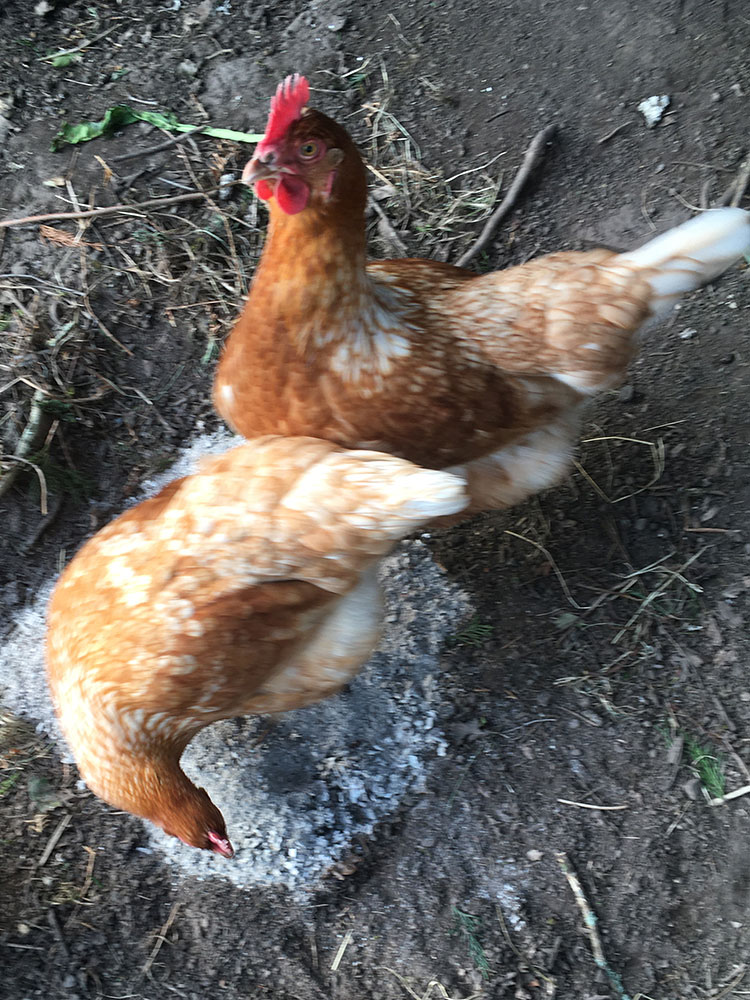
Wood ash also makes a great dust bath for hens – they love it and it will help to keep mites at bay. But perhaps the most random ‘alternative’ uses for wood ash – according to a gardener in Vermont – is adding it to your compost heap to help deter bears and it also makes a great skunk odour remover. If pet gets sprayed by a skunk, dusting them thoroughly with wood ash before giving them a bath is recommended.
I wonder if it works for fox poo …
Leave a Reply