

Taken from Lynne’s weekly column ‘Green Scene’ for the Western Mail
28th December 2024

New Year, New Plants

Nature lovers received a lovely present from Kew scientists over the festive period, as 172 new plants and fungi were revealed and described as ‘new to science’.
The ‘thrilling highlights’ include several ‘toothy toadstools’ (tooth fungi), with specimens having been collected from near Royal Tunbridge Wells and near Windsor. Further afield, scientists named a ‘black souled’ Aphelandra (almanegra) from Colombia. Named after its distinct black heartwood, this new species of deciduous shrub is in the same genus as the widely cultivated Zebra plant (Aphelandra squarrosa) from Brazilian forests and which is better known to us as a house plant.
In its natural habitat this deciduous shrub grows up to 5 m tall at altitudes of up to 1,000 metres. It boasts spectacular pink flowers 4 to 5 cm long, with up to 110 flowers in each spike from November to March. Each spike is up to 32 cm long, also giving it great potential as a house plant. Sadly, it is threatened by both habitat clearance.
Scientists warn that the unfortunate reality is that we are losing biodiversity at a disastrous rate, and many of the species that were only given a formal scientific name this year are already threatened with extinction due to human activities.
Amongst the exciting discoveries are a ‘ghost palm’ which has been waiting 90 years to be named. Although traditionally used in Malaysia and Indonesia by local communities for basketry and for its edible young shoots, the highly distinctive rattan or climbing palm has remained without a scientific name until now. Now known as Plectocomiopsis hantu, it was named after the Malay and Indonesian word for ghost. The spooky name derives from its grey stems and white undersides to the leaves.
Three new ‘fishy fungi’ from Europe and North America have also made it onto the Top Ten Discovery List. There are about 800 toadstool species globally in the genus Russula, which are ‘easily’ recognised by the apple flesh-like stalks that often smell of fish. Like many toadstools, they are mycorrhizal, their hyphae connecting with the roots of plants and trees, for mutual benefit. And though many of these species are edible, some are toxic to humans. That’s nature’s version of Russian Roulette.
Keita deniseae is another new species and genus of African rainforest liana, characterised by the strong smell of marzipan given off by its roots and stems when scraped. That’s nature’s idea of fun.
Closer to home, and observed in Berkshire, Buckinghamshire, Hampshire, Kent, Somerset, and Surrey’s wet woodlands, is a new species of fungus. Found on dead willows, this new species is a small, white bracket fungus measuring 2 to 4 cm in diameter, and has been officially named Fomitopsis solaris. Found here in the UK on dead willow (Salix) wood, the fungus is also found in locations across Europe, from Sweden to France, with a few verified records from Argentina, Canada, and Israel. I can’t help wondering if I have seen and ‘overlooked’ it – how would you know?
Dark Starts
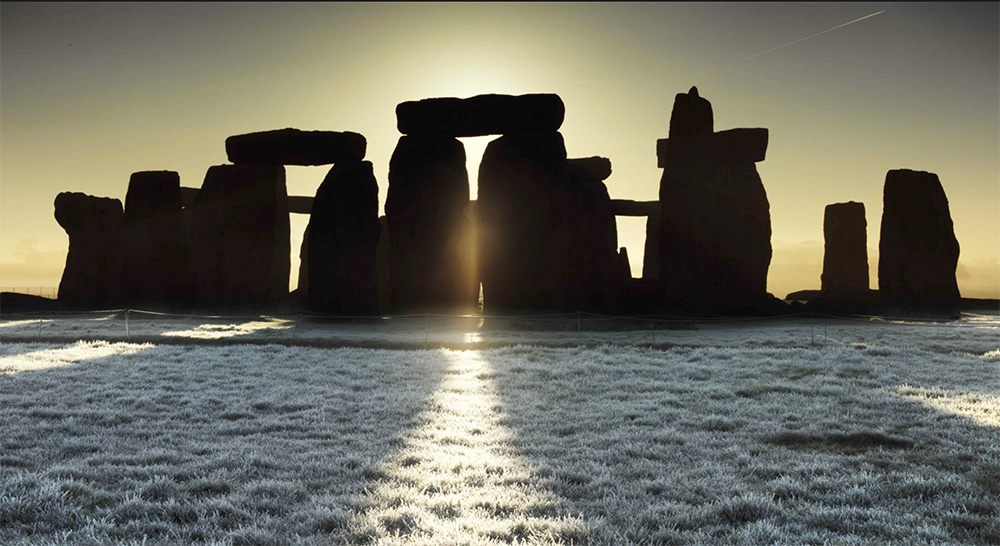 We have not only just navigated through Christmas but the shortest day is also in the rear view mirror now. Daylight during the winter solstice is actually a whopping nine hours shorter than what we get during the summer solstice. Mind you, it does feel like it too!
Some of the more observant amongst you may have noticed that the mornings actually seem to be getting darker – and they actually are!
Whilst most of us expect the shortest day to have the latest sunrise and earliest sunset, that is not the case and the reason is that a day – a solar day to be precise – is not always exactly 24 hours.
A popular science blog called The Science Geek, run by astronomer Stephen Hurley explains, “A (solar) day is 24 hours only four times a year, and never in December. It is at its shortest around 23 hours 59 minutes and 30 seconds, in early September, and at its longest around 24 hours 30 seconds in December.
There are two reasons why the length of the solar day varies, the first being the fact that the axis of the Earth’s rotation is tilted – 23.5 degrees from vertical – and second, the Earth’s speed varies because it moves in an elliptical orbit around the sun, accelerating when it is closer to the star’s gravitational pull and decelerating when it is further away. The sun therefore in effect lags behind the clock for part of the year, then speeds ahead of it for another.
As you can imagine, it would be complete chaos if our clocks and watches had to cope with days of different lengths,” continues Stephen. “So we use 24 hours, the average over the whole year, for all timekeeping purposes. So, as the solar days in December are on average 24 hours and 30 seconds, while our clocks and watches are still assuming that each day is exactly 24 hours, this causes the day to shift about 30 seconds later each day.”
And it is this cumulative shifting which explains why the evenings draw in towards their earliest sunset a couple of weeks before the shortest day, and why the mornings continue to get darker until a couple of weeks after it.
Resolution Revelations
 With next Wednesday heralding the start of a brand new year, memories of the past and hopes for the future will be at the forefront of many people’s minds. On the eve of 2000 I walked up to the top of the Sugar Loaf at midnight and welcomed in the New Year from there – with just Yogi’s predecessor, Tippy, and a head full of plans for the year ahead for company. I did the same thing, but climbing a different mountain for midnight, for the next 12 years, only stopping as the mountain tops were getting too busy as the idea caught on.
Slightly easier than climbing a mountain in the dark – whatever the weather – is the Welsh tradition of ‘first footing’. It states that a dark-haired man should let in the New Year for good luck. The man should leave the house by the back door just before midnight on New Year’s Eve, walk around the house and on the strike of midnight, knock on the front door. The householder opens the door and receives salt for seasoning, silver for wealth, coal for warmth, a match for kindling and bread for sustenance from him.
Mari Lwyd, literally meaning “Grey Mare” in Welsh, is also a New Year custom that involves a horse’s skull (now usually made of cardboard) adorned with ribbons and bells, carried on top of a pole. Hidden beneath a white sheet, the person carrying Mari Lwyd visits local homes and establishments, engaging in a battle of wits through rhyme and song.
When it comes to the tradition of making New Year resolutions, according to a YouGov poll, 17% of Brits give up on them within a month, 21% last 2 to 3 months, 10% last 4 to 6 months, and 8% last the whole year. 46% of Brits say the most difficult resolution to keep is one based on food and diets, with 44% saying improving fitness is the second most difficult resolution to keep.
So, with that in mind, Happy New Year to you all and may all your troubles be over as quickly as your New Year Resolutions.
Fascinating as always! I will keep a lookout for the funghi amongst the Somerset Salix.
I did the first footing once, many years ago, with a Scottish family. We went out of the back door, round the block to the front, but only carrying a piece of coal. This was followed by a very large tot of whisky!
Wishing you and Yogi a wonderful, peaceful and healthy New Year.