
Taken from Lynne’s weekly column ‘Green Scene’ for the Western Mail. 18th February 2017
National Nest Box Week

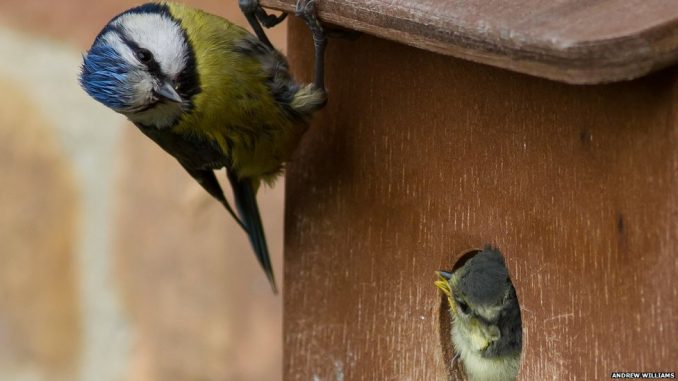
NNBW is supported by Jacobi Jayne & Co., Britain’s nest box specialists, who created the idea of a celebratory week, together with the late Chris Mead of the British Trust for Ornithology. The aim is to encourage people to put up nest boxes in their local area in order to promote and enhance biodiversity and conservation of our breeding birds and wildlife. It runs from 14th to the 21st February, so there is still time to get involved, although of course, you can put up a nest box at any time
Whether you’re a family with space for a box in your garden, a teacher, a member of a local wildlife group, or you belong to a bird club and could organise a work party, National Nest Box Week gives you the chance to contribute to the conservation effort in the UK whilst giving you the pleasure of observing any breeding birds that you attract to your garden. It a great thing to do and so rewarding to see your ‘property’ being used!
Natural nest sites for birds such as holes in trees or old buildings are disappearing fast as gardens are ‘tidied up’ and old houses are repaired. And of course, hedges are being replaced by fences, so all in all, our poor feathered friends are having a hard time getting on the property ladder.
Visit the website to register for your free NNBW information pack and also for lots of other fabulous information, like which birds use nest boxes and what they prefer. Or further information about how National Nest Box Week operates and what you can do, contact jeff.baker@bto.org.
The Early Bird Got the Worm
 I had a great time at Williams Worms this week, with fellow gardener and friend, Radio 2’s Allotmenteer, Terry Walton. We are both great fans of the ‘worm’ products and love listening to Brian’s (Mr Worm) tales! Find out more at http://wormpro.co.uk or call Brian on 01874 611444 – and probably get to hear a few wiggly tales for yourself!
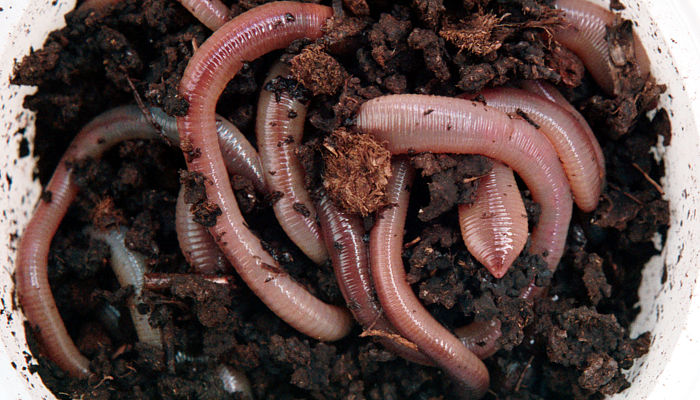
Earthworms (Lumbricus terrestris), also known as lob worms or garden worms, are nature’s ploughs and are crucial for soil aeration. In an acre of land between 16,000-30,000 lbs (7,200-13,500kg) of soil passes through earthworms and is deposited on the surface each year. And here are a few other things I learnt from him – and he also gives talks!
- The myth of both parts of a worm surviving when it has been cut in two is not true, only the part with the head attached will survive
- Earthworms use their skin to breath and do not have lungs
- The average life span of a worm is 4-5 years
- One acre of land can contain around 1 million worms
- Worms have the ability to eat their own weight in a day
- If a worm becomes dehydrated and its skin dries out it will die
- Worms are hermaphrodites and have both male and female organs
- Earthworms do not have teeth, but use a gizzard to grind up pieces of food.
- Worms don’t have eyes (except in cartoons!), but are sensitive to light.
- But they can have between 1 and 5 pairs of hearts!
I bet they had an interesting Valentine’s Day!
 Hooray for the Hazel Flower
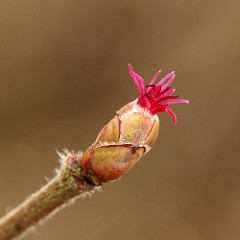 One of the most beautiful and definitely most under-rated and unnoticed flower has to be the tiny little red, fluffy hazel (Corylus) flower. Look hard on the naked hazel branches now and you will find it. It is so worth the effort.
The hazel has both male and female flowers on each shrub, and the two flowers are quite different. The male flowers are gathered within the long, breeze-blown catkins and these are by far the most prominent. Each catkin is made up of many individual flowers – these are the small green/yellow male flowers, which produce the pollen. There are around 240 male flowers in each catkin and they form during the previous summer so that they are ready to open in the dead of winter and flower through the spring.
The female flowers are tiny individual flowers, visible only as red styles protruding from a green bud-like structure on the same branches as the male flowers. They are an important source of pollen for bees.
I always joke with people at this time of year that the show-off, male catkins get all the attention whilst the beautiful and hardworking little female flower gets overlooked. They are definitely worth taking the time and trouble to look for – I adore them!
Hazels typically begin flowering in January and will go on into April. Once pollinated in the springtime, the female flowers set to work producing the hazelnuts, which ripen in the autumn.
Leave a Reply