
Taken from Lynne’s weekly column ‘Green Scene’ for the Western Mail. 19th November 2016
Lovely Leaf Colour
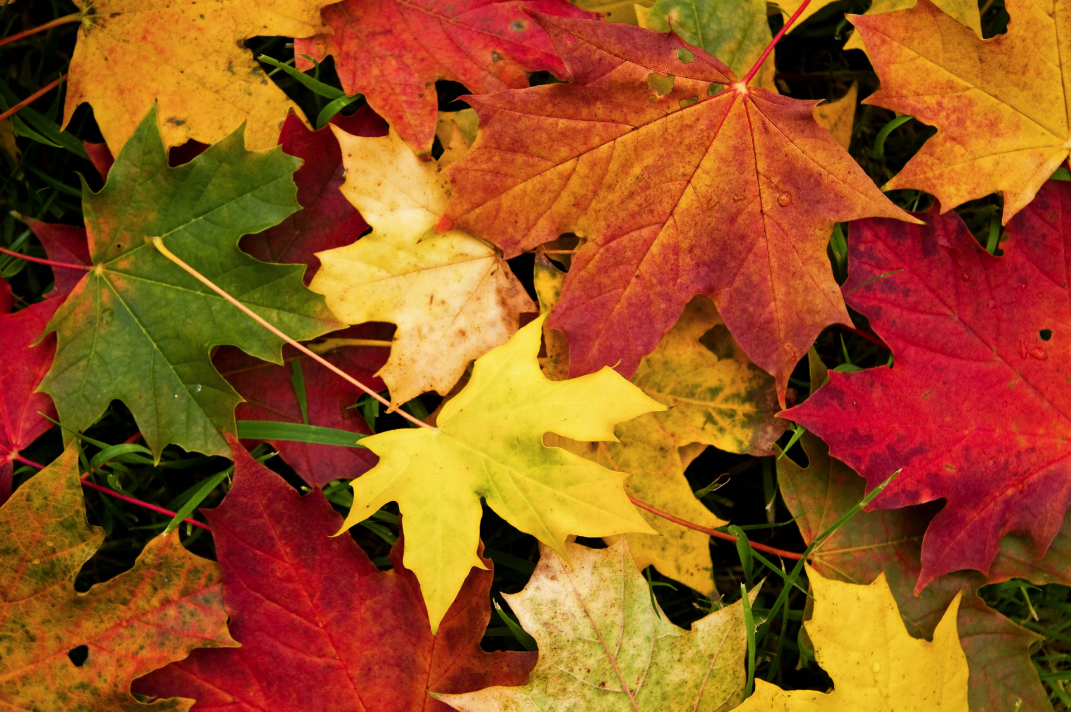 I’m sure most people will have noticed that this autumn’s leaf colours have been particularly amazing.
It is apparently all down to a wetter than average spring being followed by a dry and sunny summer. These conditions have made for a spectacular growing season – as all those with a garden will concur – which helps the trees build up plenty of the sugars which produce autumn reds, golds and oranges.
The mild autumn has also prolonged the vivid colours, as a frost or storm has usually stripped the trees bare by now.
Colour changes in leaves take place as the days become shorter and evening temperatures cool. The green chlorophyll in the leaves starts to disappear, exposing yellow and orange hues as the sugars are absorbed back into the tree.
The sunny weather then concentrates the sugar in the leaf, which speeds up the appearance of red hues. It’s all really clever stuff and something that we rarely think about – although most of us do admire the actual results.

Deep Fried Acer Leaves
 Japanese Acers are revered amongst gardeners for their stunning autumn colours and in Japan amongst chefs for their culinary attributes! Honestly, enterprising chefs in Osaka dip them in sweetened tempura batter and then fry them in vegetable oil. Some chefs take it a step further, are more patient and preserve the leaves for a year in salt barrels before using.
The fried leaf snack is called “momiji” or “momiji tempura” – which means ‘maple’ in Japanese – and can be eaten all year round. The practice has supposedly been around for almost a thousand years. The maple leaves themselves aren’t supposed to taste like much, which makes sense but the subtle flavours come from them being preserved in salt barrels for about a year, and then fried in a sweet batter.
Several recipes for ‘momiji’ can be found on the internet; let me know if you give it a go!
Human Sundials
 I thoroughly enjoyed speaking to Monmouthshire Hardy Plant Society last weekend. I spoke about a bran tub of topics and the audience were wonderfully interactive. I adore those ‘talks’. I also learn a lot too, so thanks to all those who generously shared their experiences and knowledge. Thanks especially to Mike for telling me all sorts of interesting facts about sundials, including the Analemmatic Sundial.
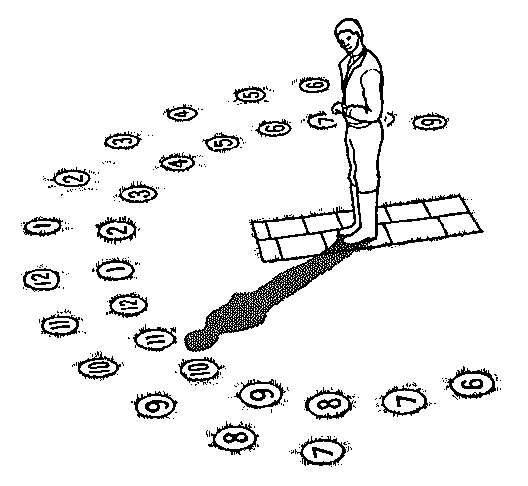
I have included sundials and armillary spheres in garden designs for various clients but had never heard of a Human Sundial until talking to Mike Faraday recently.
Totally interactive, the Human Sundial, or Sunclock, uses a person’s shadow to indicate the correct time. It’s a fab idea and are relatively easy to construct with the correct instructions. It’s a great idea for schools too. The Human Sundial can be created on a hard surface such as a yard with paint or in grass, with sunken bricks or stones which will allow it to be mowed over.
You can access layout plans and relevant instructions at www.sunclocks.com.
Want To Be Happy?
 And thanks to Norman from the Monmouthshire Hardy Plant Society for reminding me of this lovely quote:
“If you want to be happy for an hour, get drunk – if you want to be happy for a day, get married – if you want to be happy for life, plant a garden.”
You can find out more about the Hardy Plant Society at www.hardy-plant.org.uk or for more details on the Monmouthshire group and their programme of events and speakers email hpsmon@aol.com
Super Doopah Sunflower
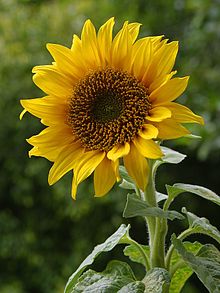 I have cut off all my old sunflower heads and put them in various places for the birds to enjoy. And in doing so, was reminded about the gardener that has just won £2,000 for growing a record breaking sunflower; one reaching just over 8 metres. Yep, that’s 8 metres, not feet – that’s a staggering 26 feet 5 inches.
Wigan based gardener, Richard Hope is no stranger to world records as he has held them for the biggest swede, heaviest leek and longest parsnip and also won last years Thompson & Morgan competition with a 24 ft sunflower.
Although his sunflower was taller than his house, his giant entry was shy of the world record by 3ft 8in (1.1m), but Mr Hope still has his sights on beating the 30ft 1in (9.14m)) sunflower grown by Hans-Peter Schiffer of Kaarst-Vorst, Germany in 2014.
“It takes complete dedication from beginning to end,” said Mr Hope when asked how he has managed to grow such a roof-topping specimen, “It’s best to grow your plants up a south-facing structure, like a tall wall – something you can put a ladder against”.
Leave a Reply