
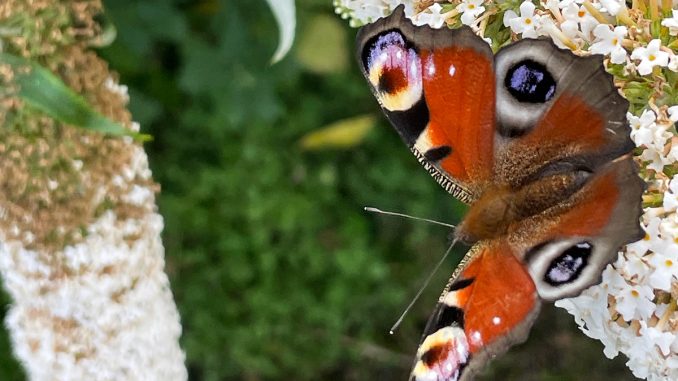
Taken from Lynne’s weekly column ‘Green Scene’ for the Western Mail
26th July 2025

Lady(birds) in Red
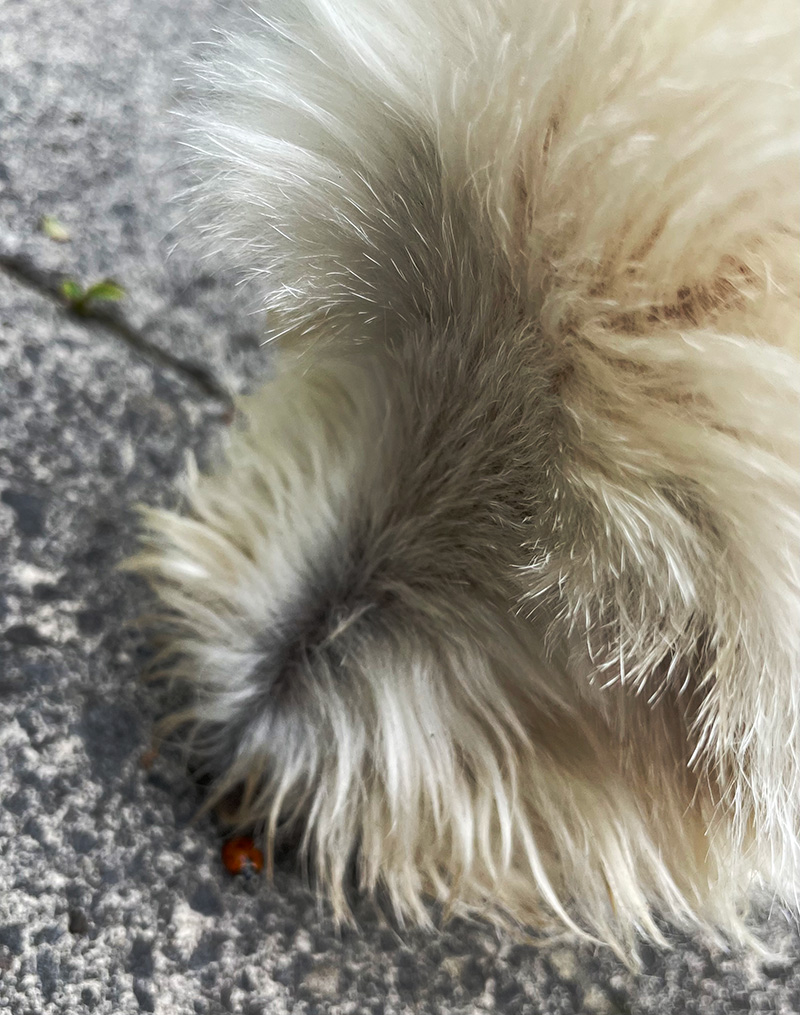
I don’t recall seeing as many ladybirds as I have lately, for a long time. I remember being ‘hit’ by a swarm of them when I was on my motorbike about 20 years ago and also seeing a huge amount of them whilst walking over the old Severn Bridge about 10 years ago. I also remember being bitten by the ladybirds in the first swarm – the first time I realised they could bite. Apparently it was so hot they were actually looking for any form of hydration – even blood or sweat. They were also the good old fashioned native ladybirds, whereas the masses that escorted me over the Severn Bridge 10 years later were the Harlequin variety.
My brother remembers Nan telling us that the number of spots on a ladybird indicated its age but recent research has blown that theory out of the water. She had a fabulous sense of humour and was a great one for telling a good story – with varying amounts of accuracy. To be fair the age-by-spots theory was at least very plausible.
There are more than 40 species of ladybirds in the UK. The most commonly recognised are either the two-spot or the seven-spot native ladybird, and the non-native harlequin species. The latter originates from Japan and was introduced around the world to act as a biological control for aphids. Although not deliberately introduced to the UK, it became established here in 2004. As an invasive species, which can ‘out-eat’ our native ones, it is thought to be negatively impacting their numbers.
Harlequin ladybirds can vary hugely in appearance, but are usually black or orange with contrasting coloured spots.
But just to confuse things, the native two-spot ladybird for example, can be either red with two black spots or black with two red spots. The seven-spot ladybird is slightly more conformist and is almost always red with seven black spots. There also are several other quite common species that you may not have noticed or recognised.
The eyed-ladybird, usually red with 14 black spots (often circled in yellow), is usually found amongst conifers. The cream-spot ladybird is a brown ladybird with 14 cream spots and the orange ladybird, is orange with 12 to 16 white spots. The kidney-spot ladybird is black with two red kidney shaped markings and loves euonymus as it feeds on euonymus scale. Bryony ladybirds, are brown ladybirds with eleven black spots and are actually the only vegetarian ladybirds, feeding purely on white bryony.
The smaller relatives, which are easily overlooked and not so common in Wales, include the twenty-two spot ladybird, not – as my Nan would have had you believe – twenty two years old but a long yellow ladybird with 20 to 22 black spots, and the fourteen-spot ladybird, with a pattern of between 4 to 14 black spots which often merge.
Ladybirds typically only live for up to two years, (a definite flaw in Nan’s tall tale) and hibernate in winter. In many cultures, they are considered to be a symbol of good luck (though not for aphids) and their name originates from the Middle Ages when they were known as the ‘Beetle of Our Lady, referring to the Virgin Mary, who was often depicted wearing red.
They are also known as lady bugs, but in the same way that they are not birds, neither are they bugs. There are in fact beetles, with the key difference between a bug and a beetle being their mouthparts and wing structure. Beetles have chewing mouthparts and hardened wing covers that meet in a straight line down their backs, while bugs have piercing-sucking mouthparts and their wings, if present, are often partially hardened and partially membranous, forming a “Y” or “X” shape when folded. For that reason, scientists refer to them as ladybird beetles.
And after all that, I bet the only thing that you remember is that a group of ladybirds is known as a ‘Loveliness’. There’s lovely.
Buddleia Buddies
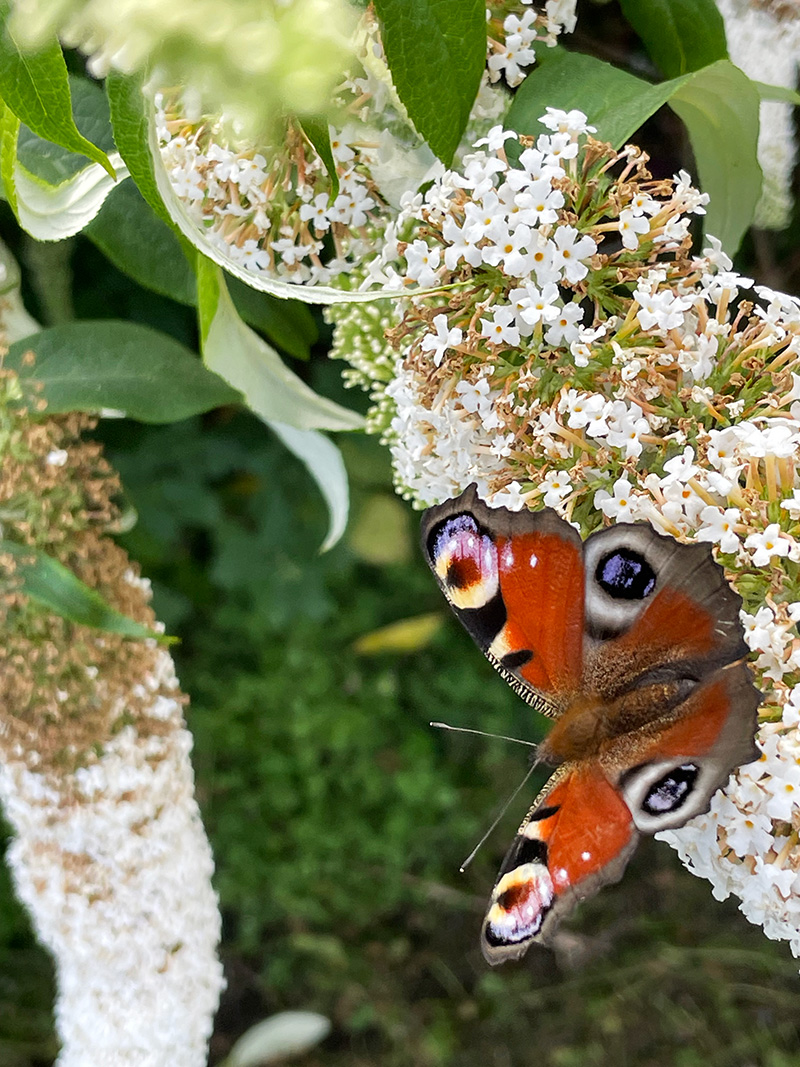 I have been heartened by the amount of bees and butterflies I have seen recently – although less so by the vast amount of wasps. I do try to ‘love’ them too, but they don’t help themselves by just being randomly annoying. Even when you don’t want to get involved, they still seem to want to fight.
Anyway, I have loved seeing the amount of butterflies on buddleias. Often thought of as a weed, I have always somewhat secretly held a torch for buddleias as a hard working, generous plant, but now I am publically coming out as a ‘Buddleia Buddy’. But they do need ‘tough love’, you can’t let them get away with nonsense. They need to be planted in the right place and pruned properly and will then reward you with masses of colour, beautiful scent and a guaranteed source of food for bees, butterflies and other pollinators. Of course, it is the fact that they are literally butterfly magnets, which gives the shrub its common name of Butterfly Bush. One naturalist recently reported regularly seeing ‘more than 50 individuals of up to ten species together on a single bush’ in his own garden.
Despite being a supporter of the shrub even in my late teens, I could never remember how to spell it for my planting plans or columns. Dad told me that it was named after Reverend Buddle, and you just added an ‘ia’ on the end of his name. You will occasionally see it spelled ‘Buddleja’ but the addition of two letters after the Reverend’s surname remains the same principle.
Buddleia davidii and Buddleia alternifolia are probably the most popular butterfly bushes, but they differ in their growth habit and flowering patterns. Buddleia davidii is known for its large, showy flower panicles on upright, arching branches, while Buddleia alternifolia has slender, arching or weeping branches with flowers produced along the length of the previous year’s stems. I think out of the two, the davidii varieties are the most often seen as they have the greatest number of options to choose from. Over time, plant breeders have developed new cultivars of butterfly bushes ensuring there is a range of flower colours, shapes, and sizes for every garden and even balcony. Most buddleias can reach a giddy height and width of 12-15 feet making them great doers for big spaces, but the newer, more compact cultivars are ideal for planting in containers.
There are apparently over 140 distinct species of Buddleia and I can only encourage you to check out which variety, size and colour would be best suited to your garden but here are a few ideas.
In the ‘davidii’ camp are Black Knight (one of my faves), with rich, dark purple blooms, White Cloud – these white blooms will ‘lift’ a shady area of the garden – Royal Red, with gorgeous red blooms and Pink Delight, with ‘delightful pink’ flowers.
If you can’t decide on a colour then there is even Buddleia davidii ‘Tricolour’, which has pink, white and purple blooms as three different varieties are grown together as one shrub which will get to between 5-8 feet tall.
Other options include Buddleia globosa, with striking round orange flowers giving it the common name of ‘orange ball tree’ but which also has a ‘Lemon Ball’ cultivar and is a good early flowering option with the small yellow flowers being produced in late spring and early summer.
Buddleia alternifolias are very enthusiastic, vigorous growers and can be trained into a small tree. Unlike B. davidii, it flowers on wood produced the previous summer, so pruning should be done immediately after flowering. They also flower earlier than the davidii’s, which is the most important reason to get the pruning right – the flowers – and flowering time will be the biggest clue as to which one you have.
Buddleia glomerata ‘Silver Service’ is a fabulous upright, evergreen shrub with lance-shaped, deeply serrated, silver-grey leaves and clusters of very fragrant small yellow flowers in summer. The scent is clove-like which is what sells it to me but it is only hardy in milder winters and areas.
The Buddleia davidii ‘Buzz Series’ offer bushy, dwarf shrubs with woolly grey to green leaves and masses of scented white, lavender-blue, lilac or dark red flowers which are produced right through the summer and autumn.
There are also Buddleias conveniently named to make great gifts – like Silver Anniversary and Peace, for example. But do check their suitability for the recipients garden to ‘avoid disappointment’.
I’m sure your local garden centre will always stock a selection of Buddleias but one of the best places to see them all online is at www.championplants.co.uk/collections/buddleja-plants with over 60 varieties available to buy.
I have always wanted to design and create a dedicated buddleia garden and am slowly introducing more and more into my own garden. The earliest flowering is Buddleia ‘Longstock Gem’ flowering even earlier in spring than the alternifolia types. With larger, fragrant, violet-lilac flowers, ‘Longstock Gem’ is known for its arching habit and attractive, dark green to grey-green leaves.
As butterfly bushes can and often do grow to well over 10 feet tall with a similar spread, it’s important to keep them properly pruned. Most – with the exception of the alternifolias (as mentioned) should be fully pruned at least once a year, ideally in early spring, once the chance of frost has passed. March is often ideal, but go with the weather as frost may harm the new growth.
Buddleia copes well with tough love, so cut each branch back to around a foot high as this courageous level of pruning will provide beautiful new flowers and a well shaped shrub. If you have let your Buddleia get out of control you can either cut it back over several years or cut it hard and take a chance. I’ve had mixed results although I think have only ever ‘committed Buddleia manslaughter’ once or twice in 40 years.
Following intense spring pruning, you should also deadhead the old and dead blooms immediately after flowering to encourage new blooms – it may seem daunting but I always find it quite therapeutic working amongst the dining butterflies.
Leave a Reply