

Taken from Lynne’s weekly column ‘Green Scene’ for the Western Mail
27th February 2021

Into The Fuchsia
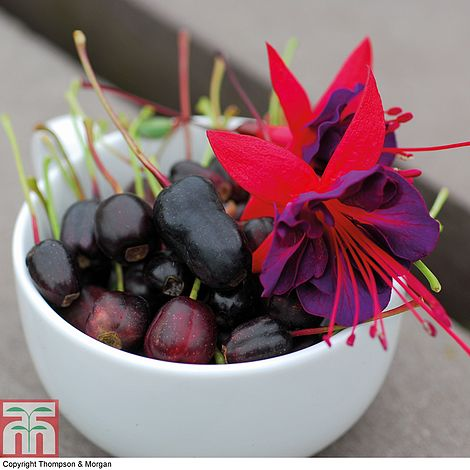
I like my plants to work hard, so the more they do the better. And that’s why I like the look of the edible Fuchsia ‘Berry’. The shrub blooms just like the fuchsias we are all familiar with but it also produces prolific edible berries, which are rich in vitamin C and apparently taste like a fig crossed with a kiwi fruit.
In fact, all fuchsia fruit are edible and you can also eat the flowers. By all accounts, the berries are lightly tart with lemony freshness and have been compared to stone-less cherries. They will appear towards the end of the summer, when the plant is still flowering.
The plant breeders at Thompson and Morgan have worked for many years to produce the ‘berry’ tasty variety, cross hybridising and selecting from a range of different berrying fuchsias, doing endless taste tests and berry counts. Each shrub can produce up to 300 berries each year.
The fuchsia berries are rich in vitamin C and make a great jam. The method is the same as most other berry jams. You can also bake them into scones, muffins, cakes and add them to pancakes, ice cream, a fruit salad or your morning cereal. They make a good chutney and are tasty and sweet enough to eat straight from the shrub as a convenient snack. The petals of fuchsias are edible too and are great fun to decorate dishes with – or freeze them into ice cubes for a fancy addition to summer drinks.
I’m not sure what Granddad would have made of this advice – I remember having quite a row from him as a kid for just going through his flowerbed popping all the fat fuchsia buds. I daren’t think what would have happened if he had caught be picking off the flower-heads and berries – edible or not.
As easy to grow as a normal fuchsia, the Fuchsia ‘Berry’ is hardy, so you can plant anywhere you would normally grow your hardy, bush fuchsias. Grow them in beds and borders, containers on your patio or on the veggie patch. Plant them around 1ft apart.
The shrubby plants produce fabulous, classic blue and red fuchsia blooms from late June, which are soon replaced by the plump, vitamin-rich berries in their hundreds. The shrubs will keep on flowering while they are fruiting – see what I mean by ‘hard-working?
And of course they would make a great present for Mother’s Day. More details from www.thompson-morgan.com or maybe your local friendly garden centre would be able to order in for you.
The fuchsia might not be orange, but edible.
Pollen Puffs
Experts are warning of a tough spring for hay fever sufferers. The warm weather we had last week has already triggered a ‘pollen bomb’, although I can’t type that without shaking my head. I am not taking away from the discomfort and distress that hay fever sufferers go through at all but maybe describing it as a ‘pollen puff’ would be slightly less dramatic.
Whatever you call it, spring pollen does seem to be getting more of an issue for hay fever sufferers. Winters are running on for so long that the early spring flowering plants blossom at the same time as late spring flowers, which is known as a “condensed spring”.

Most people forget about spring tree pollen and the effects it has, associating hay fever with grass pollen later in the year. Grass pollen is responsible for 95% of hay fever symptoms but tree pollen does seem to be causing more problems each year as alder, hazel, elm and willow throw their pollen to the wind.
Friends who do suffer with hay fever, and even asthma, as a result of high pollen count swear by a teaspoonful of local honey every day. Local honey contains local pollen, which when digested desensitises you to the effect of the pollen.
Don’t forget that your four legged friend could be suffering from hay fever too – sneezing, scratching and runny eyes are all signs that they are being affected by pollen.
Boston terriers, Cairn terriers, Scottish terriers, West Highland terriers, wire-haired terriers, Dalmatians, Irish Setters, Poodles and Schnauzers are actually more prone to hay fever than other dogs.
You can help your dog by wiping them over with a damp towel after a walk to help remove any pollen clinging to the coat. Washing their bedding regularly and hoovering – the house, not your pet – can help too.
Thankfully Yogi doesn’t suffer from hay fever, so I don’t have to suffer from hoovering.
Pollen Positives
 I had a great response from sharing the fact that when honey bees have been visiting snowdrops, you can see the orange pollen collected in the little pollen baskets on their legs.
So I thought I’d share one of my favourite things – the Pollen Identification Card. It is a little reference card showing the colour of the different pollens collected by bees throughout the year.
If you notice what colour pollen is on the bees legs, match it to the card and you will know what plant, tree or shrub they have been visiting.
 I have checked various websites and it seems that the cards have been upgraded and laminated since I bought mine, so aren’t exactly the same as the photo. The principle and information is the same. Find out more at www.northernbeebooks.co.uk/products/kirk-pollen-identification-cards
Northern Bee Books also stock a great selection of second hand bee books. Just saying!
Leave a Reply