

Taken from Lynne’s weekly column ‘Green Scene’ for the Western Mail
19th June 2021

Happy Father’s Day
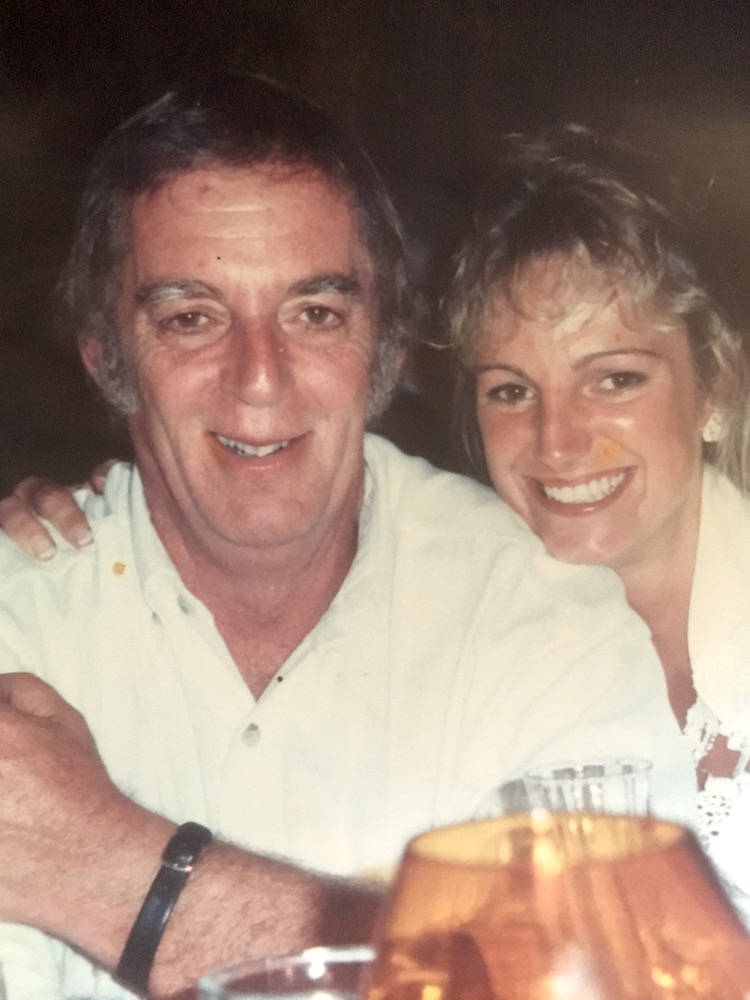 At this time of year I always get asked for ideas for presents for dads who love their garden. I don’t think you can go far wrong with a plant – or a tree – if you have the room. On my suggestion, one of my friends has bought her father a fruit tree every Father’s Day for the last twelve years and they have organically established a beautiful orchard, which in essence is, and will always be, a tribute to her dad. Just for the record, her mother gets a rose for Mother’s Day and they also have a beautiful rose garden.
Commercialism being what it is, there are some lovely roses suitable for Father’s Day too. ‘Dad’s Rose’ is a floribunda rose with lovely lemon buds opening to a double flower of a creamy white, and which gets more white as the flower ages. It has a fantastic scent making it perfect for the patio or in a border close to where you can really appreciate it.
Another topical floribunda rose is ‘Father’s Favourite’, flowering from late spring into autumn, with clusters of double, apricot to orange flowers with yellow centres and a light scent. If your prefer a stronger scent then choose ‘Special Dad’, with plenty of bright red blooms from early summer through until autumn. Helpfully, this hybrid T also has excellent disease resistance. All of these roses will get to around 2-3 ft high and are suitable for growing in containers as well as beds and borders.
Of course my brother and I will be remembering our dad on Father’s Day. Bob passed away 25 years ago, the day before Father’s Day and only 54 years old – far, far too young and the age I am now.
As my brother and I both worked with Bob (we never called him Dad, always Bob) for several years, we still have the pleasure of passing local gardens and saying – “Remember planting that with Bob?’, or ‘Remember putting that fence up – or patio down – with Bob?’
Ian and I obviously have lovely memories, but occasionally the serendipity gets stretched. Two years ago we pruned two apple trees that my dad’s father planted for Bob and his brother when they were born, and last year I whilst working for a client that Bob had worked for 30 years previously, I was able to swim in the swimming pool that he had actually built. It was quite emotional.
That’s the thing about gardening, you are contributing to nature and history – your legacy lives on through plants, design or even hard landscaping. As the Greek proverb goes, “A society grows great when old men (and women, I hasten to add), plant trees in whose shade they know they shall never sit.”
But probably the most poignant quote for this week is, “I wish Heaven had visiting hours.”
Water Wisely
 You would think that after all the rain we had in May, the gardens wouldn’t need watering again this year but it is amazing how quickly the soil dries out. Gardens are ‘bone dry’ now and containers and hanging baskets will need watering at least twice a day. If you let the compost dry out it is really hard to get it to re-absorb water and it’ll just run off. It happens easily and if your hanging baskets are already looking a bit crispy you may be able to resurrect them by dunking the baskets into a trough or dustbin of water. Completely submerge the whole basket until the air bubbles stop rising and your compost should be ‘rehydrated’. Remember it is always better to water slowly – lots of people almost throw water at their containerized displays and/or veg and it’ll just run straight off the surface, being of no benefit to the plants whatsoever. Of course, heavy thunderstorm rain, triggered by hot weather, will also largely run off. So even after heavy stormy rain, it won’t be long before you’ll need to get the hose out again.
Dad always used to say it’s best not to water lawns or established shrubs as it encourages their roots to rise to the surface for the water. If you have to stop watering at any time, this leaves the root system vulnerable to continued drought. If you leave grass and established shrubs to fend for themselves, the roots will organically go deeper into the soil searching for water and that will in turn establish a healthier more self sufficient root system.
If you are planting new plants during hot, dry weather always fill the planting hole with water before you put the plant in and backfilling with soil. It’ll be messy but it ensures the water is where it is needed and will give the new plant the best chance possible. I have a good reputation for plant survival and I think it’s largely down to common sense and ‘being bothered’.
I always sink several empty 2 litre plastic bottles amongst my runner bean rows. Take the tops off and cut the bottoms off first, so they are like a funnel. Then sink them into the ground – between any thirsty plants – and when you water make sure you fill them with water too. They drain very slowly and ensure water gets to the roots of the beans (or vulnerable plants).
Remember that most vegetables are around 90% water by weight – so it is essential to water regularly when we don’t have ‘helpful’ rain. It’s all too easy to think, “I’ll do it tomorrow”, but plants will dry out really quickly and can’t go to the tap for a drink!
Smarty Plants
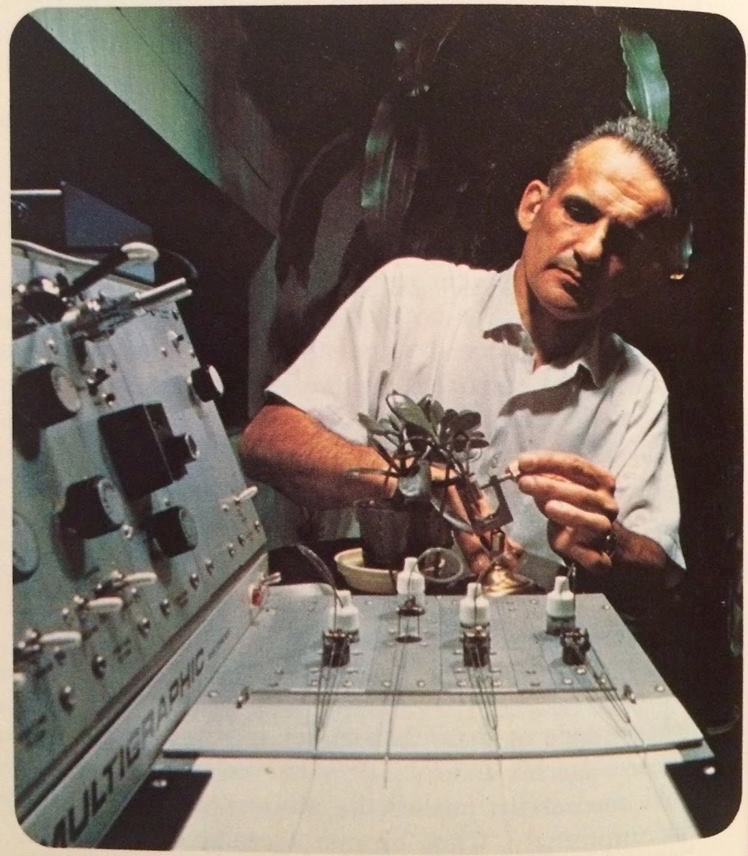 Having just written that ‘plants can’t go to the tap for a drink’, has just reminded me of one of my ‘hero’s’. Cleve Backster was an interrogation specialist for the Central Intelligence Agency, best known for his experiments with plants using a polygraph instrument in the 1960s. I was all set to fly to the States in 2013 to meet and interview him but sadly he died a month before I was due to leave.
Backster claimed that his experiments show evidence that plants not only respond to physical and chemical stimuli, but that they are capable of knowing the emotions and thoughts of entities around them. This ‘plant perception’ became known as the Backster Effect.
One of his experiments involved a plant being set up with electrodes that would allow the plants ‘thoughts’ to move a small cart that the plant was placed in. When the plant it was thirsty it would actually move itself to the tap.
Though no other scientists have been able to get the results Backster did, the idea remains intriguing – especially to me!
Check out his fascinating studies for yourself online, read The Secret Life of Plants, or watch the documentary of the name. https://topdocumentaryfilms.com/the-secret-life-of-plants/
You won’t look at plants the same again – and definitely won’t let them die of thirst!
Leave a Reply