
Taken from Lynne’s weekly column ‘Green Scene’ for the Western Mail
12th April 2025

Happy (and Safe) Holidays
I think schools broke up for Easter last week. Not having children, and therefore nor grandchildren, my diary isn’t split up into ‘term times and holidays’, so I’m never quite sure. But Easter weekend is definitely on the horizon and so is my annual ‘polite reminder’ – please be careful in the garden as you tackle DIY jobs and garden maintenance.

Statistics show that the Easter holidays are the busiest time for people undertaking jobs around the house and garden and it’s no coincidence that it is also the busiest time at Accident and Emergency and Minor Injury Units throughout the country.
Whilst it’s never a good time to have an accident, these days it is even more imperative to avoid adding to the NHS workload. As a kid I seemed to have a Loyalty Card with Neville Hall Hospital as I regularly fell out of trees, off horses, or even occasionally over ‘big bars of thin air’, and we were always very lucky to be ‘in and out’ whilst tea ‘kept warm’ in the Rayburn.
So, whilst accidents are so called because they are not planned, please take extra care as you tackle that ‘to-do’ list this holiday time.
Eggs-treme Care Needed
 And at the risk of sounding a real doomster this week, please keep all chocolate eggs and confectionary away from dogs. It’s obviously essential to do so all year round but Easter – and Christmas – always see sharp spikes in visits to the vets with dogs having snaffled Easter eggs and other chocolates. There are special dog chocolate gifts available but I just prefer to keep all chocolate away from our four legged friends, as it may be too easy to mix up dog chocolate and human chocolate.
Something else to remember is that if you are having an Easter egg hunt in your garden, please make sure you ‘find’ all the eggs, before your pooch does.
I’m not a fan of Easter eggs anyway, possibly being the only woman who doesn’t like chocolate or shoes. I would much rather give a gift of a Chocolate Cosmos plant at this time of year. The flowers, that are a lovely velvety maroon-crimson colour appearing in mid to late summer, really do smell of chocolate and it’s far less likely to cause misery to dogs – or the waistline.
The first chocolate Easter eggs appeared in Europe in the early 19th century, with France and Germany leading the ‘eggs-ample’. The UK caught on in 1873 when Fry’s of Bristol (and of Fry’s Chocolate Crème fame, my dad’s favourite), produced the first hollow chocolate egg here, with the filled eggs being created in 1963. They were originally called Fry’s Crème Eggs with Cadbury’s taking over in 1970.
Stunning Sycamores
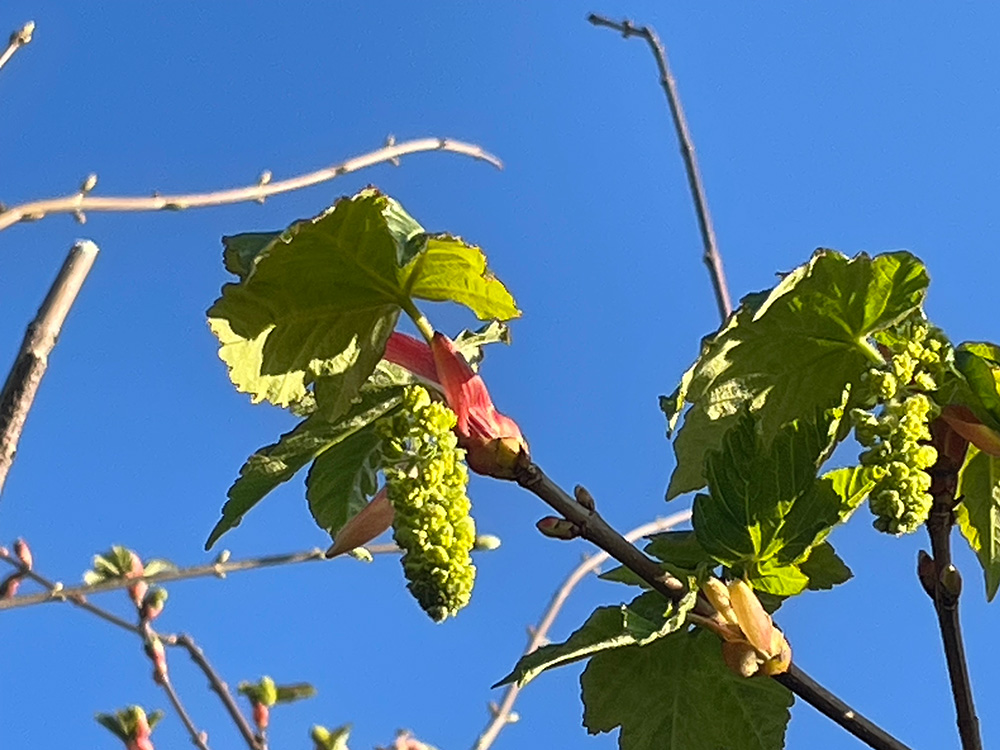 I wonder how many people have noticed the profusion of sycamore flowers out now. The small, greeny-yellow flowers which hang in spikes or ‘racemes’, appear at the same time that the new lime-green leaves start to unfurl and therefore can often be missed – unless you suffer from hay fever I suspect. Don’t forget that ‘local honey’ will act as a homeopathic way to alleviate hay fever symptoms. It is thought that local honey desensitizes the body to local pollen, and as it contains traces of local pollen, regularly consuming it might help your body build a tolerance to that pollen, thus reducing hay fever symptoms.
After pollination by wind and insects, the female Sycamore flowers develop into the easily-recognisable winged fruits known as samaras. As kids we always called them ‘helicopters’ due to the way they rotate like helicopter blades when falling to the ground, and we often had helicopter competitions to see whose could hit the ground first. Not surprisingly, none of my friends went on to become helicopter pilots.
 In Wales, sycamore trees were traditionally used to make ‘love spoons’, decoratively carved wooden spoons that are still given as a romantic gesture.
In Celtic mythology, the sycamore was associated with the ‘world tree’, a sacred tree that connects heaven, earth, and the underworld. The Celts believed that the sycamore was a home to fairies and other spirits, (aren’t all trees?) and they often planted sycamore trees near their homes for protection. Be careful not to plant one too close to your house though, as it is more likely to cause destruction and devastation than give protection.
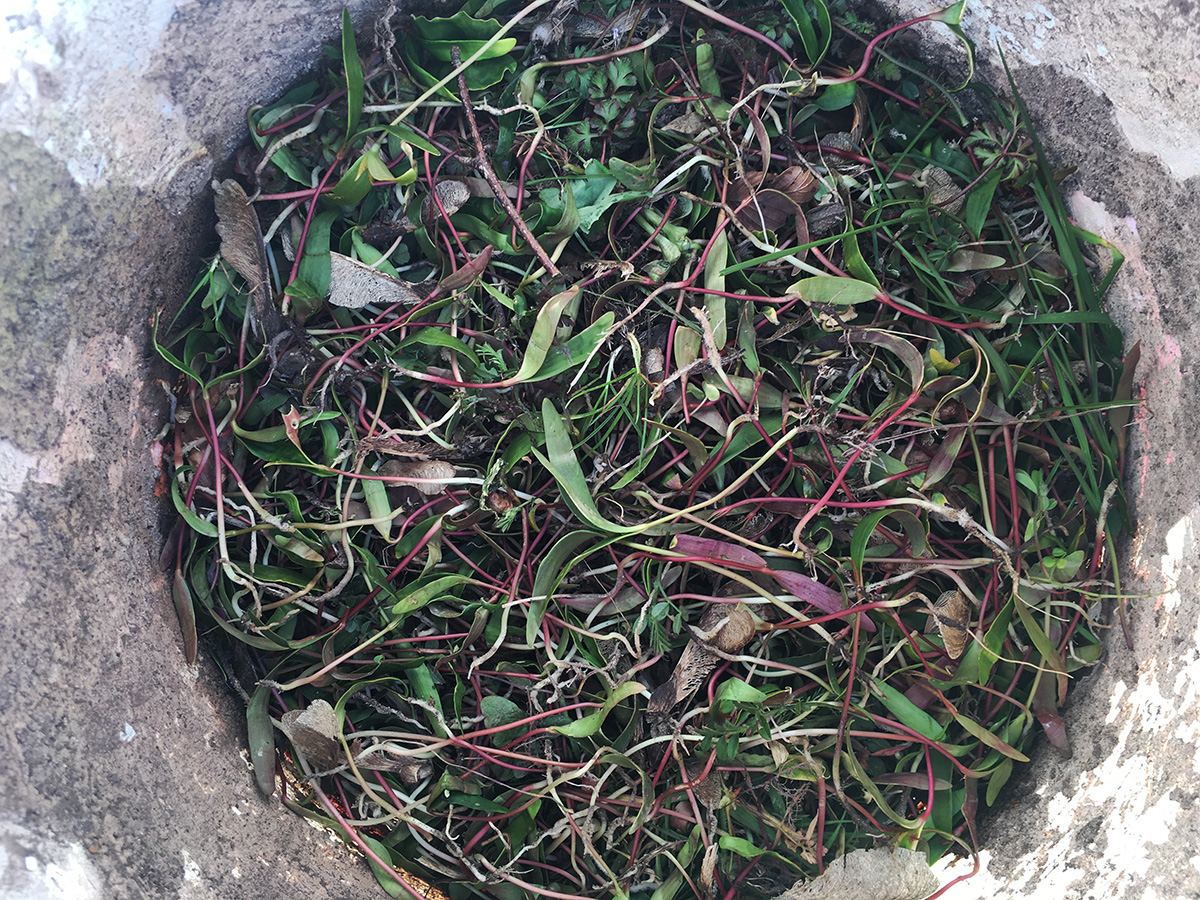
And another warning essential to accompany sycamores is that the seedlings are highly toxic, especially for horses, when grazed in a field or paddock. Unfortunately they ‘seed’ very easily and can often be seen almost as a carpet especially in ‘mast’ (prolific) years.
Perfect Permaculture
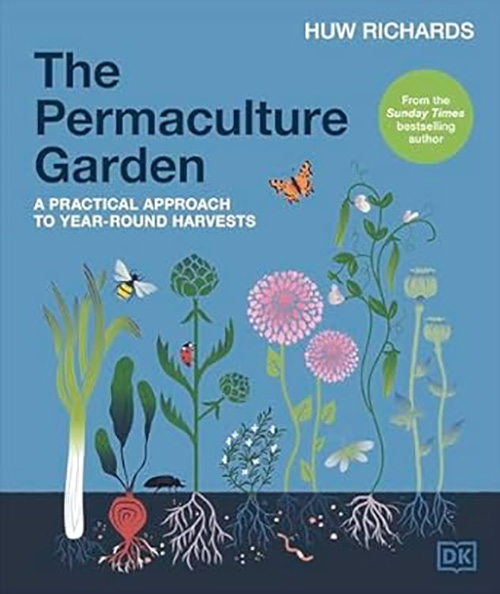 If you are looking for vegetable growing inspiration for this looming holiday, look no further than Huw Richard’s new book, The Permaculture Garden. Huw is an amazing gardener and has a huge following amongst the younger generation of green fingers. I have clothes in my wardrobe older than Huw, but don’t let his young age fool you. He confesses to have been gardening since a 3 year old and knows his onions, for sure.
Being as comfortable and savvy with tech as he is with ‘tatoes, he started his YouTube Channel at the age of 12, with videos having over 4 million watches. Having nearly half a million followers across the social media platforms, and three gardening books under his belt, I think Huw’s popularity is largely based on his can-do attitude and the lovely ‘Welsh way’ he puts things across.
His latest book is no exception and is full of information on how to create a garden based on nature’s natural rhythms, which will benefit the soils, the wildlife and the plants. As well as hints and tips on growing, there are also great design ideas and the fear of pruning and propagating is alleviated by simple instructions to follow.
You can read more at Huw’s website, http://abundanceacademy.online and follow him on social media.
Please ‘Water Wildlife’
As the ‘unprecedented’ warm weather continues, please remember to make sure that wildlife in your garden has access to fresh drinking water. Hedgehogs, birds, bees and butterflies will all be struggling to find fresh water at the moment as puddles and shallow streams have dried out. Bees and butterflies need very shallow or boggy water to drink from, so bowls or saucers will need topping up every day.

Garden birds will also appreciate a bath and will reward you with their comical antics as they bustle about in their bath. Last week there was actually a queue of four sparrows waiting to use the bird-bath at the cottage. I could almost picture the towels draped over their ‘arms’ as they clutched their little toilet bags. Surely I’m not the only one with that kind of imagination?
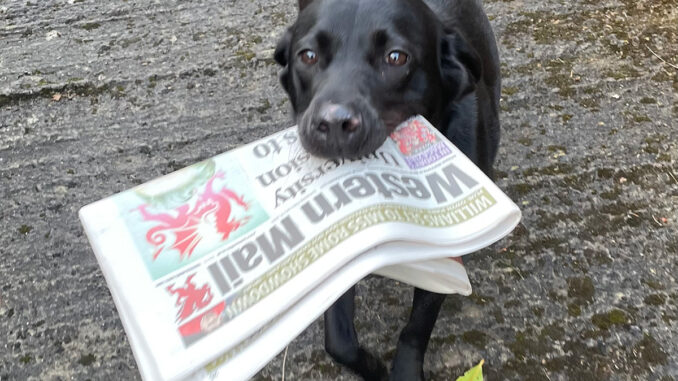
And for no reason other than it’s pretty cute, here’s a photo of my brother’s dog, Fidget, taking him something to read during break in work.
You’re welcome!
Leave a Reply