
Taken from Lynne’s weekly column ‘Green Scene’ for the Western Mail
11th April 2020

Hap-pea Easter
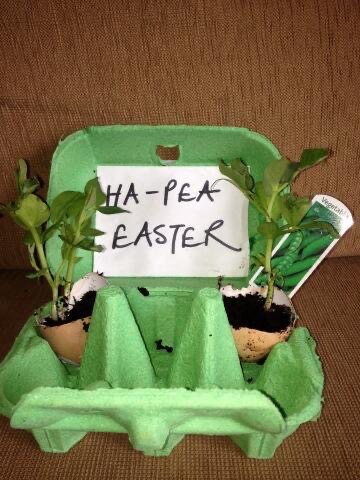 Last year I grew these little pea plugs as Easter gifts for friends and family, but this year it’s a very different Easter indeed, with no gifts and very little to write about regarding the ‘holiday’ weekend. I would normally be writing about the RHS Spring Show in Cardiff heralding the start of the horticultural shows, and the fact that Easter weekend is traditionally the time when most people get back out in their gardens en mass. People would normally be visiting garden centres or relatives (not necessarily in that order) but this year the advice is, of course, to stay home and save lives.
Traditionally there is always a surge of admissions to Accident and Emergency departments over Easter weekend, as people reacquaint themselves with power tools, garden machinery and ladders. For obvious reasons, please be extra careful with DIY tasks now.
The advice may well be, “Be safe and stay home” but please remember to stay safe AT home too!
Stone Walling
 Being an avid fan of social distancing for most of my life, I have actually enjoyed catching up on jobs around the cottage over the last few weeks – at this rate I should be finished around 2024. Interestingly, I have always blamed my aversion to housework on a lack of time but the last few weeks have proven that to be wrong.
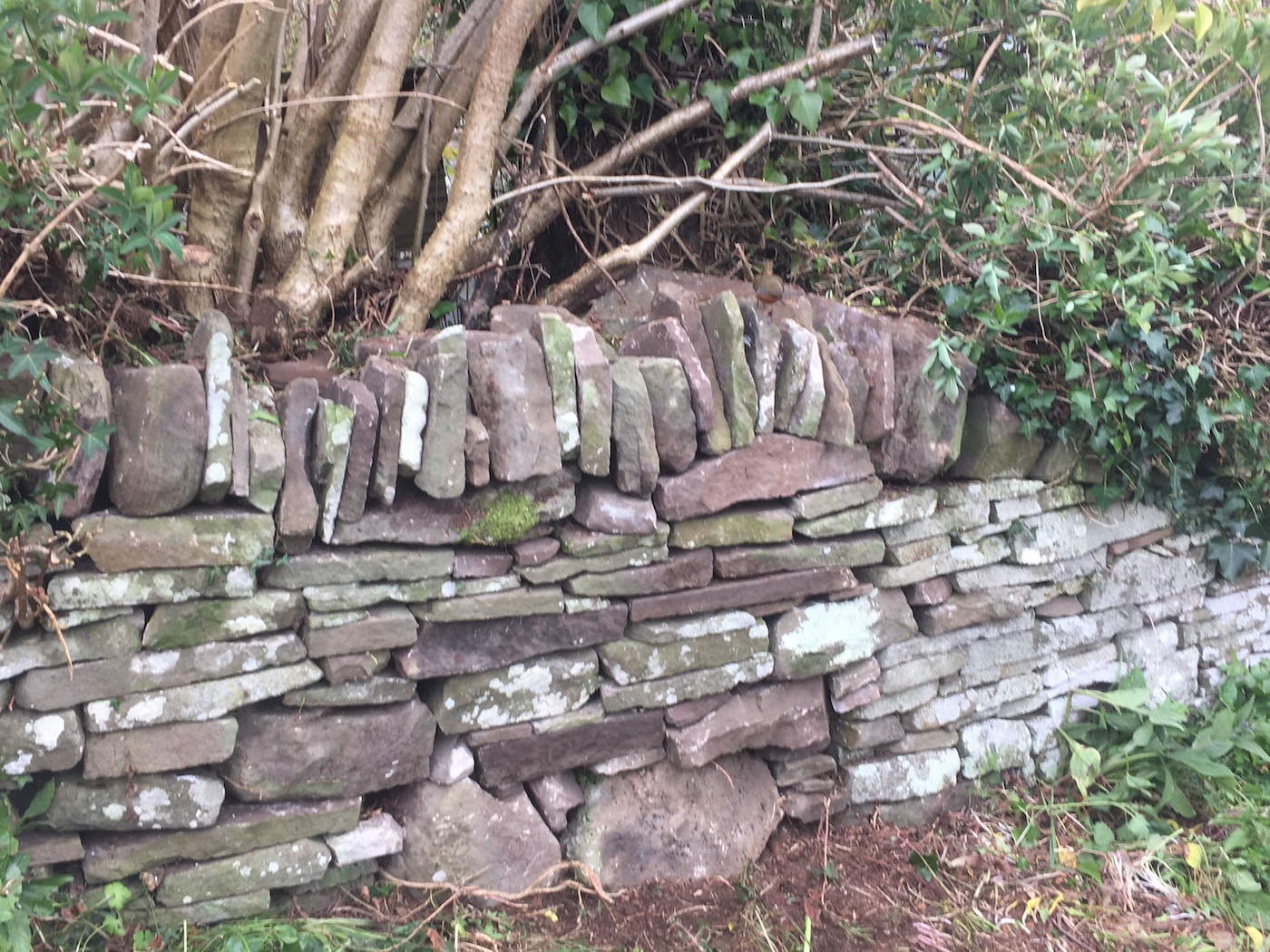
One of my favourite-ever things to do is dry stone walling, and there are yards and yards of it surrounding the cottage. I have had the luxury of having time to repair a few collapsed sections and it always strikes me as an analogy for life. Where the wall crumbles, it is important to strip it right back to a firm and solid foundation before rebuilding. Try to rebuild on dodgy and insecure foundations and it will only collapse again.
My Wing-Man
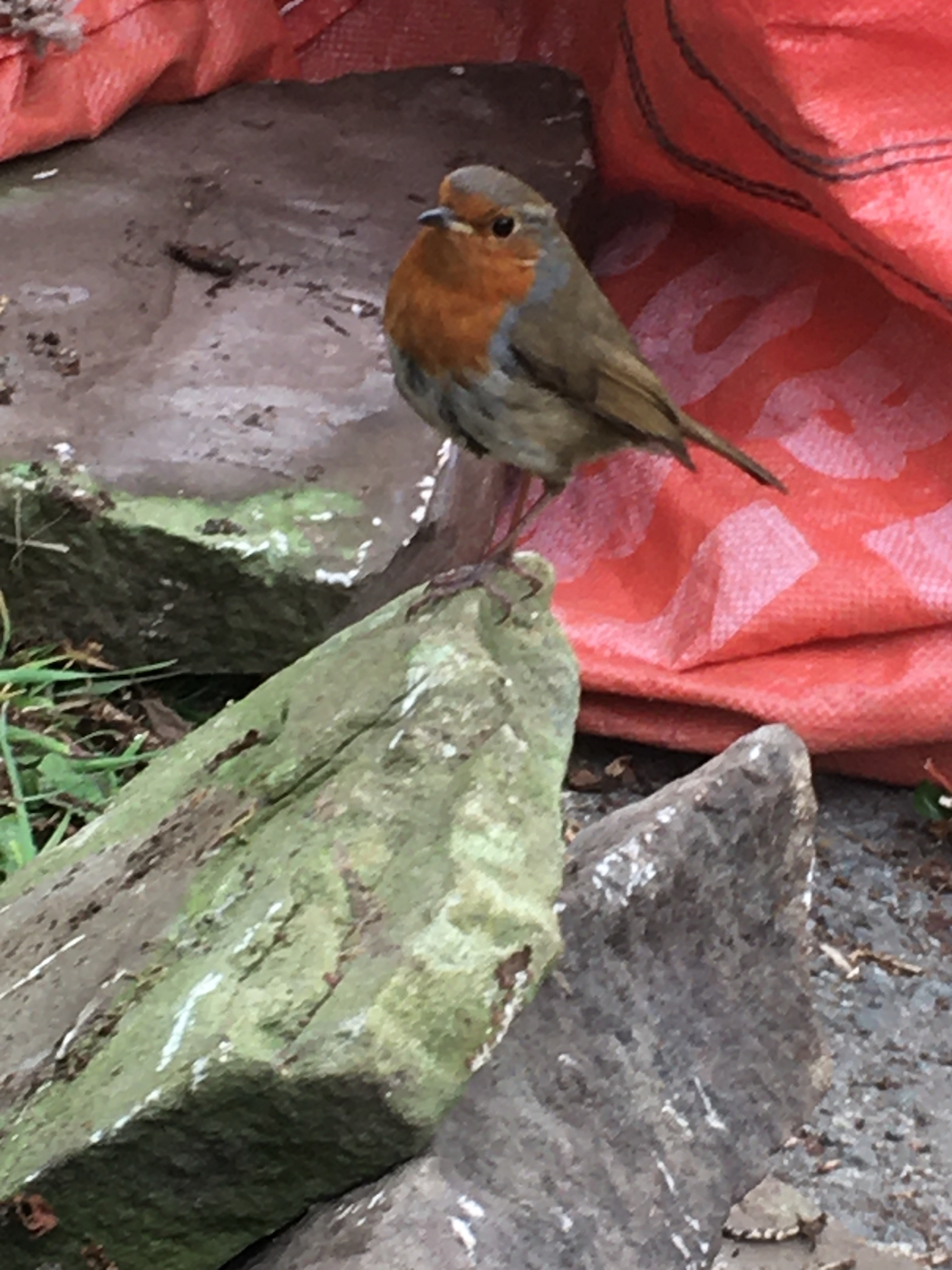 Whilst repairing my walls, and doing most other jobs in the garden, I have been accompanied by a special ‘wingman’ – a cheeky robin. After Dad died in 1996, whenever a robin worked alongside us we always said it was Dad coming to check we were doing the job right.
He was quite territorial (the robin not Dad) and robins do hold territory all year round, which very few birds do. They will defend it both by singing and trying to drive away any intruders – no matter what size they are or what task they are trying to complete.
Robins also are one of the few birds that sing all year, except for a very short time in late summer when they are moulting.
Autumn and spring songs are distinctly different. Currently, the spring song is powerful, confident and upbeat, whereas the autumn song, starting after the moult, is more subdued and melancholy. I’m much the same too – much chirpier in the spring than when heading toward winter.
They are among the earliest birds to start the dawn chorus and one of the last to stop in the evening, and if roosting robins are disturbed they can burst into song even in complete darkness. Bless their little hearts.
In The Bleak Mild Winter
 And now for a bit of good news: the RSPB Big Garden Birdwatch results have shown that the milder winter helped small garden birds.
Almost half a million people across the UK spent an hour watching the birds that visit their garden or outdoor space as part of the RSPB’s Big Garden Birdwatch at the end of January, counting nearly 8 million birds in total.
Results revealed smaller birds such as long-tailed tits, wrens and coal tits were seen in greater numbers in gardens across the country than in 2019 thanks to the milder winter.
Daffodil Do’s and Don’ts
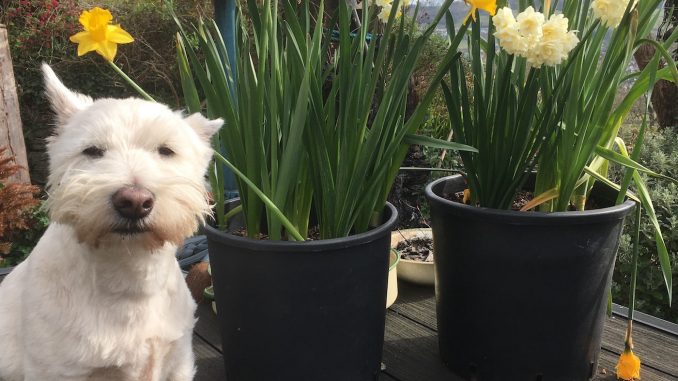
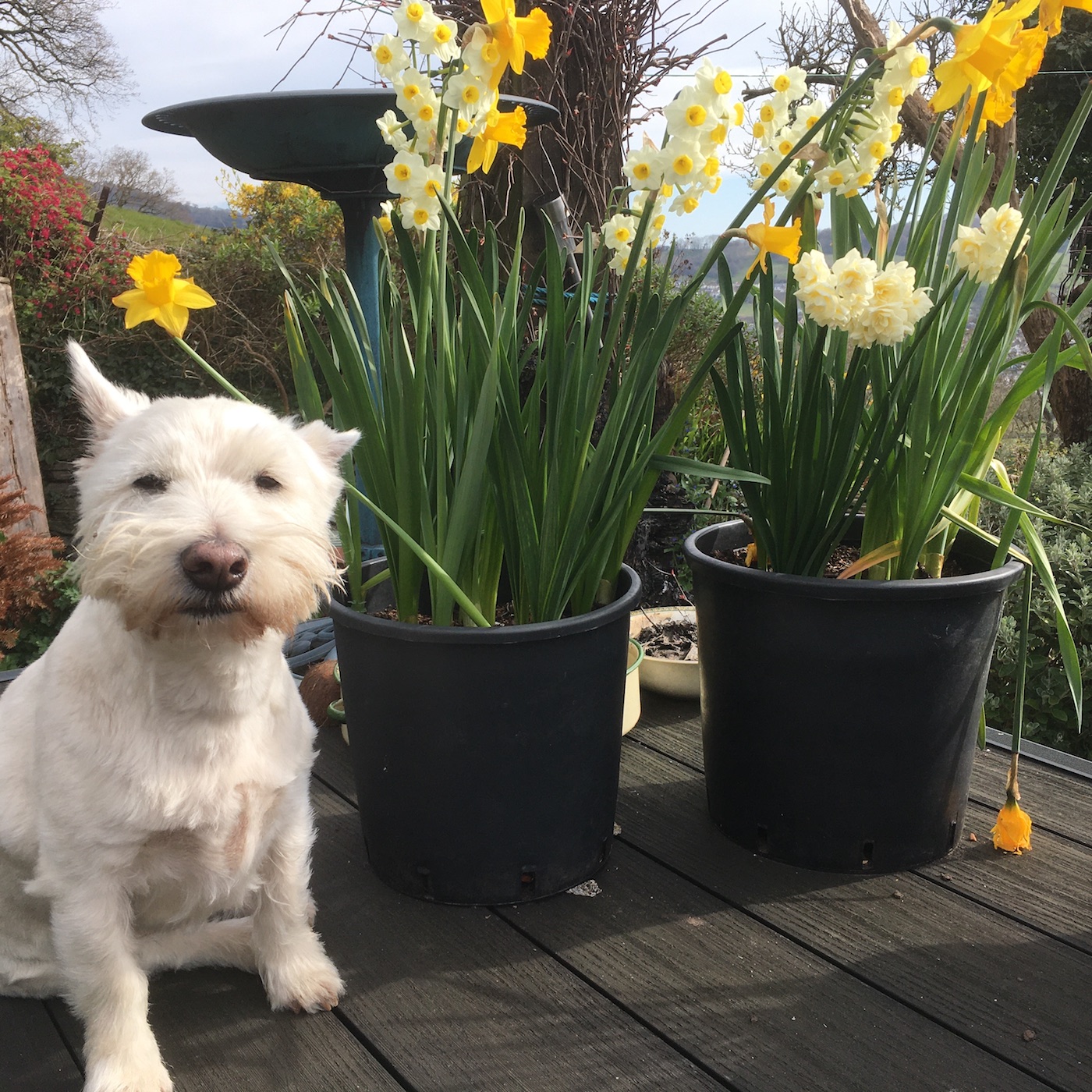 I am always surprised at the variation and duration of flowering times of daffodils. There are several brave drifts behind the Fire Station in Crickhowell which are out in January and yet I still have some still in tight bud in my own garden in April. Watering late flowering daffs during dry weather will help to prolong the blooms, and apologies if this advice comes too late for your own display.
Once your daffs are over, dead head them by removing the spent bloom just below the seed pod. This will save your bulbs putting in an unnecessary amount of effort trying to producing seeds. Don’t, however, be tempted to remove any of the leaves. They will need to be left to die back naturally for 6-8 weeks. This is the critical aspect of daffodil care.
In simple terms, the leaves absorb energy from sunlight, and through the process of photosynthesis, the energy is converted into chemicals that produce sugar. This essential food returns to the bulb to keep them flowering year after year. If you remove the foliage too early, the bulbs will be stunted, which results in smaller and fewer (or no) blooms the following year. Similarly, avoid tying or plaiting the leaves to keep them tidy, as this will reduce the amount of sunlight that can access the leaves and therefore restrict the goodness returning to the bulb.
After flowering, keep bulbs watered during dry spells, and feeding weekly with a high potash fertilizer, until the leaves die back, will improve next year’s displays.
If you have grown daffodils in containers, you may want to use the containers for veg now, so just lift the clumps and replant them in a corner of a flowerbed so the foliage can die back naturally. Once the foliage is dry and brown, lift and store somewhere cool, dry, dark and well ventilated to allow them to dry out naturally before replanting in the autumn. Writing from experience – do be careful to put them somewhere where you’ll remember them.
Leave a Reply