
Taken from Lynne’s weekly column ‘Green Scene’ for the Western Mail
28th August 2021

Gardener On The Roof
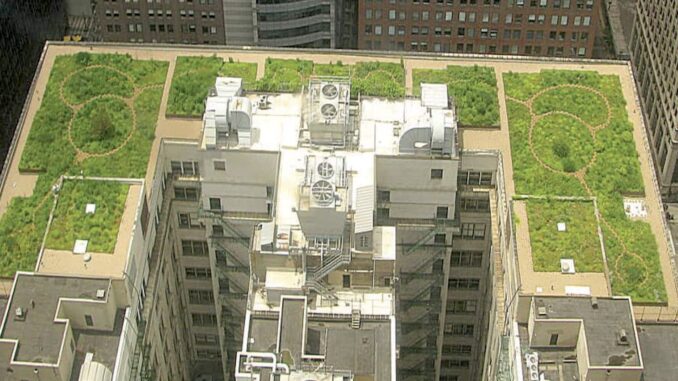
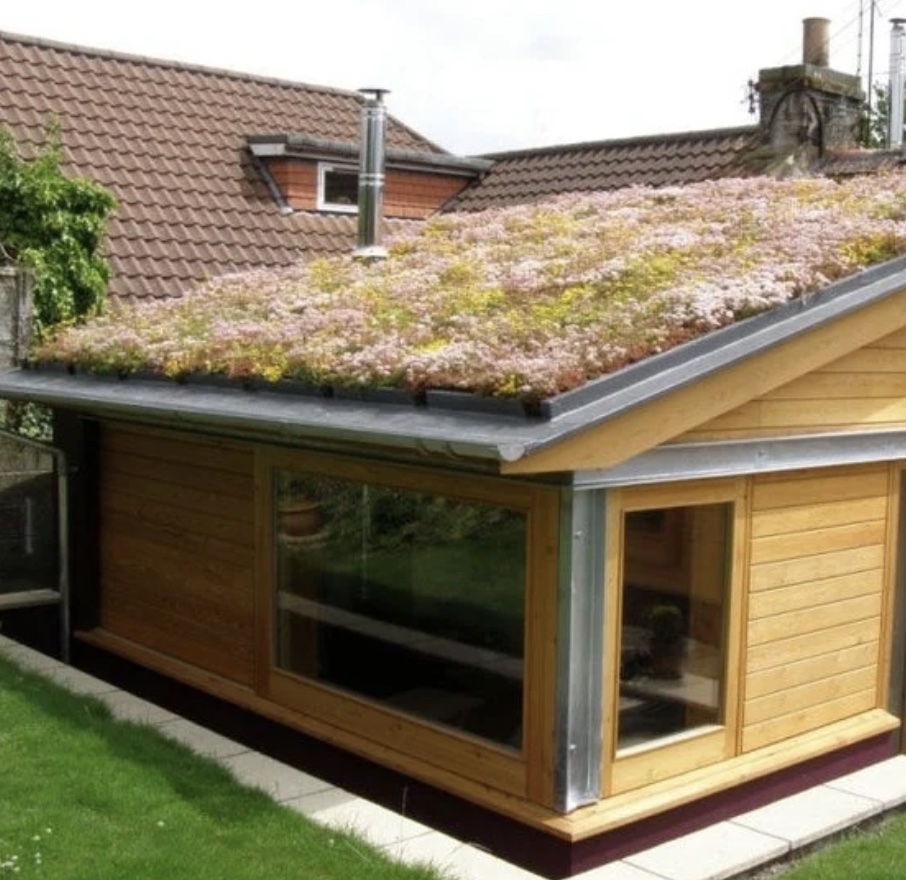 I have been a big fan of green roofs for a long time. Also called eco roofs and living roofs, they are basically ‘planted’ roofs that are professionally created and installed and which will utilise an otherwise wasted space. These ‘elevated gardens’ will then provide another level of dining for our bees and other pollinators by providing them with increased natural and beneficial habitat.
As well as benefitting our pollinators, there are also numerous other benefits. They have been proven to reduce rainfall run off and therefore reducing the risks of flooding. On a large roof, this water run off can be reduced by a whopping 60%. After all the recent increase in flooding, it makes you wonder why living roofs aren’t mandatory for large new builds.
Green roofs also have excellent acoustic qualities for both external or internal sound, which is beneficial when used on industrial developments – and a green roof would also helps the commercial buildings to blend into their environment. You could even have numerous bee hives or apiaries on top of these buildings amid the planting.
The sky – or the roof – is the limit.
A well planted green roof reduces pollution by removing gas pollutants and dust particles from the air, therefore improving air quality. The natural evaporation of water from the plants and soil helps to cool and humidify the air, lowering the ambient temperature. Together with the substrate of the green roofs actually absorbing heat, this is obviously beneficial in the heat waves, which are becoming more common too. Even in Wales.
They can even help to convert carbon dioxide to oxygen and research shows that under ideal conditions, a single square metre of wild flowers can absorb up to 1.1 kg of carbon each year. In comparison, a mature tree can absorb around 21 kg of carbon dioxide per year.
The running costs of a building can be reduced as the thermal insulation on the building is improved, providing a more balanced temperature inside the building. Heating costs are reduced in the winter and air conditioning expenses reduced during the summer.
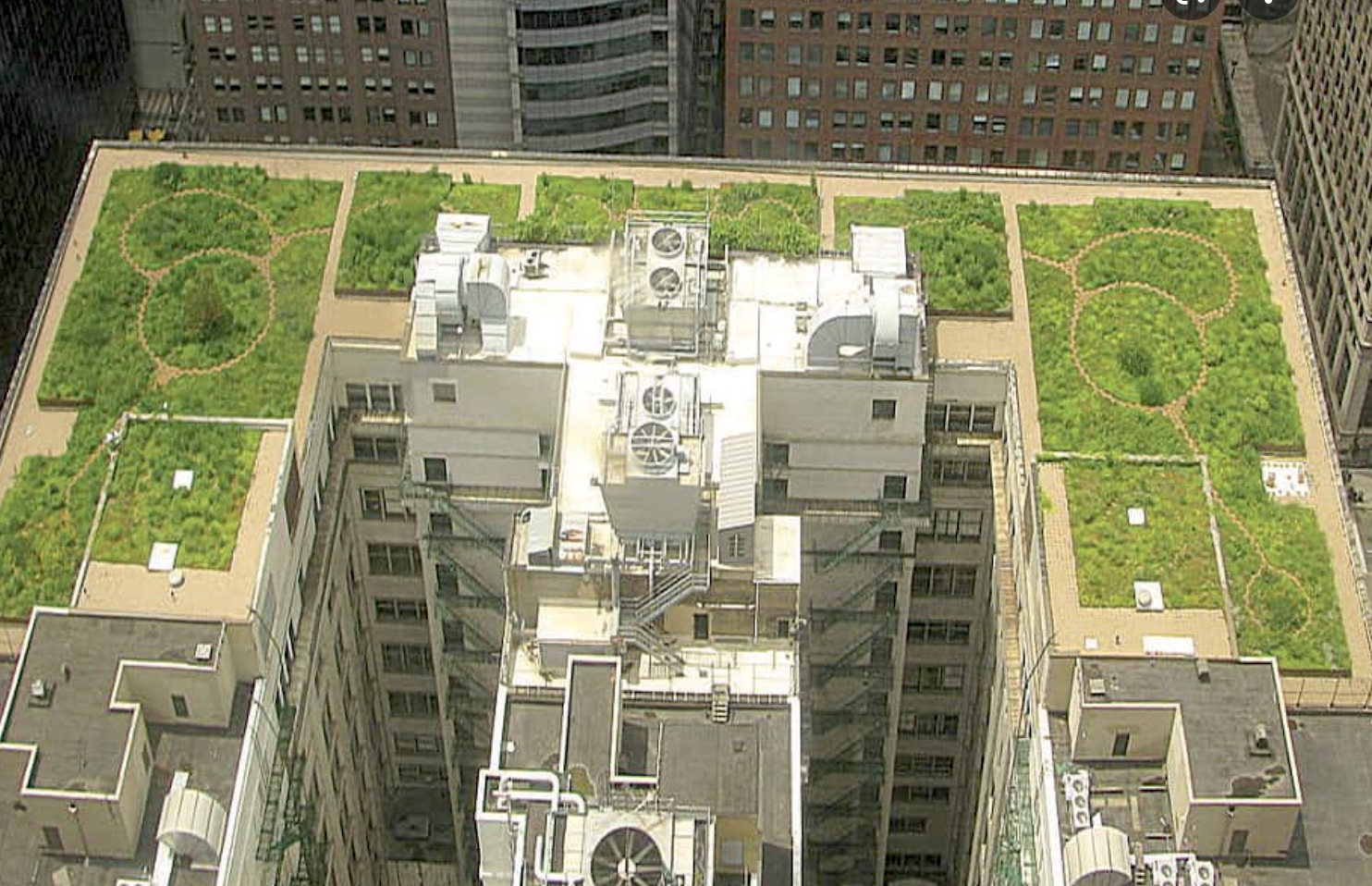 Research has shown that when protected by the landscaping of a green roof, damage by UV is reduced and the life expectancy of waterproofing membranes is substantially increased. Planning officers have even agreed that, in certain circumstances, a green roof could even aid a planning application, as it is deemed to have so many environmental advantages.
I am so passionate about this. Can you imagine the benefits to wildlife if industrial units and supermarkets were to install living roofs? You can even choose the type of planting you prefer – within reason – sedums and alpines, wild flowers, traditional types of Japanese gardens and even herb gardens have been successfully created on top of suitable buildings.
But there is also huge potential on a smaller scale. Loads of people have had outdoor offices and cabins installed in their gardens during lockdown – they could all accommodate a green roof. Smoking shelters, bus stops and public bicycle storage racks could too. As an extra bonus, my accountant has advised that as a green roof installation is considered as work on a commercial premises, (environmental or otherwise) it can go in as an allowable expense. What’s not to love?
However – a word of caution – creating a green roof is a specialised installation, with weight and drainage being the main essential issues to address, and waterproof layers, root barriers, drainage systems and growing mediums for the plants all being specialised skill sets. And that’s why I am championing Tegula Roofing and Restoration, who have the necessary credentials for creating and installing green roofs. And yes, it is roofs and not rooves – I wasn’t sure.
If you are interested in finding out more, please contact Jack on 07889210424
Let’s ‘graze the roof’, and make a difference.
Rescue Party
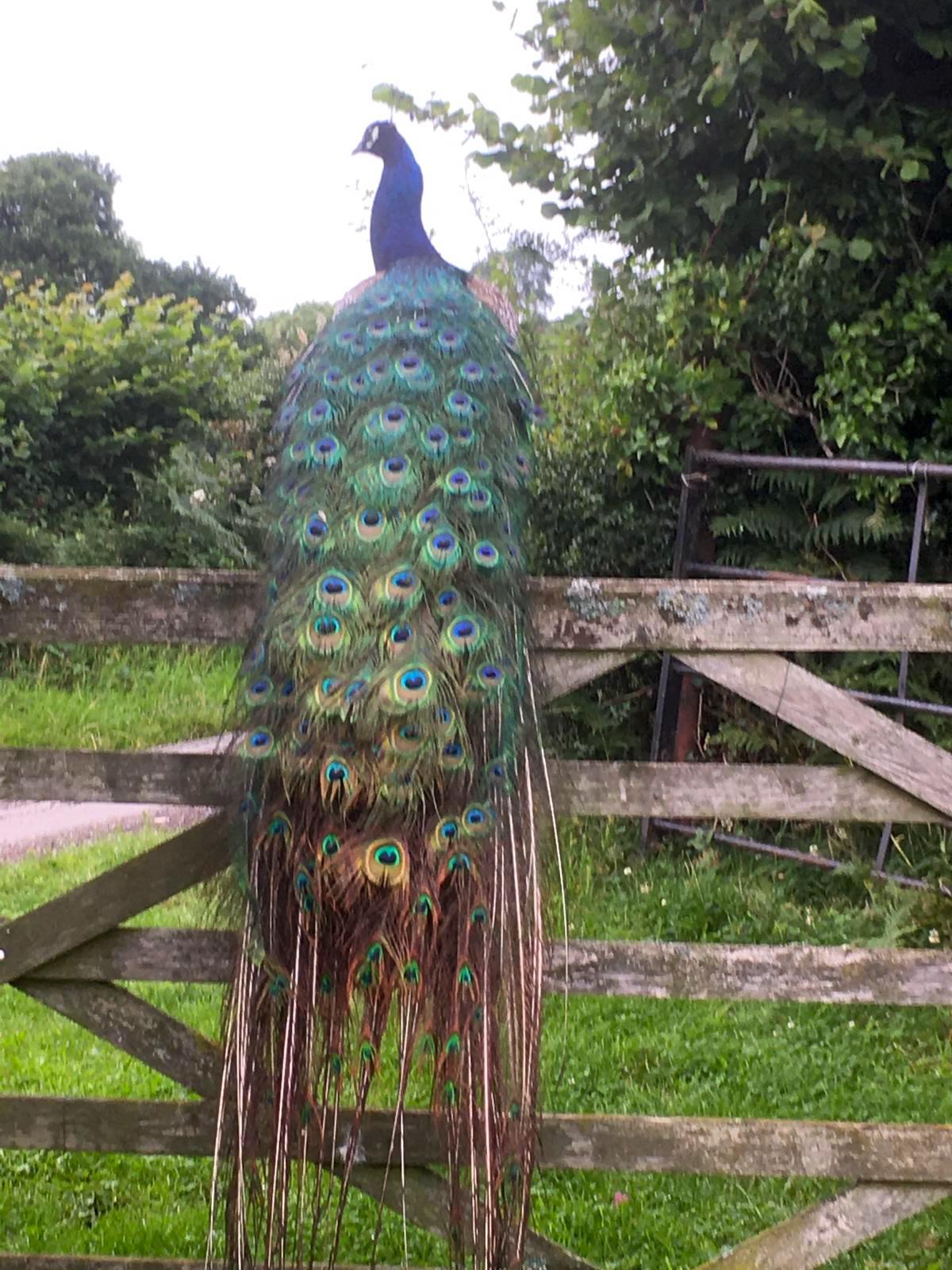 I’m renowned for not answering my phone – I just don’t like it. If friends need anything, they know to text – if they do call, I know it’s urgent. And that was the case one evening last week when a friend rang to ask if I could help her to catch an injured peacock, which had taken refuge in her rural garden. Fast forward to 10 o’clock on a balmy, moonlit evening and Ness, my brother and I were gently corralling the most beautiful, majestic, (and long) peacock into her new summer house. He was the most gentle soul, and didn’t even flinch when I picked him up. I did – and still do – feel incredibly humbled to have been so close to such a magnificent bird. He was much bigger than I expected him to be, weighing about 7kg and very, very long, with his absolutely stunning tail.
Ever resourceful, Ness had arranged treatment and respite for him with the fabulous Sussanne Chambers – also known as The Peacock Lady. Sussanne founded and runs Peacock UK, and is based in rural Worcestershire.
Her passion for peafowl started during a visit to Bristol Zoo at the age of eleven, when she saw a beautiful white peacock for the first time. She says, ‘It was love at first sight and from that moment I was determined to have peacocks in my life.’
That determination became reality. Her peacock farm has grown to become one of the UK’s largest specialist peafowl farms and she is responsible for importing many of the new rare breeds of peacocks to the UK.
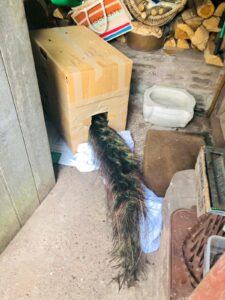
As a peafowl expert, Sussanne kindly takes in injured or birds that need re-homing, and was extremely helpful with necessary advice for catching our handsome fella. Ness had prepared a large cardboard box prior to him being collected personally by ‘The Peacock Lady’. The most important thing was to cut a hole in the box for his tail, which was about 5-6’ long (and which makes up 60% of the peacock’s overall length.)
Sussanne and her majestic peafowl have appeared in Tatler, and on Countryfile, and some of the better behaved birds make regular appearances on TV and in films. A few of her regal-looking birds have gone to right royal homes and she is often consulted about all things peacocky. I didn’t realise that there were so many different breeds of peafowl – and all stunning.
Do have a look at Sussanne’s website, and at her videos, at www.peacocksuk.com
You can also visit to meet her and her birds, but by appointment only please.
The good news is that our rescued peacock is doing well. He had a nasty cut on his foot, which had become infected and meant that he couldn’t ‘push off’ to fly. He has been treated, and also for worms and fleas, and is now enjoying life with his new hen-pals.
Oh, and did you know that a group of peafowl (that includes peacocks, peahens and peachicks) is known as an ostentation, pride or party – all hugely appropriate I’d say.
He’s Hilarious, He’s My Brother
 This week’s hilarity from my brother, who was strimming a churchyard on Monday and got stung by a few wasps.
I messaged him later that evening to ask, ‘How are your stings?’
He replied, ‘My Gordon Sumners? A bit itchy, but okay ta.’
Leave a Reply