
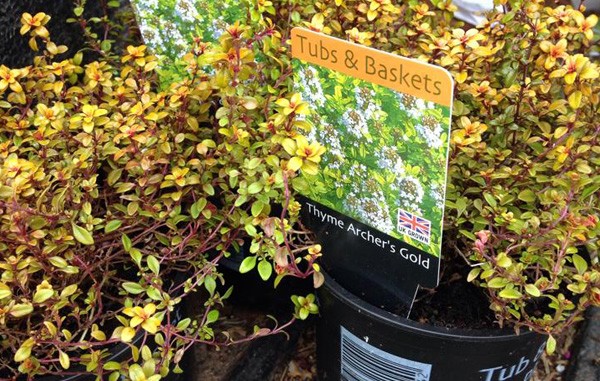
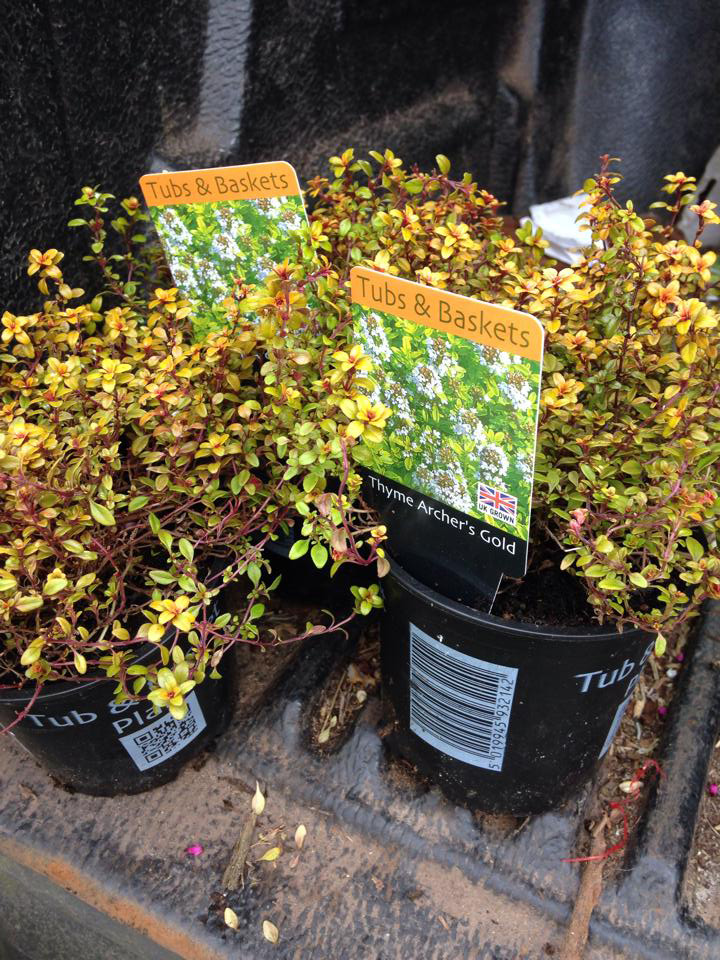
 Last week I had a rather exciting opportunity, which I am thrilled about but can’t share just yet. I hope to be able to very soon! I would like to say ‘Thank You’ to Abergavenny Garden Centre (previously McDonalds) for supplying some lovely plants at very short notice. And that reminds me, I will be there with Radio 2’s allotment gardener Terry Walton, on the 26th March to answer any gardening questions you have and to just ‘mingle’ – and of course I’ll have some books for sale!
The plants I used for my ‘opportunity’ were thyme – Thymus citriodorus ‘Golden Queen’ to be precise. I had to talk about my ‘preferred plants’ and therefore chose them as they are such hard-working plants with loads of benefits and it would be a shame not to share these in my column as well as on camera (there’s a clue).
Thymus citriodorus is commonly known as Lemon Thyme and, as the name suggests, the leaves have a lovely fresh citrus-y scent and flavour. Although described as an ornamental thyme, the leaves can still be used in the kitchen to enhance dishes like stews, soups and sauces and I am told are lovely added to fruit salads and even custard, though I haven’t tried that yet.
As an evergreen, the golden variegated leaves provide year-round interest and the colder the weather, the more vibrant the leaf-colour becomes. In June and July a mass of pink flowers will attract the bees and butterflies as they offer a good source of nectar. But as if that isn’t enough, the other fabulous thing about all the thymes is that they contain a chemical called thymol which the honey bees can use to support their immune system and which can help them fight the Varroa mite.
Thyme also helps dogs relax and when planted in the garden you may even find that your dog lies near it, or even on top of it if Yogi is anything to go by. Zoopharmacognosy is the study of how animals self-medicate in the wild, and thyme has been found to reduce anxiety and even help respiratory problems which is why animals will choose to be near it.
So with all those benefits for us, the bees and our four-legged friends, I’m sure you’ll agree we all need more thyme!
Leave a Reply