

Taken from Lynne’s weekly column ‘Ask Lynne’ for the Western Mail. 5th April 2016

I work with a group of disadvantaged teenagers and have been reading about the benefits of exercise and fresh air. A friend told me that you design garden gyms. We have a nice big room that we can use for exercise indoors but can you give me some advice about creating an outdoor gym in our communal garden please.
I am a huge advocate of exercising out doors; I think it is advantageous for the mind as well as the body, so well done for exploring this avenue for the group.
There is a wide range of bespoke outdoor exercise equipment available to buy if you have the funds but do make sure they are also installed professionally. Otherwise there are numerous less expensive methods to get fit in the fresh air too.
 My favourite work out involves battle ropes which is just a long length of rope used in various ways to work various parts of the body, old car tyres can be used step in and out of (like you used to in school) and larger tyres can be used to flip over for the length of a garden; garden benches can be used for tricep dips and inexpensive frames can be fixed to outside walls for pull ups. Even marking out a hopscotch outline (I always make it as long as possible to be more challenging!) will encourage exercise.
Circuits are great fun outdoors too – simply carry out a different exercise at each ‘station’ and then move on to the next. There are fabulous variations of this, which can be great fun for groups.
‘Normal’ fitness items like yoga balls, skipping ropes, medicine balls and free weights can be taken outdoors when the weather is suitable, as well as being used indoors when it’s not. And that’s quite important in Wales.
But don’t forget that gardening is also good exercise so maybe get the youngsters involved in looking after the garden as well – it certainly keeps me fit!
After a sunny day last week, I noticed there were 14 dead honey bees floating in a bucket of water on the patio. Is this connected to the disease that’s affecting them or something else? It was quite harrowing!
 The sunshine will have brought the bees out of their hives for the first time for several months so, as well as foraging, they would have been thirsty and looking for water. Unfortunately bees, and butterflies, cannot drink from deep water as the surface tension won’t hold their weight, therefore they drown. The way to avoid this is firstly to try not to have buckets and deep containers of water in the garden that aren’t covered and secondly to provide proper drinking habitats for the insects. Simply use a saucer or even an upturned dustbin lid and make a little bog garden with compost, stones, leaves, twigs and other natural material and always keep it wet. This way the bees and butterflies can stand on something safe and use their proboscis to draw the water out of the moist compost. It is a great thing to watch too – you will find your drinking hole becomes quite popular as word gets around!
Following the recent negative publicity about garden ponds we have decided to fill ours in as we have our young grandchildren to stay quite often. Is it OK to use rubble and then cover it with top soil or should we use all soil?
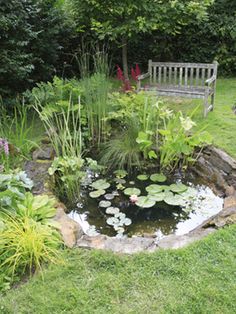 It depends on the size of the pond. Just a thought, but if the grandchildren are small – it may be an idea to turn it into a sand pit for them simply by draining it and filling with clean builders sand. This way when they have grown up you could turn it back into a pond. Or similarly, turn it into a veggie bed or wildflower bed whilst they are growing up.
If it is a large or deep pond then yes, in theory you would be able to put a certain amount of rubble or hardcore in the bottom before filling up with soil but it has to be well compacted to avoid the soil filtering through and sinking which will leave you with an uneven surface.
Leave a Reply