
Taken from Lynne’s weekly column ‘Ask Lynne’ for the Western Mail. 14th May 2016

 I am looking for a plant or several different ones, that will provide ground cover and flower for as long as possible and also be good for the bees. I want to cut down on the amount of weeding I have to do!
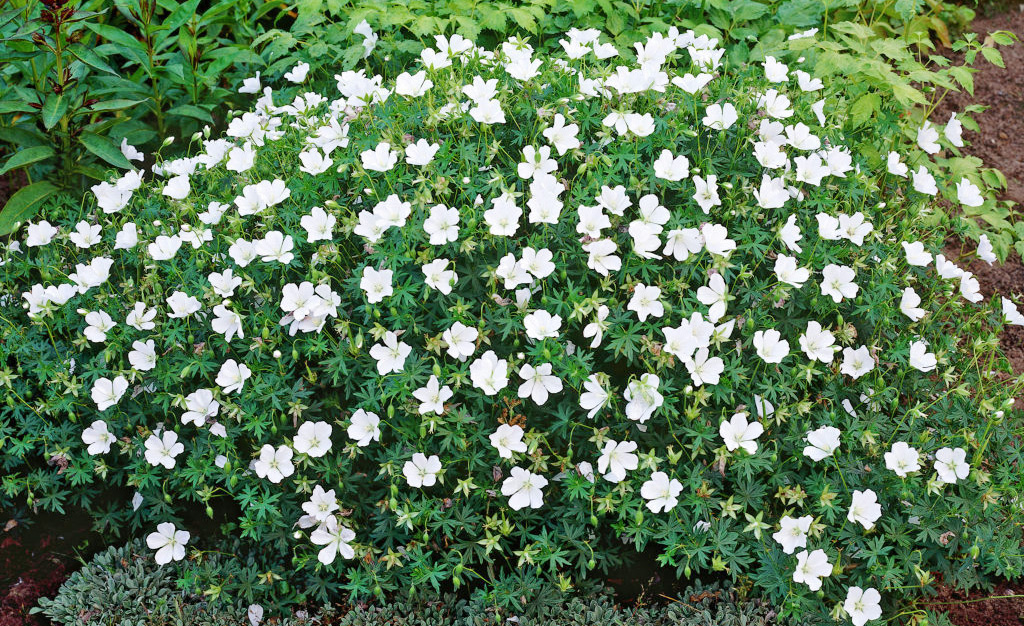
Dense planting is an ideal way to reduce weeding and also get colour and provide food for bees – bees prefer large drifts of the same plant as it means they can feed in the same place for longer; also I think larger drifts of the same plant look nicer.
I love the hardy geraniums or Cranebills (not to be confused with the Pelargoniums, the showy bedding plants).
There’s a hardy geranium for every garden situation – sun or shade, damp or dry, even those intractable patches of dry shade. The foliage is handsome; they make excellent ground cover; they are untroubled by slugs and snails; and their delicate flowers, in every shade of pink, purple, white and blue, are not only pleasing in their own right, but are the perfect foil for showier plants.
Best for ground cover are Geranium sanguineum and its tribe. This semi-evergreen perennial plant is now enjoying an enviable revival in popularity. Happy to grow in most aspects from full sun to dappled shade (beneath trees), it is also happy in all soil types except those that are waterlogged.
Growing to approximately 10″ (25 cm) tall, it is literally smothered with rosy-purple-pink flowers all summer long. A very pretty ground cover plant that only loses its foliage for the worst months of the year – and so can be termed as semi-evergreen. With rhizomatous roots it will slowly spread – but never becomes invasive.
And they are called Cranesbill on account of seed heads that form after flowering which resemble the strange bird’s beak and body shape.
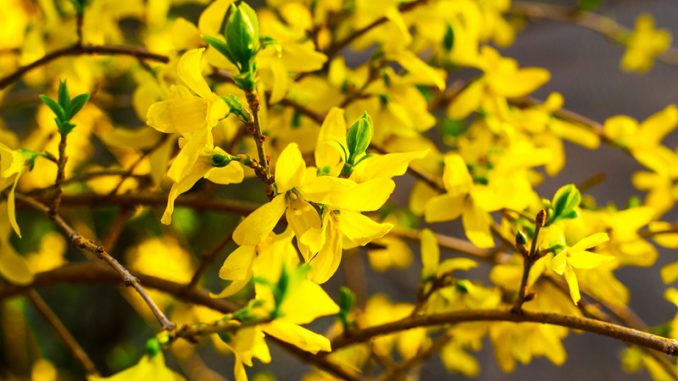
 We have planted a forsythia too close to a path and have to keep cutting it back to be able to use the path which also means we keep cutting off the blooms – can we move it or will we kill? It is about 5 ft tall and was planted about 3 years ago.
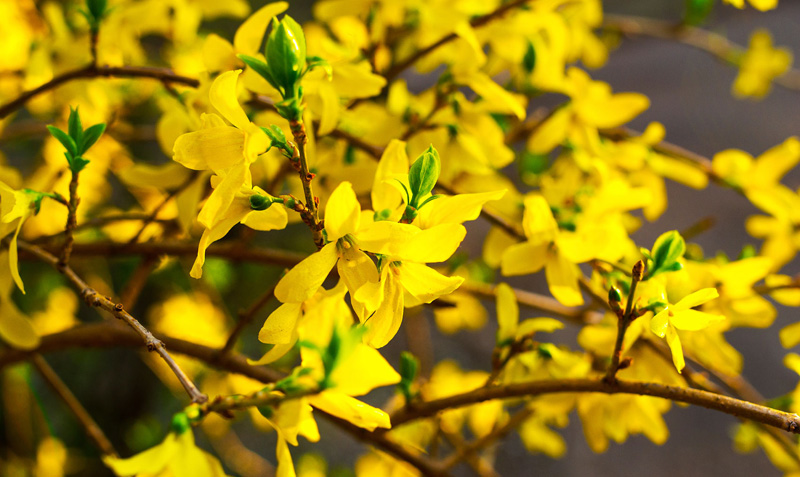
I always say ‘Have a go, you have nothing to lose’ (other than the shrub!). It is a pet hate of mine to see a shrub constantly being hacked back because it is too big for the space allocated. It’s just a form of mutilation. I think it is far better to try to move it and plant something more suitable in it’s place. With regard to your forsythia, dig it out with as much root as possible and dig a good sized new hole for it. Fill the hole with water before putting the soil back around the roots – it’s messy but the water will give the shrub the best chance of survival. Keep it well watered after relocating. One of my tricks is to place a large plastic bottle, with the top off and bottom cut off, upside down into the soil near the roots. You can then fill the bottle with water a few times a day and it will slowly leak into the soil keeping the soil moist. Adequate water is the key to relocating any plant.
As it’s a forsythia, which will have about finished blooming, you can prune it back before planting which will also help. Good luck.
 Is there an app I can use on my phone to help me identify plants?
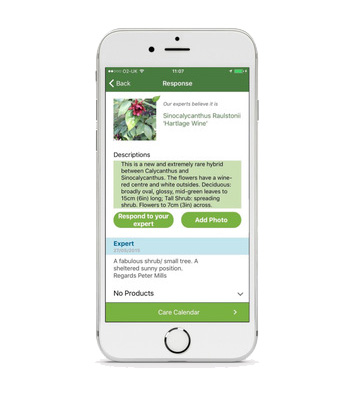
Yes; the PlantSnapp app makes identifying and buying a doddle. First take a photograph of the plant, then the app will do its best to recognise it. Once recognised, it will give details of name, care information and even where/when it must be planted. Here’s the clever bit… once you’ve found out what your mystery plant is, you can then buy it through the app from one of their HTA certified nurseries. The PlantSnapp app is available from Apple only.
LikeThat Garden is an extremely simple app also available from Apple only. It’s an easy process that involves the user photographing the plant in question and the app sifting through its database to find matches.
And the most accurate of the apps is the FlowerChecker, which uses real botanists to identify unknown plants, moss, fungus and even lichen and is available from the App Store and for Android.
Leave a Reply