
Taken from Lynne’s weekly column ‘Green Scene’ for the Western Mail. 22nd October 2016
 Bonkers Conkers
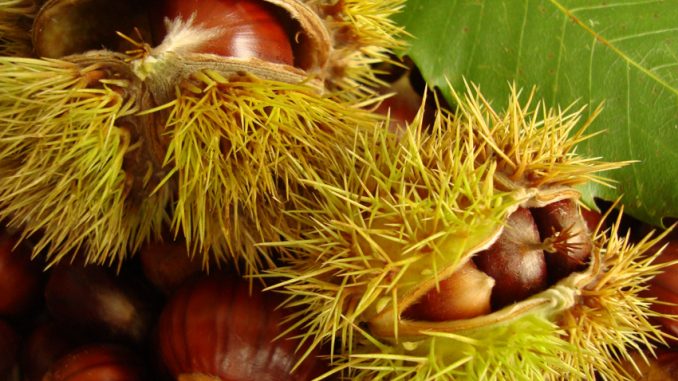
 It is that glorious ‘chestnut’ time of year. I’m not referring to the colour but the nuts. Both the horse chestnuts and the sweet chestnuts are great finds amongst the fallen autumn leaves – but do take care not to confuse the two. The former is the traditional school boy (and girl) entertainer and should not be eaten and the latter is the delicious edible nut probably best known for it’s stuffing association!
There was a much-maligned rumour a few years ago that conker playing was going to be banned by Health and Safety Executive and ‘trading’ the shiny brown nut was going to be banned by a rather oddly proposed EU Law. As far as I know, neither happened although numerous schools have banned playing conkers in the playground.
Even though neither ban was enforced, it is still a shame that so few kids today either know about the fabulously competitive game and the pride of owning a 29-er (for example) or can be bothered to participate.
I suppose you have to be of a certain age to know that soaking in vinegar or baking in the oven was cheating and that stab of disappointment when your prized nut got smashed to smithereens.
Well suffice to say, I have my 22-er tucked away safely in my pocket if anyone fancies a challenge!
Me Old Chestnut
 The sweet chestnut is a different ‘kettle of nuts’ altogether. Second only to cob nuts or philberts, they are my favourite foraged food, and many a dog walk at this time of year is planned around a reliable and prolific chestnut tree.
I did ask around for a few original ways to use sweet chestnuts and was surprised to be told by a young, new-era chef, that they are not supposed to be eaten raw owing to their tannic acid content. Unfortunately he couldn’t expand on that information, and I couldn’t feign interest. I have eaten copious amounts of raw chestnuts since a kid and much prefer them that way rather than cooked, or roasted.
However, another piece of advice did interest me. Apparently chestnut flour, made from dried ground chestnuts, is available in larger supermarkets, specialist food shops and delicatessens. The pale brown flour has an unusual but pleasant smoky flavour and is gluten-free and nutritious. It is ideal for breads, pancakes, fritters and cakes and as a thickener for soups and stews. Strangely, the flour doesn’t keep well in the traditional manner but can be frozen until needed.
Now that I will be trying!
Leave a Reply