

Taken from Lynne’s weekly column ‘Green Scene’ for the Western Mail
23rd May 2026

Bank Another Holiday
This weekend is extended by another Bank Holiday. Whilst typing this up, I started by writing that ‘both the early and late May Bank Holidays are not that old really, being established in 1971 and 1978 respectively – and as I remember the summer of ’76 very vividly, it’s well within my memory bank.’
And then I realised that that is actually around 50 years ago. And yes, I am that person that also thinks that the 1980s were just a few years ago too.
The bank holiday at the beginning of May is known as the ‘ Early May Bank Holiday’ or ‘May Day’ and was introduced as a bank holiday in 1978, although that time of year has a much longer history rooted in ancient spring festivals and the arrival of warmer weather. Usually.
This bank holiday is referred to as the Spring Bank Holiday and was originally known as Whit Monday, because it fell on the Monday after Pentecost. It was then formally established as a holiday in 1971, after a five-year trial period, and with the last Monday in May eventually designated as the fixed day.
Despite its Christian origins, today it is focused on rest, recreation and leisure – unless you are self-employed!
This ‘long weekend’ is largely seen as the unofficial start of summer, with the start of many outdoor events, festivals, and increased demand across the hospitality and travel sector. I’m sure the late arrival of sunshine and warmth will get people moving about like insects becoming more active after the cold spell.
Make the most of it, as the next bank holiday isn’t until the 31st of August.
Woolly Good Compost
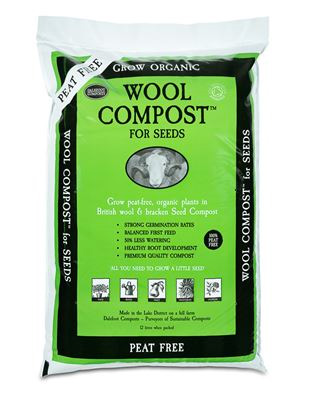 I think this bank holiday weekend is one of the busiest during the whole year for garden centres and plant sales, especially as it’s in the wake of the Chelsea Flower Show and enthusiasm (and confidence) Is high. We can have a frost right up until the end of May, so it’s always safer to wait until the end of the month before planting out anything tender, including bedding displays.
This year I am using Dalefoot Compost for all my seedlings and containers. Before discovering Dalefoot, I struggled to get my seeds established and am sure that it was to do with the quality – or lack of it – of most composts. Some ‘seed mix’ compost I’ve tried that should be a fine, nutrient-full mix to support seed sowing, has actually had large pieces of bark and even chopped up plastic in it. It’s frustrating as the compost isn’t cheap. I do make as much of my own as I can but always need to buy in extra at this time of year.
I first met the lovely Dalefoot crew at Chelsea Flower Show a few years ago and have largely used their products since – with the exception of a couple of ‘knee-jerk’ (and disappointing) buys when I’ve been at the garden centre.
Dalefoot Compost is made with wool, comfrey and bracken and is Soil Association approved. There are several mixes to choose from and I have found the seed mix and the Double Gold to be brilliant. The Lakeland Gold is a great ‘clay-buster’ and will add nutrients, encourage worms and ‘ooomph’ to all veggie beds when applied as a mulch in spring and autumn. I call it the ‘worm-whistling’ compost as you’ll see a marked increase in nature’s little helpers – and it is perfect for the No-Dig method. I haven’t tried the Tomato Mix yet but will do as it has rave reviews and, let’s face it, nothing says ‘I’ve grown my own’ more than the sweet smell of home grown tomatoes.
All the composts reduce the need for watering by as much as 50% as the sheep’s wool makes them wonderfully moisture retentive, and which is another big plus point in the death-inducing dry spells we get now. You may think the compost is expensive but by the time you factor in the losses and poor yields when using inferior compost – and time saved watering – I think it’s a great investment for your garden.
More details including stockists and delivery at dalefootcomposts.co.uk
New Fledglings
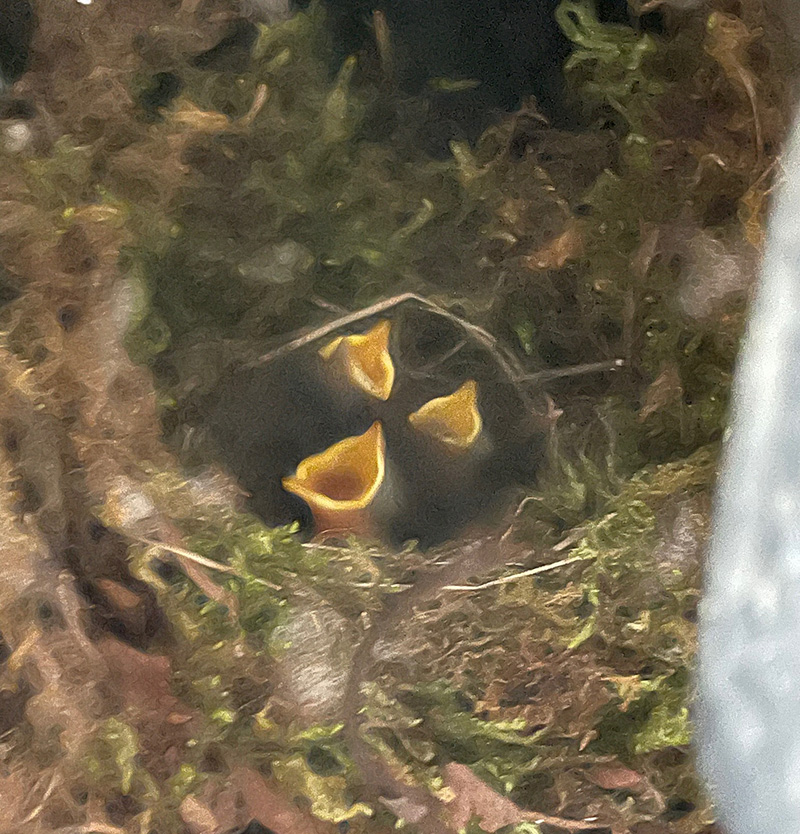 We had a tense morning in work last week as a mother Swallow considered it time for her young to leave the nest. We were sitting in a courtyard having our 10 o clock break when suddenly it turned into a feathered crèche as the little youngsters literally found their feet for the first time. The mix of joy, awe, and respect that I initially felt was soon flooded out by trepidation, worry and fear for these little vulnerable, clueless and incredibly fast-moving fledglings. They fearlessly ran up to us – and my brother’s Labrador, who was just mesmerised by them – as they encountered the great outdoors for the first time.
We left them and their frantic mother to it, whilst keeping a bit of an eye on the from a far, and sure enough when I left that day she had cwtched them all up safely in a thicket of geranium leaves, and to rest in preparation for the next day’s schooling.
When ready, fledglings will jump – not fall – out of the nest, which in itself is a miracle when you think of the height they ‘free-fall’. They then often have to navigate a number of obstacles on the ground to get out of a barn or shed and will have to spend a bit of time on the ground strengthening their flight muscles and allowing flight feathers to fully develop.
Parent birds work hard to raise their young and get them out of the nest as quickly as possible ,and once on the ground will move them around to a different spot every night, sometimes splitting them up enhancing each one’s chances of survival. It is an incredible natural process.
The parents still take care of the fledglings and feed them whilst on the ground. It is a chaotic time – for both the birds and any onlookers – but resist the temptation to get involved. They know what to do and a fledgling knows how to call for mum or dad if needs be. If you are worried about a fledgling, have a look on songbird-survival.org.uk under ‘seasonal advice’.
And New Feathers
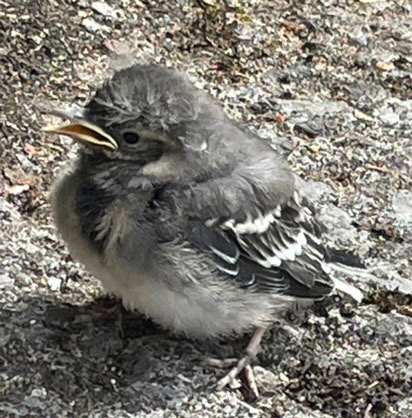 A friend asked me why her friendly robins had suddenly disappeared from her garden, worried that something untoward had happened to them.
Fear not Helen, it is most likely that the females are sitting on a nest and the males are staying close to her to protect her and the nest. Both male and female robins have the iconic red breast and are difficult to tell apart until this time of year when the female sits tight and the male does the protecting.
The other reason your regular-robins may be keeping a low profile is that they have a significant moult at this time of year, which can make them vulnerable to predators. They will lay low until their feathers are replaced with resplendent ones again – maybe they just don’t want to be seen in public in tatty feathers.
Lemmy the Legend
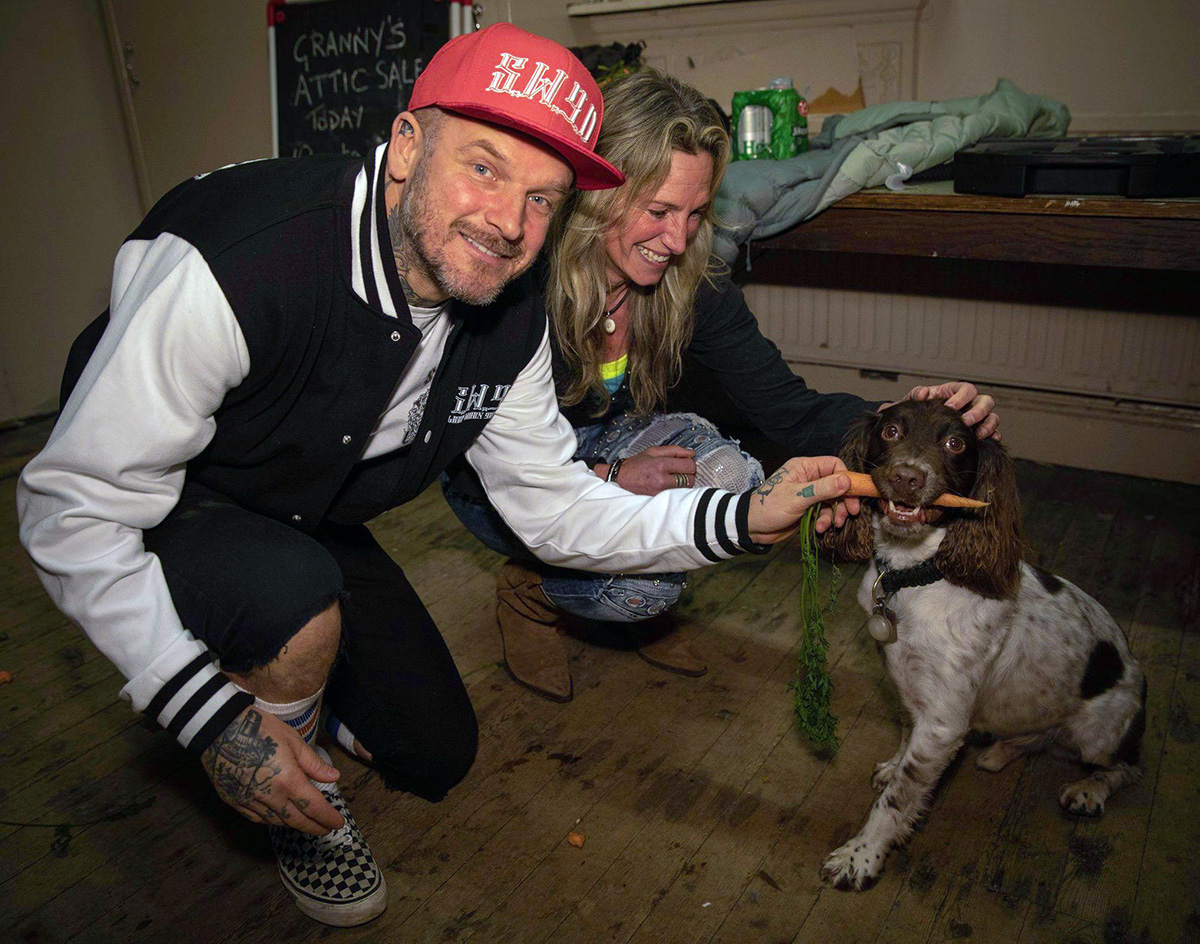 I first met Lemmy Pritchard when I was interviewing his dad, Matthew, to promote his book, Dirty Vegan. Whilst Matt was charismatic, comical and entertaining, Lemmy was even more so, and delighted in exploiting a home-grown carrot in order to promote his dad’s vegan cookbook. He knew how to work a crowd.
Sadly Lemmy passed away last week, leaving a huge spaniel-shaped hole in a lot of lives, especially, of course, Matt’s. The only single downside to being a ‘pawrent’, is that dogs don’t live as long as we do. We may be lucky enough to have them for the whole of their life, but they can only share part of ours. We go through every day with our wing-dogs close to our side, woven into our lives, nose-to-knee, sharing what even the closest humans don’t see. They are the source of our happiest times and in our darkest times, prevent the unthinkable. They fill our heart and it is painfully inevitable that one day they will break our heart.
Of course Lemmy had the best life, but now is not a time for sentences starting with ‘At least …’. Right now I’m holding Yogi tighter than ever, and Matt tight in my thoughts.
Lemmy, you are a legend; 24-carrot gold.
Leave a Reply