
Taken from Lynne’s weekly column ‘Green Scene’ for the Western Mail
23rd August 2025

Audacious Autumn

It comes as no surprise that the Met office is forecasting an early autumn, due to the hot weather. I noticed in work last week that a few of the trees are already showing signs of changing leaf colour and some are just shedding leaves whilst they are still green. It is the tree’s way of trying to preserve essential moisture within its system.
I also read that blackberries are so ripe in hedgerows that they’re tasting alcoholic. I can’t say I’ve noticed that but maybe it’s why my chickens are enjoying the ones I pick for them.
I think the early mornings have felt more autumnal since the beginning of August, despite the Meteorological autumn beginning on September 1st and the astronomical autumn, the 22nd September.
Obviously, I am continuing to put fresh water out for wildlife and I have started feeding the birds. It is controversial, as some experts insist it discourages the birds from foraging for food naturally, but as I am working in gardens all day every day, I can sympathise with them at just how hard and hostile the ground is at the moment. I don’t fancy their chances of finding worms, and as the fruit is early, it is unlikely to still be available for them into the winter.
Help the Hedgepigs
 I am also feeding hedgehogs. August is a crucial time for hedgehogs to fatten up before hibernation, and with so little food around naturally, I think it can only be a good thing to help them out. I use the same hedgehog food as the Vale Wildlife Hospital, who care for 2,000 hedgehogs every single year. It helps them not only gain much-needed weight, but ensures good health before being released back into the wild, ensuring the best chance for survival. You can buy it from www.brinvale.com who also have a wide range of other foods and goodies for wildlife and birds. You could also buy a hedgehog house if you want to plan ahead a bit.
Dad always used to call hedgehogs ‘hedgepigs’. I always thought it was his take on the ‘hog’ bit, swapping it for the related ‘pig’. He had lots of his own ‘adapted’ words and phrases. But it turns out that a hedgepig is actually an older name for a hedgehog, and was used first of all. The name ‘hedgepig’ is thought to have come about because hedgehogs live in hedgerows and have a snout that is very similar to a pigs nose. Other names for hedgehogs include ‘urchin’ (which, ironically, is what Dad used to call me and my brother) and ‘furze-pig’.
H-enjoying Treats
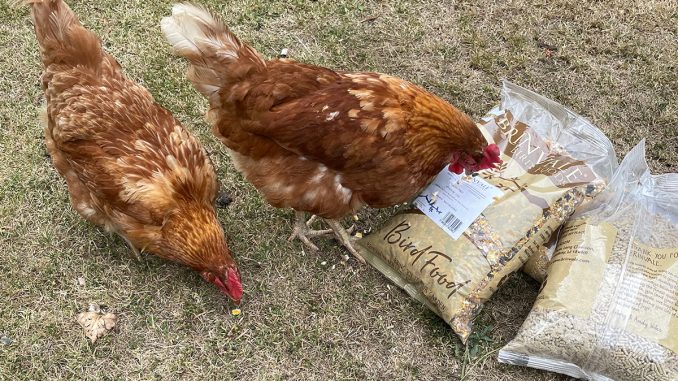
 As I have been stocking up on ‘wildlife food’, I have also been spoiling my chickens by buying them ‘posh food’ from Brinvale.
It does actually work out to be cost effective, as they don’t waste it. They also get a bag of frozen peas (defrosted) each week and a neighbour’s sourdough scraps.
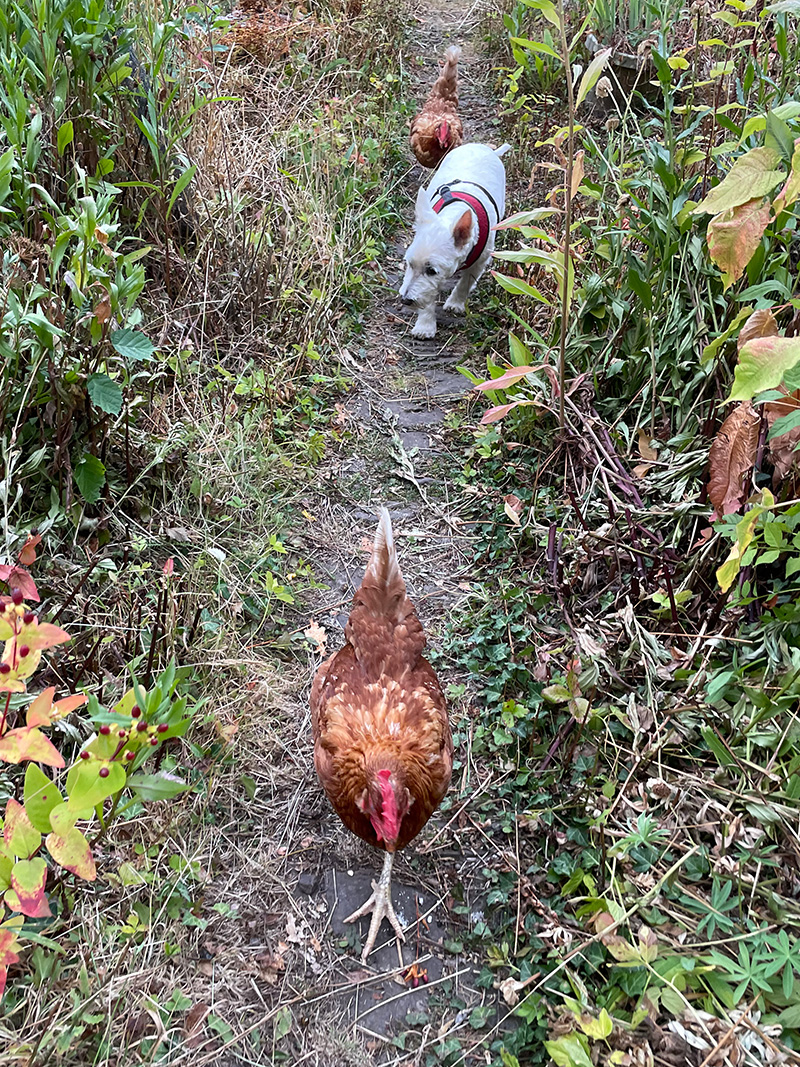
I must admit, I adore my two hens (the goshawk had the others) who always give me the best welcome at the gate when I come home.
And last week they even followed me and Yogi through the woods on our early morning sniffari – it was so comical.
They are real characters and far more intelligent than they are given credit for – using the same ‘escape route’ in reverse to get back into their pen at night. That’s using memory!
Out on a Limb
Do think twice before seeking shade under large tree canopies in hot weather. As well as shedding leaves there is an increase in ‘summer branch drop’ incidents this year. As an extreme measure, stressed trees can actually choose to ‘drop a limb’ in order to try and reduce their stress. It’s the ultimate survival tactic, I’d say. I’ve been pretty hot and stressed on times during these last few heatwaves but have managed not to ‘sacrifice a limb’.
Excellent X-rays
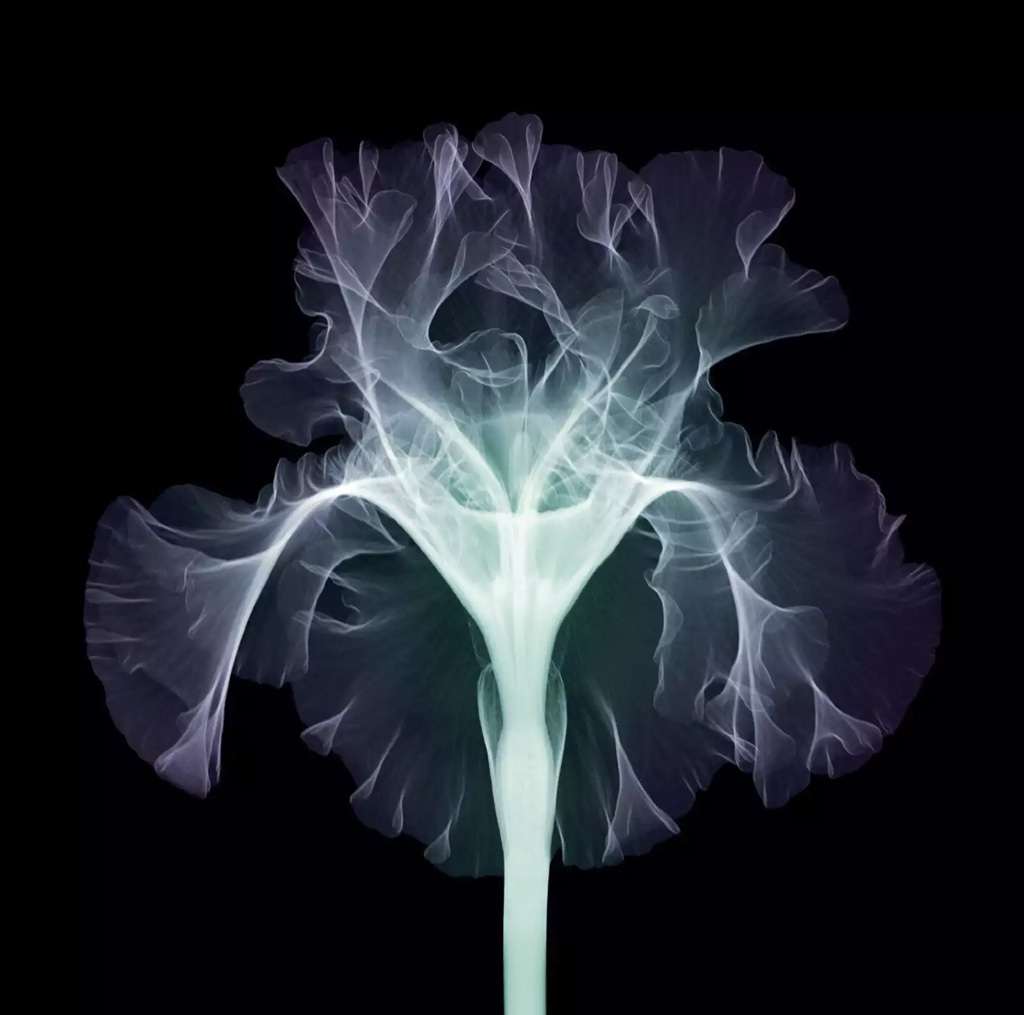 As a totally unrelated aside (apart from the anatomical/skeletal link, possibly), I recently saw the absolutely mesmerising ‘x-ray artwork’ by Nick Veasey. Described as art that ‘challenges our obsession with surface appearances by revealing the unseen beauty within everyday objects’. Using X-ray technology, Veasey strips back the layers, exposing the intricate structures that lie beneath the surface. His art encourages viewers to look beyond the superficial and appreciate the often-overlooked details that make up the essence of the world around us.’
Explaining his inspiration Nick says, “We live in a world obsessed with image. What we look like, what our clothes look like, houses, cars… etc. I like to counter this obsession with superficial appearance by using X-rays to strip back the layers and show what it is like under the surface.”
His floral X-ray artwork is simply stunning with a totally unique and new depiction of some old favourites, but I’ll make ‘no bones’ about having my eye on the short wheelbase Landrover pick up. I’ll let you have a look for yourself – and then you’ll get the pun. www.nickveasey.com
Naked Ladies
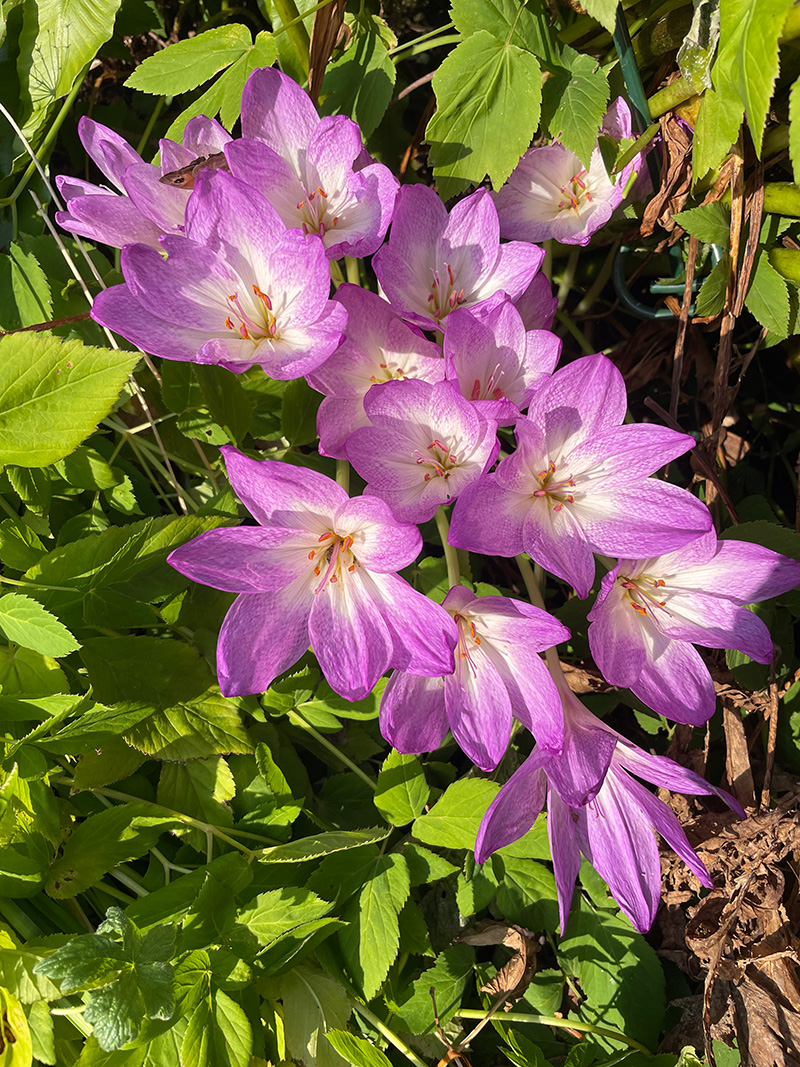 I love the autumn crocuses in my garden now. They are ‘the Giant’ variety and always a welcomed splash of colour – but usually a bit later on in September and October. Whilst called autumn crocus because they resemble crocuses, (and bloom in the autumn) ‘Colchicum autumnale’ is actually a member of the plant family Colchicaceae. True crocuses belong to the family Iridaceae – the Iris family.
Other popular common names for these stunners include ‘naked ladies’ because the flowers emerge from the ground long before the leaves appear, and ‘meadow saffron’, which is misleading as the spice is obtained from the saffron crocus, ‘Crocus sativus’ – also sometimes called ‘autumn crocus’.
Every garden should have a good ‘dollop’ of these cheerful blooms, they are undemanding and easy to grow. They are great ‘en masse’ in pots and are available in a wide range of colours. I keep meaning to add some of the white (Colchicum Autumnale ‘Album’) to the cottage as they stand out beautifully in the front of borders and when naturalised in drifts.
I have also been tempted by the striking Colchicum Waterlily bulbs, which have double flowers, making them look like water lilies. They are stunning and I think would be best shown off in pots close to the house.
‘Naked ladies’ are also extremely drought tolerant – as this years blooms have proven – and are a valuable food source for pollinators such as bees, providing nectar and pollen late in the season when other sources are scarce. Do be warned though, whilst they are great for wildlife, all parts of the plant can be toxic if ingested by humans or pets. Whilst I always think, ‘why would you eat a crocus anyway?’, in this case, the leaves come through the ground after the flowers have died back and will be out at the same time as wild garlic. They look quite similar, so I think that’s the thing to be more careful about – although don’t add the flowers to your salads either.
Leave a Reply