
Taken from Lynne’s weekly column ‘Green Scene’ for the Western Mail
1st June 2019
 Bee-ing Nice
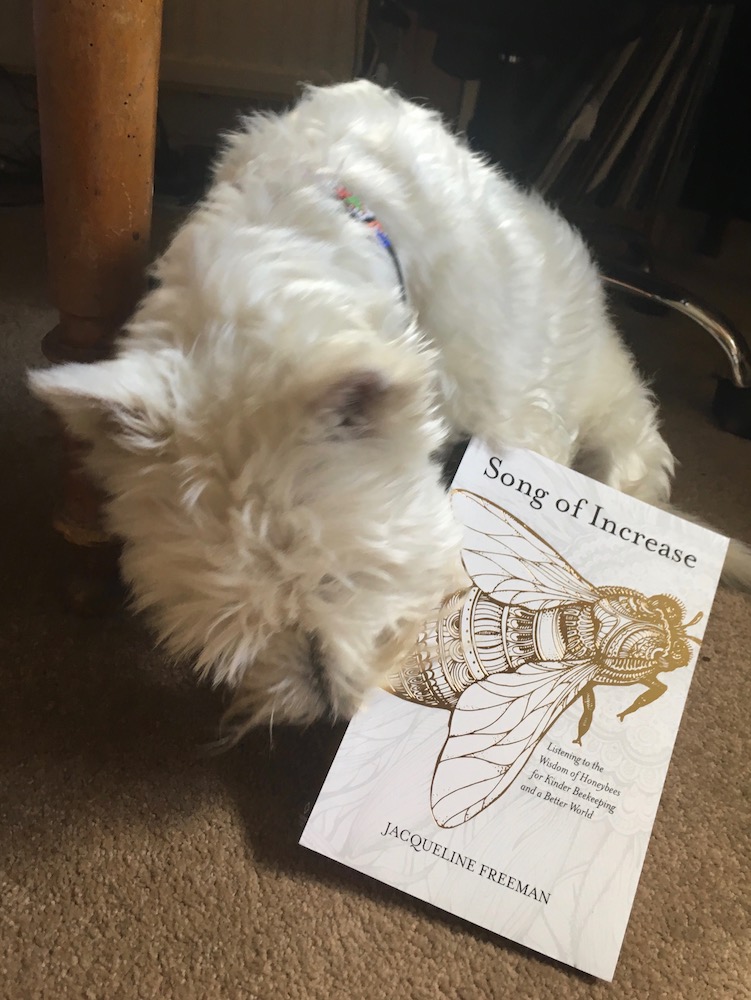
Sometime the nicest people do the nicest things. Last week I had a book arrive in the post. I hadn’t ordered anything and was intrigued; when I opened it a card read, “I read this and thought of you.” The book was called the ‘Song of Increase, Listening to the Honeybees for Kinder Beekeeping and a Better World’ and the sender was fellow a bee keeper and founder of Honey Bee Beautiful, Catherine Clark.
Having been a traditional beekeeper for 10 years, for the last few years I have left my bees to their own devices. I leave the honey for them and am basically just providing homes for them. I like it that way. I was moved to read that I already endorse many of the practices recommended in the book, for the benefits of my bees rather than myself. The book claims that we have become to human-centric in our beekeeping methods and the bees are suffering as a result.
I have always disagreed with the practice of taking the honey from the hives and replacing it with sugar syrup, a watery, shabby, substitute for what the bees have worked hard for and to sustain themselves through the winter. It’s like you doing those dreaded food shops to have someone come and empty your fridge each time.
And each time the hive is opened and checked, the fragile environment they work hard to maintain is trashed. Comb is ripped and torn, propolis seals are broken the temperature is disturbed and delicate brood held up to strong sunlight which will kill them.
I was taught to keep bees in the most traditional, disciplined and professional manner, and I am grateful for that knowledge, but my choice is now to leave my little hardworking friends ‘bee’.
At the beginning of the season I had two empty hives which I cleaned out and left with an imaginary ‘To Let’ sign outside. They have now been inhabited by two swarms which have settled in nicely and through their own choice. That’s a good feeling.
The funny thing is that the book describes the most magical way in which bees conduct their lives. They are hard working and work for the greater good of their entire colony; they are kind, and they are thoughtful – just like the lovely lady who took the time and trouble to send me the book. Find out more about Catherine’s wonderful 100% natural skincare range at www.honeybeebeautiful.co.uk
Spot the Spit
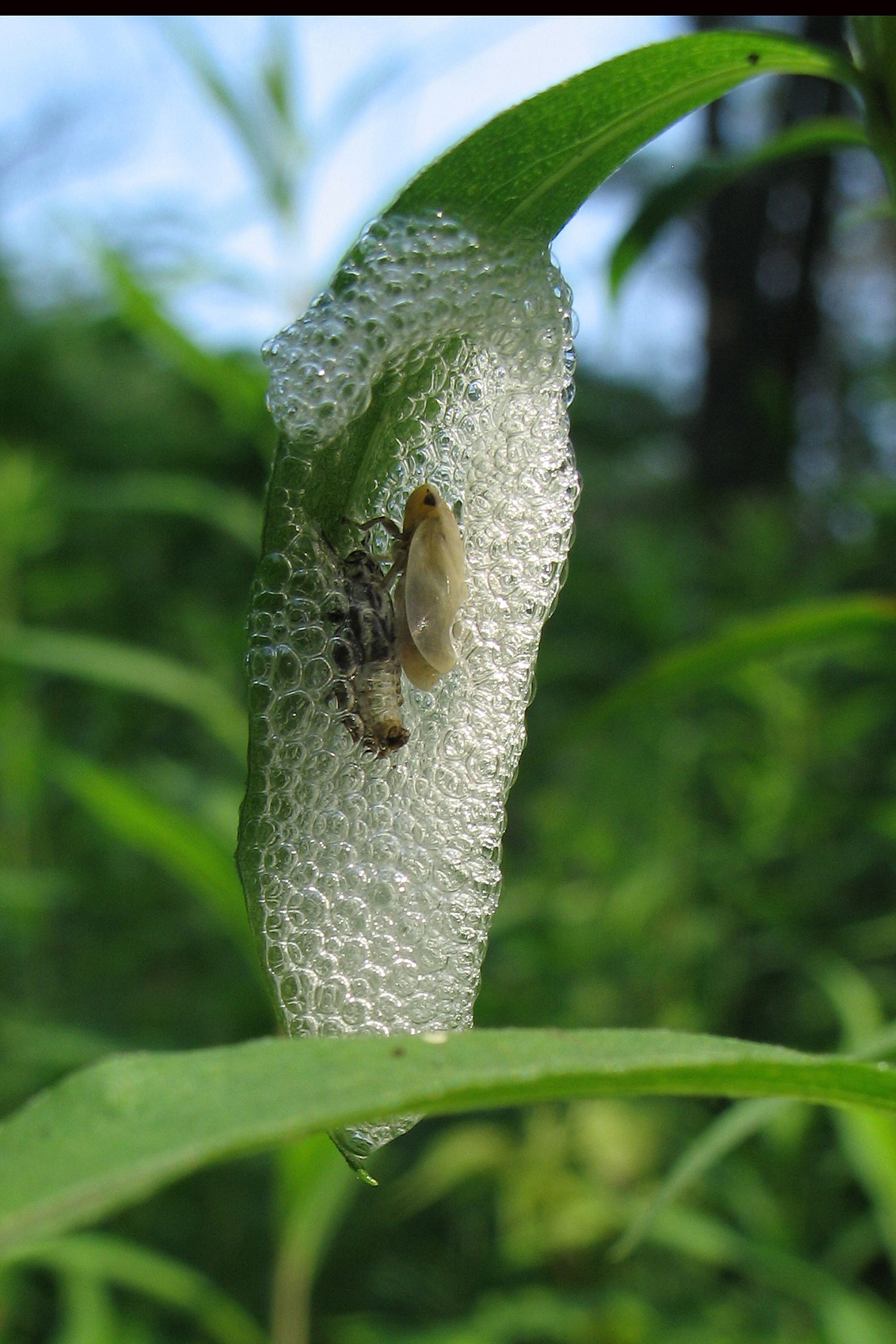 I have so many fond memories of ‘messing about’ with plants whilst growing up. Putting a piece of grass between your thumbs and blowing to make it whistle, popping the seed heads of Greater Stitchwort, wrapping the stem of plantain around it’s own seed head and firing it, making large leaves ‘pop’ on your cupped hand and looking for the little green bug in the bit of ‘cuckoo spit’ on various plants.
And now scientists are encouraging us all to do just that – the latter anyway – looking for the spittle and spittlebugs.
The little green spittlebug feeds on the host plant whilst ‘hidden’ in his little bubble of spit or spittle. And with the growing fear of Xyella entering the UK, sightings of this little bug will be used to map the distribution of the insect, in a pre-emptive strike against the deadly plant disease.
Monty Don often refers to the threat of Xylella, talking about it on Gardener’s World and at Chelsea Flower Show. The disease is caused by a bacterium which is moved from one plant to another by plant-sucking insects such as the spittlebug.
It has 563 different host plants worldwide and could affect garden plants like the rosemary and lavender, right through to the oak, ash and sycamore in the UK.
Scientists are calling for volunteers to record where and when they’ve seen spittle or spittlebugs and the results will be used to map the distribution of the insect to better understand how Xylella might enter and spread in the UK. If, God forbid, the disease does arrive in Britain, they’ll be able to make some really good predictions about how it’s likely to spread and how quickly.
If found in the UK, all host plants within 100m would need to be destroyed and there would be immediate movement restrictions on some plants within a 5km radius for up to five years. You can report sightings at www.brc.ac.uk/irecord/xylem-feeding-insects
Keep Your Marbles
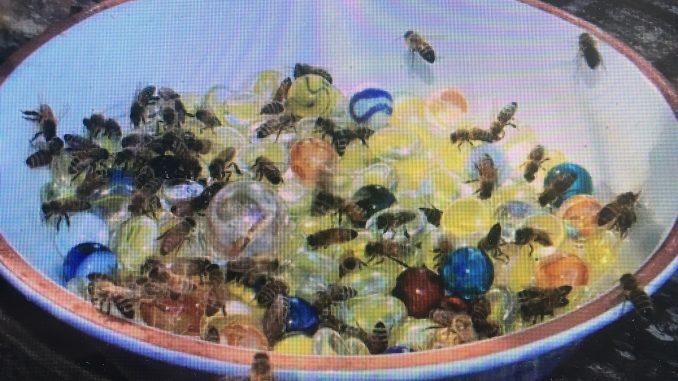
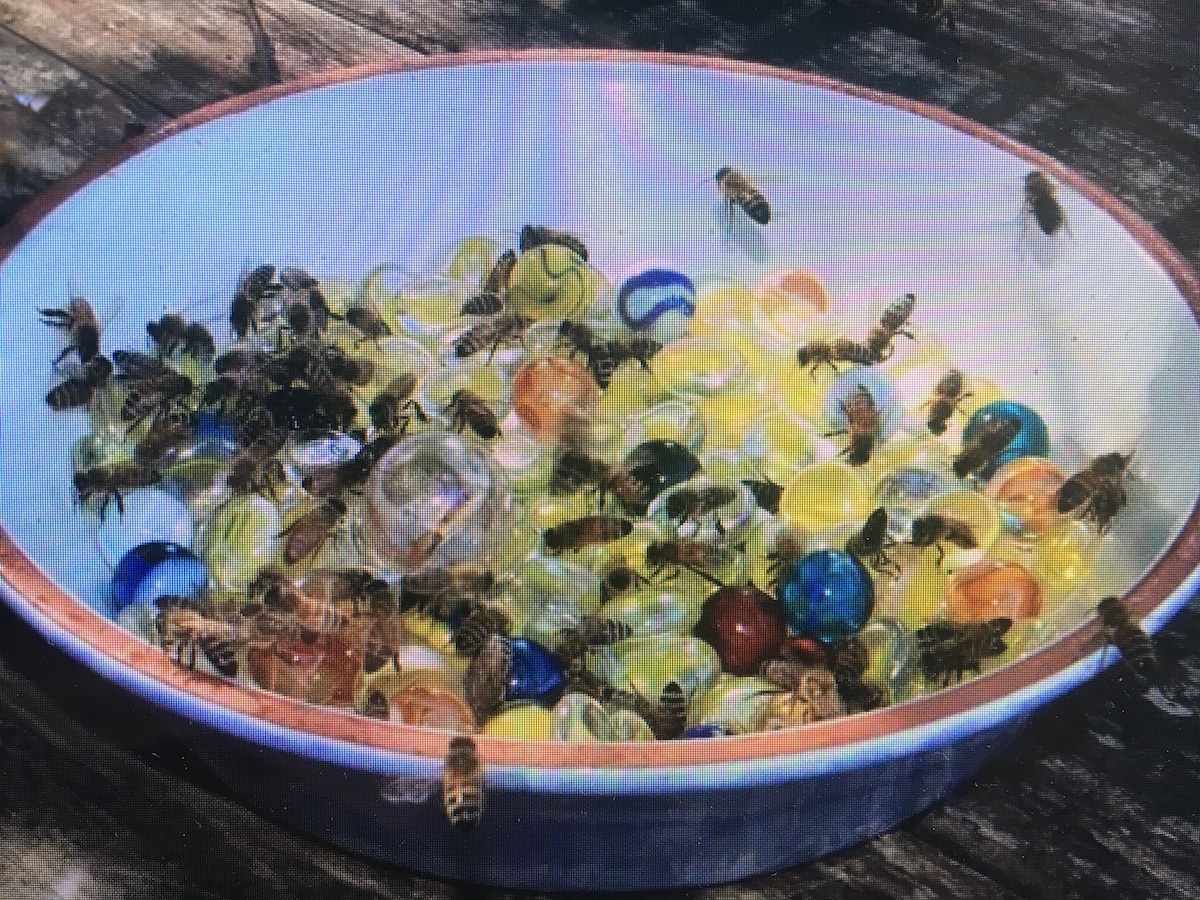 Please keep watering vulnerable plants during these dry spells, but also remember the wildlife in your garden. I am always banging on about the importance of making sure hedgehogs, birds, bees and butterflies have access to water in the garden.
One of my favourite things to share is making a bee watering hole from a shallow dish and sticks and stones as they need to drink from shallow water and can stand on the stones to dip their proboscis in the water. But how’s this for a more funky option, from Rusty Burlew at Honey Bee Suite? Simply fill a dish or saucer with marbles and water and the bees and butterflies will stand on the marbles to drink. Water great idea!
Love the idea of the marble in the dish for the bees to have water… a very ornate way to keep them hydrated.