
Taken from Lynne’s weekly column ‘Green Scene’ for the Western Mail
14th November 2026
Tiptoe through the Tulips
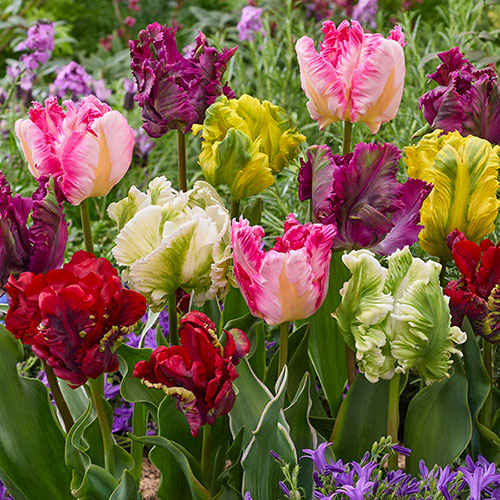
If you haven’t already done so, it’s time to plant tulips for next springs uplifting displays. I think it’s the most overlooked aspect of gardening. Whenever you see the vibrant spring displays, you inevitably wish you had planted bulbs the previous autumn.
So – do it! You can also get some good deals now, or even a bit later in the month, and I have planted tulips as late as mid-December. Sarah Raven has a sale on beautiful bulbs now and the garden centres will no doubt be doing the same. The only downside is that the sales may have restricted choice. I actually find that helpful – otherwise I get a bit overawed by all the different varieties. A bit like when there are loads of available spaces in a car park.
In his very last hosting of Gardener’s World, last Friday, Monty Don – once again – showed how to plant up a ‘tulip lasagne’. I often cringe at these sort of descriptions but I suppose it helps describe the process.
Basically it is just planting layers of tulip bulbs between layers of compost so you can get more bulbs into one container. It is a great way to get a brilliant display next spring by ensuring the containers are jam-packed with blooms. I have done it for over 40 years – but still am reticent to call it ‘tulip lasagne’.
A word of caution – mice absolutely love tulips bulbs – and they seem to be able to ‘smell’ them at quite a depth. Tulip bulbs are packed with moisture and carbohydrates, making them an ideal meal for rodents trying to survive cold autumn and winter months when other food is scarce. Unlike daffodils and other bulbs, tulips do not contain bitter or toxic chemicals, making them palatable and easy for mice, voles and even rats to digest. If you are planting in containers it is worth putting chicken wire over the top of the container until the tips starts to show. Some people recommend dusting the bulbs with chilli or garlic powder, or even bone meal, before planting. Or you could sprinkle bone meal on the compost surface. I usually plant tulip bulbs with a mix of daffodils and/or alliums to help disguise the ‘scent’ of the tulip bulbs and therefore protect them. Rodents hate anything in the onion family, like alliums, and it also means you get a longer flowering display from the same container.
Beat the Bullies
 Next week (16th – 20th) is Anti-Bullying Week. This year’s theme is ‘Break the Silence’, encouraging people to begin conversations about bullying, to listen and act together.
The week starts with Odd Socks Day on Monday 16th, and is designed to be a fun way to encourage people to express themselves and celebrate their individuality and what makes us all unique.
All you have to do to take part, is wear odd socks to your school, at work or at home, it couldn’t be easier. And certainly couldn’t be easier for me as I probably wear odd socks more often than I wear a matching pair. But that is due to my lack of clothes washing and wardrobe skills. And to be honest, I have never felt any necessity to wear matching socks, so at least for one day of the year, I’ll be ‘on trend’.
In 2025 over 5 million children, thousands of parents, hundreds of workplaces and lots of celebrities and influencers got involved. Ant and Dec, Emma Willis, Brian May, Craig David, Sir Mo Farah are all examples of celebs who have donned odd socks for a good cause. And of course – social media is the place to post photos of your trendy tootsies.
Interestingly, I was recently in a rather random group of people talking about ‘being bullied’. All seven of us – different ages and from very different backgrounds – had been bullied at school. That’s not a great statistic is it.
And of course bullying takes place in other areas and environments too – the workplace, the home, recreational groups and now, as a sign of the times – online. It does need to be addressed and what I have learned as I have got older is that, despite campaigns and raising awareness, it is often unrealistic to think you can change the behaviour of someone else, in this case the bully. It is our own behaviour and response that has to change. And that is best achieved by setting boundaries and by making sure that people know that it is not OK to be mean to you. That is often (but not always) achieved by honest and courageous conversations. These are difficult, but they can be invaluable to both empower the person being bullied and to disempower the bully. Like most things, practise and repetition will make these sorts of honest communications much easier.
After a diagnosis of Lupus, ME/CFS a couple of years ago, I have been researching relentlessly in an attempt to remedy the numerous and diverse symptoms associated with these auto immune issues. I have been largely successful and am now (mostly) symptom free. It is no small claim and has been no mean feat to get to this stage.
I will be writing more about it in the future but for now, I will share that setting boundaries was a significant part of recovery. Not supplements, not positive thinking, not reliving trauma, not brain retraining, and definitely not ‘pushing through’, but by making small but significant changes in the way I manage and conduct my life , and which involved a substantial amount of boundary setting.
It is not easy but it is simple, and can definitely ease the numerous and diverse ‘symptoms’ associated with autoimmune issues, menopause, neurodivergent behaviour, anxiety and even in specific situations like being bullied. So much so, I have recently qualified as a ‘coach’ in this particular ‘therapy’. I will share more going forward but for now, and for this column, I urge you – in the first instance – just to be aware and acknowledge just where ‘unfairness’ is prevalent in your life. Of course that will include any form of bullying – which is not always as obvious as you would expect. Personally, I think ‘break the cycle’ would be a more apt theme than ‘break the silence’, as the cycle can be broken by actions as well conversations. But that’s a conversation for another column.
Reassuring Robin
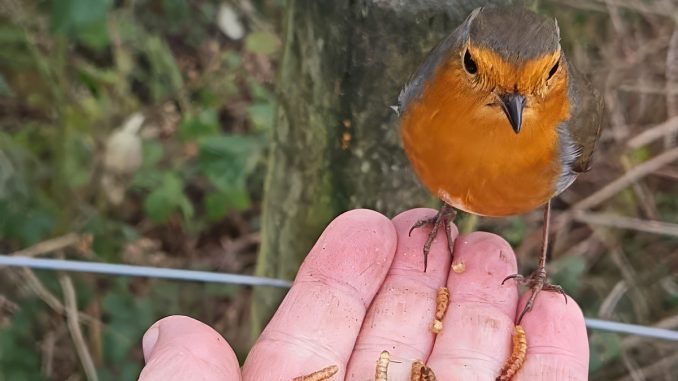
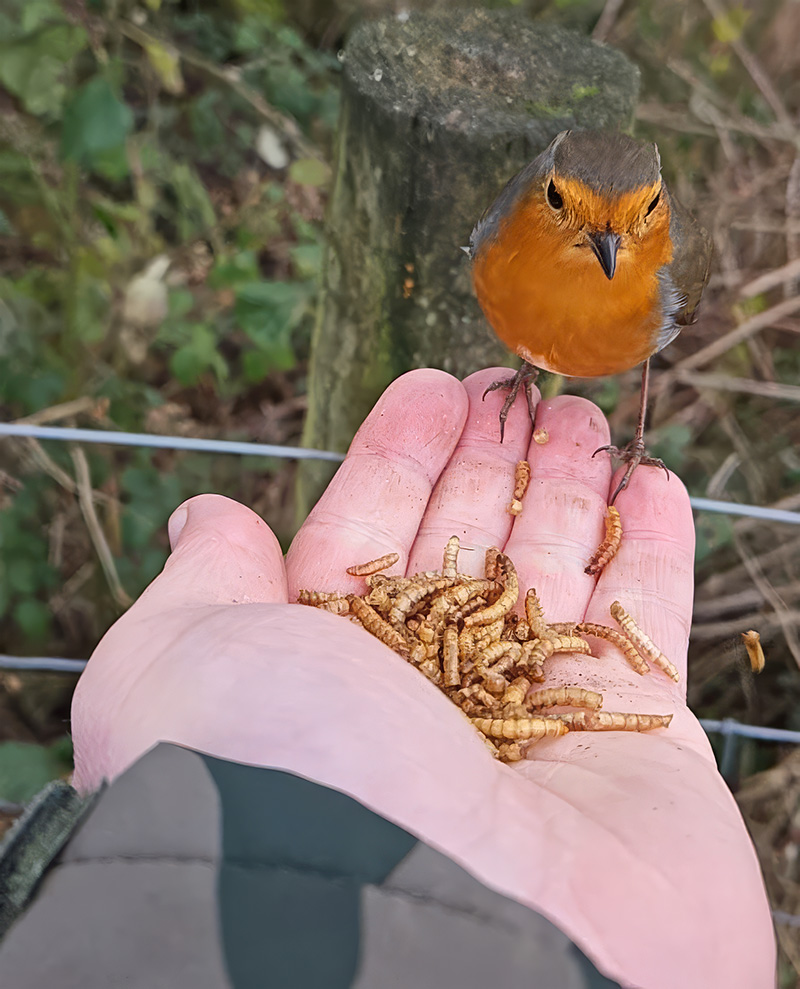 Ever since losing my beloved Yogi, I have had a cheeky little robin visit me every day. He bounces his way cheerfully through the cottage, busily picking up crumbs and spiders, biding his time until I give him his favourite mealworms. He is getting braver and more tame by the day and brings some comfort, as popular belief suggests that ‘when robins appear, loved ones are near’. Many people consider a close-up encounter with a robin to be a sign or ‘visit’ from a departed loved one.
In Christian folklore, the robin’s red breast is said to have come from a drop of Christ’s blood during the crucifixion, and now symbolises the presence of angels. Because they are early nesters, signalling the arrival of spring, robins also represent renewal, hope, and leaving behind old phases of life. And in many regional traditions, having a robin cross your path is seen as a sign of luck, happiness, or important news on the way.
As if all that’s not enough for our little feathered friends to represent, they are also thought to have a sixth sense.
While many British robins stay put throughout the year, others arrive from mainland Europe in winter. These migratory birds typically travel at night, navigating long distances with few visual landmarks to guide them.
Back in the 1960s, German scientists tried to find out how they achieved their journeys. They suspected that birds could sense the earth’s magnetic field and use it to orient themselves. So they placed European robins in a specially designed test cage and manipulated the direction of the magnetic field around them. Remarkably, the robins changed their orientation accordingly, demonstrating that they could use the earth’s magnetic field as a compass – and so possessed a sort of sixth sense.
I have always been a firm believer that a sixth sense should be our first sense.

Leave a Reply